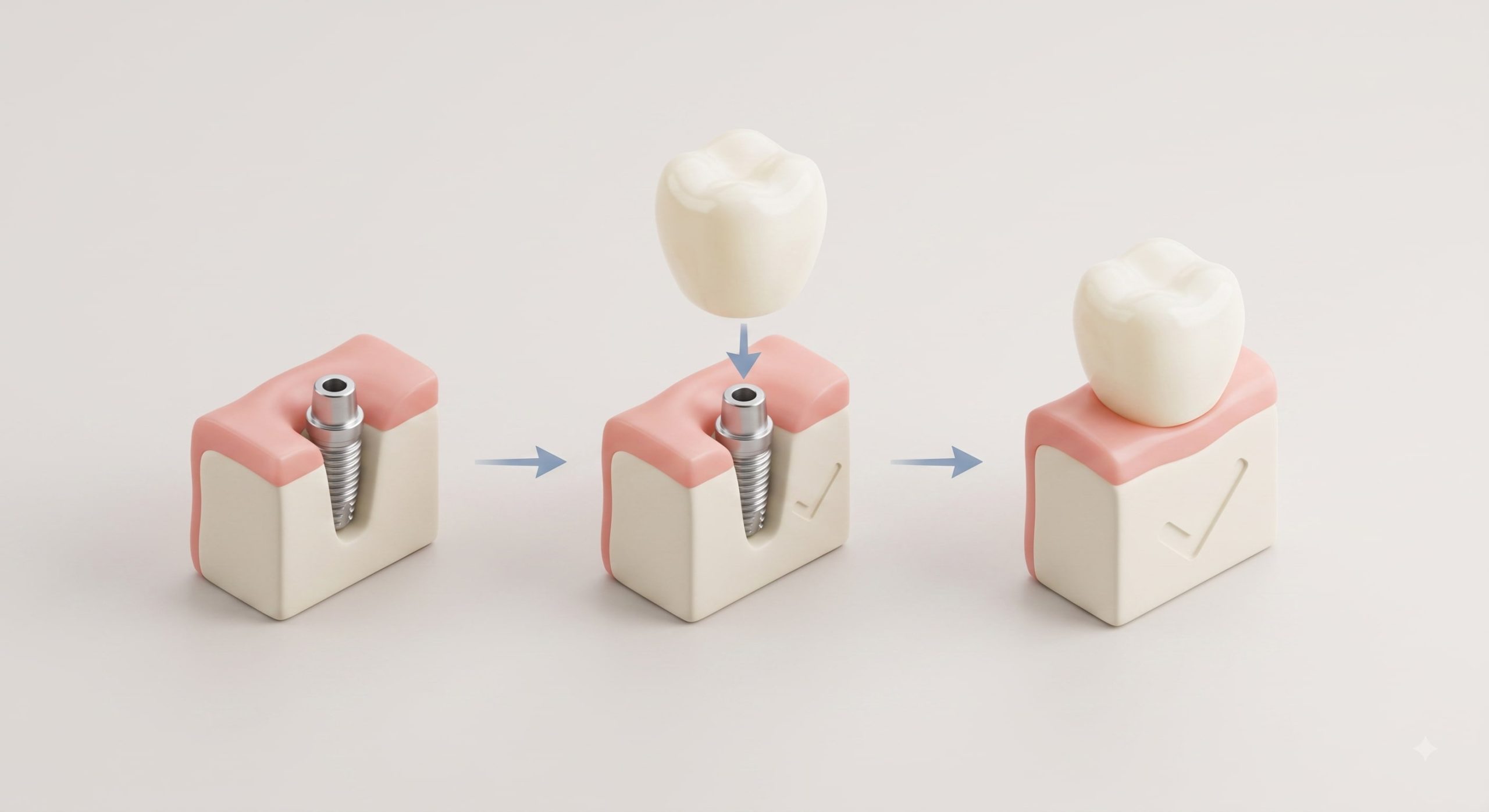
In many cases yes, a temporary tooth can be fitted within 24 to 72 hours of implant surgery. What surprises most patients is that having a tooth in place and having a tooth that can chew normally are two different things. Whether the temporary crown can bear full chewing force right away depends on how firmly the implant sits in the bone at the moment it goes in, not on how the patient feels or how the surgery went overall.
This distinction matters because it changes what patients should expect during the healing period. A temporary tooth that looks natural but is deliberately kept out of contact with the opposing teeth is not a sign that something went wrong. It is often the safer choice, and understanding why helps set the right expectations before surgery rather than causing confusion afterward.
This article explains what actually determines whether a temporary crown can function normally right away, what a non loading temporary crown is and why it exists, and how this decision differs depending on which tooth is being replaced and how many implants are involved.
Quick Answer
In many cases yes, a temporary tooth can be fitted within 24 to 72 hours of implant surgery. Whether it can bear normal chewing force right away depends on how stable the implant is at placement, measured through insertion torque. Implants with strong initial stability may support a functional temporary crown immediately, while others are fitted with a non loading temporary that stays out of contact with opposing teeth until healing progresses further.
What determines whether a temporary tooth can be fitted right away
Getting a temporary tooth after implant surgery is not something a dentist decides in advance purely by preference. It comes down to a measurement taken during the surgery itself, called insertion torque, which reflects how tightly the implant engages with the surrounding bone at the moment it is placed. Clinical literature generally points to a threshold around 35 newton centimeters as the level associated with reliable outcomes for loading an implant right away, though the exact figure used varies somewhat by implant system and by whether the case involves a single tooth or several implants working together.
This measurement matters because it is the closest available indicator of whether the implant can withstand the forces of a temporary crown without shifting at a microscopic level while the bone is still integrating around it. A patient considering implant placement at the same time as a tooth extraction can find a broader explanation of how that specific protocol works and who tends to qualify for it in a separate guide on immediate implant placement. This article focuses on a narrower and often overlooked question that applies regardless of whether the implant is placed at the time of extraction or later into already healed bone: once the implant is in, what decides whether the temporary tooth sitting on top of it can actually be used for chewing.
Functional loading versus non loading temporary crowns
A functional, or immediately loaded, temporary crown is built and adjusted so that it makes contact with the opposing teeth during normal biting and chewing, essentially working like a real tooth from day one. This is only appropriate when the insertion torque and overall stability of the implant meet the threshold that supports it.
A non loading temporary crown looks the same to the eye but is deliberately adjusted so it does not touch the opposing teeth when the patient bites down. It restores appearance and helps shape the gum tissue around the implant site, which matters for how the final crown will look later, but it is not meant to be used for chewing. Patients are usually asked to keep this side of the mouth light during meals and avoid biting directly into food with that tooth until the dentist confirms the implant is ready for a functional replacement.
Neither option is better in an absolute sense. The choice reflects what the implant can safely support at that specific point in healing, and both protocols are recognized approaches in implant dentistry rather than one being a compromise version of the other.
Why loading too soon can be a problem
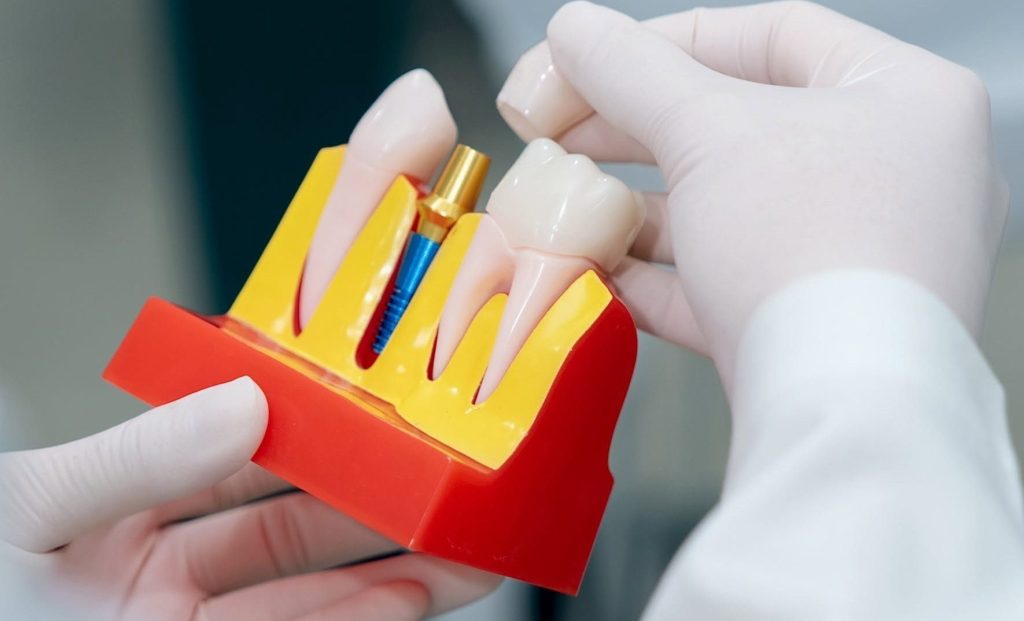
The concern with placing a functional temporary crown on an implant that has not reached sufficient stability is a phenomenon called micromotion. If the implant shifts even slightly at a microscopic level while chewing forces are applied, that movement can interfere with the biological process where bone cells attach directly to the implant surface. This process is what ultimately anchors the implant permanently, and disrupting it during the early healing window is one of the more preventable causes of implant failure.
This is why a dentist who recommends a non loading temporary crown is not being overly cautious without reason. They are protecting the outcome of the surgery based on what the implant actually measured at placement, rather than proceeding on assumption. Patients sometimes push back on this because a non loading temporary can feel like a step backward compared to what they expected, but the alternative of loading an implant that is not ready carries a real risk of losing the implant altogether and having to start the process over.
Does it matter which tooth is being replaced
The position of the tooth in the mouth influences how much this decision affects daily life, even though it does not change the underlying stability requirement. A front tooth carries less direct chewing force than a molar, so a non loading temporary in that position mainly affects biting into firmer foods with the front teeth rather than general chewing. A back tooth involved in the primary chewing function means a non loading protocol has a more noticeable impact on how a patient eats during the healing period, since more care is needed to avoid loading that side of the mouth.
This does not mean molars are less likely to qualify for functional loading. Insertion torque and bone density in that specific location still determine the outcome. It simply means the practical experience of living with a non loading temporary differs depending on where in the mouth it sits, which is worth understanding ahead of time so the healing period does not come as a surprise.
What this means for single implant versus multiple implant cases
A single implant case is assessed on its own stability measurement, and the decision about loading applies to that one site. When several implants are placed together, such as in full arch treatment, the temporary restoration is often splinted across multiple implants rather than standing alone on each one. This connected structure can distribute forces differently and sometimes allows earlier functional loading even when an individual implant’s torque reading would not support it on its own. The specific protocols used for full arch and full mouth implant cases, including how the temporary bridge is designed and when it can bear function, are covered in more detail in the guide comparing temporary and final full arch restorations.
Delia Dental Clinic‘s approach to temporary teeth after implant placement
Delia Dental Clinic measures implant stability at the time of surgery before deciding whether a patient leaves with a functional temporary crown or a non loading one. This decision is not finalized during the pre treatment consultation, since the actual insertion torque can only be confirmed once the implant is physically placed and engaged with the bone. A CT scan taken before surgery gives the treating specialist a strong indication of bone density and volume at the planned site, which helps set realistic expectations, but the final call on loading protocol happens in the operating room based on what is measured at that moment.
For international patients, this means the specific outcome, whether the temporary tooth will function normally right away or needs to stay out of occlusion for a period, is confirmed on the day of surgery rather than promised in advance. Delia Dental Clinic explains both possible outcomes before treatment begins so patients are prepared either way, and the international patient team at Ho Chi Minh city and Hanoi can outline what a non loading period would mean for the remainder of a travel window if that turns out to be the recommended approach.
Frequently Asked Questions
Does a non loading temporary crown look different from a normal tooth?
No, a non loading temporary crown is shaped and shaded to match the surrounding teeth and looks natural in photos and conversation. The difference is only in how it is adjusted at the biting surface, where it is set slightly out of contact with the opposing teeth so it does not bear chewing force. Most patients cannot tell the difference by looking in a mirror, and the aesthetic result is generally the same as a functional temporary crown during this period.
How long does a non loading temporary crown usually stay in that state?
This depends on how the implant progresses during osseointegration, which is commonly assessed over a period of a few months rather than weeks. The dentist reassesses stability at follow up visits and moves the crown into normal function once the bone integration has reached a point that supports it. There is no fixed universal timeline, since healing speed varies by patient, implant location, and individual bone quality.
Is it painful to have a non loading temporary crown?
Not typically, since the entire point of the non loading adjustment is to avoid the forces that would cause discomfort or risk to the healing implant. Some patients notice mild sensitivity to temperature or pressure in the surrounding gum tissue during the first days after surgery, which is a normal part of healing rather than a sign the temporary crown itself is causing a problem. Persistent or worsening pain should always be raised with the dentist rather than assumed to be routine.
Do I need to follow a special diet with a non loading temporary crown?
Yes, patients are generally advised to keep that side of the mouth light during meals and avoid biting directly into firm or chewy foods with the temporary tooth. A softer diet overall during the early healing window protects both the temporary restoration and the implant underneath it. Specific guidance on food choices during implant recovery is covered separately, since the right approach can vary depending on whether one implant or several are involved.
If I travel home before the implant is fully loaded, is that a problem?
Not usually, since the healing and integration process continues regardless of location, and the temporary crown is designed to be worn safely during this period as long as the non loading instructions are followed. What matters is having clear guidance before departure on how long to expect the non loading phase to last and what signs would warrant contacting the clinic. International patients typically return for the permanent crown once healing has progressed enough to confirm the implant is ready.
Final Thoughts
Whether a temporary tooth can be used for normal chewing right after implant surgery comes down to a specific measurement taken during the procedure, not a general impression of how well the surgery went. A non loading temporary crown protects the implant during its most vulnerable phase while still restoring appearance, and it is a deliberate clinical decision rather than a sign of complication. Patients who want to understand what to expect for their own case, including whether prior imaging suggests a straightforward candidacy for immediate function, can send existing X rays or CT scans to Delia Dental Clinic via WhatsApp or Messenger for a preliminary review, with the final decision on loading protocol confirmed once surgery takes place.


