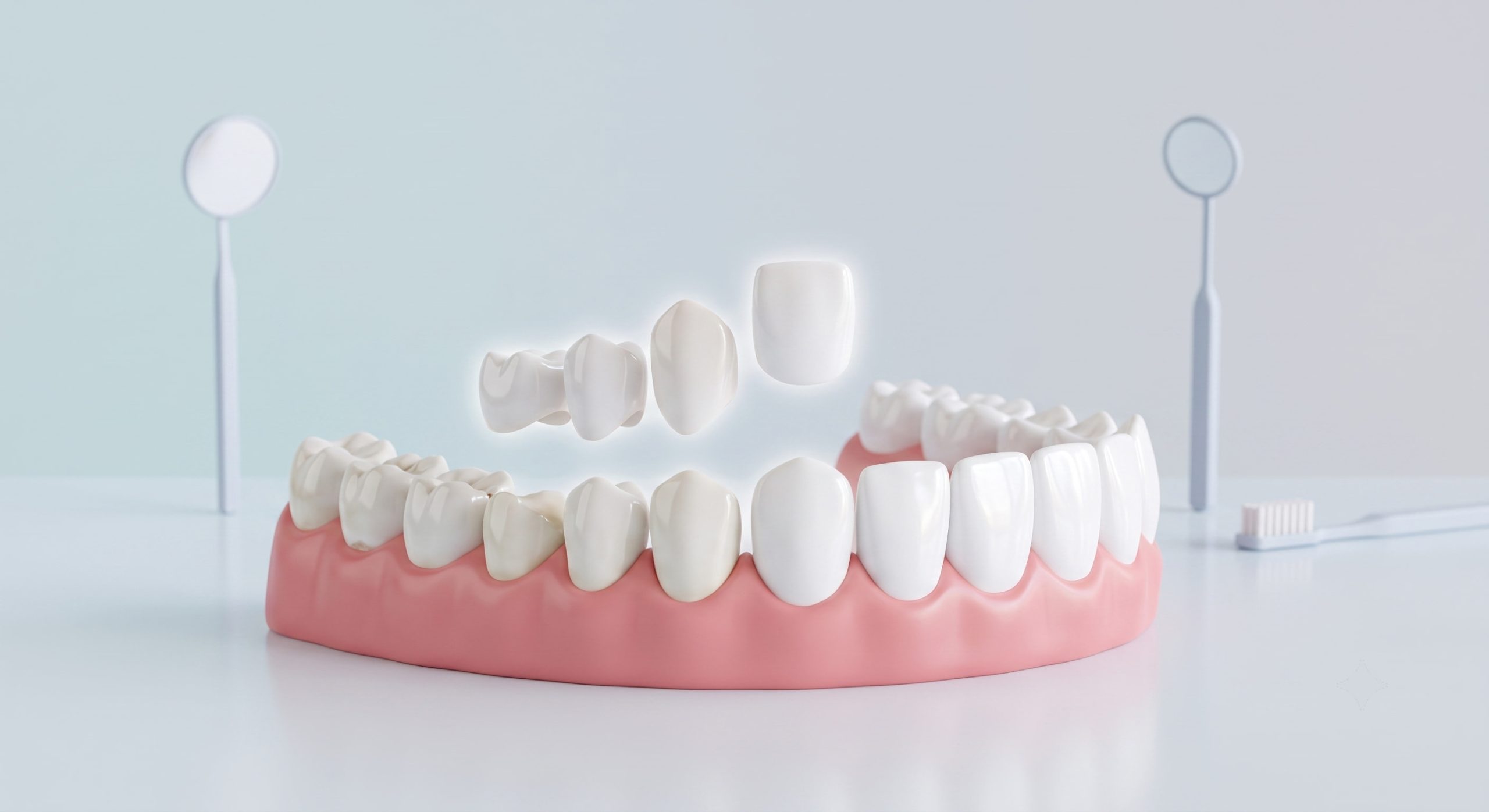
There is no standard number of crowns required for a full smile makeover. Eight crowns may cover the upper front teeth in one patient, while another may need treatment across both arches. Some people marketed a 16- or 20-crown package may not need every included tooth crowned at all.
The number should not be chosen only by counting the teeth visible in a photograph. Smile display matters, but crowns also require a structural or functional reason. The condition of each tooth, the transition between treated and untreated teeth, and the way the upper and lower teeth meet all affect the final plan.
This guide explains what 8, 16 and 20 crowns may cover, when a larger plan becomes full-mouth rehabilitation, and how to check whether a proposed crown package matches your teeth rather than simply a preset number.
Quick Answer
There is no fixed number of crowns for a full smile makeover. Eight may cover a limited upper smile zone, while 16 or 20 may involve both arches or a wider functional reconstruction. The appropriate number depends on which teeth are visible, structurally damaged and involved in the bite—not on a standard package.
Why Is There No Standard Number of Crowns for a Smile Makeover?
A full smile makeover describes a treatment goal, not a fixed number of crowns. It may involve crowns, veneers, whitening, bonding, orthodontic treatment or gum contouring in different combinations.
Crowns are generally considered when a tooth needs more than a surface-level cosmetic change. A crown covers the prepared tooth and may be used when the tooth has extensive structural loss, a large restoration, a significant crack, severe wear or another condition that makes full coverage appropriate.
This is different from treating a healthy tooth purely because it appears within the smile. A visible tooth may need its colour or shape changed, but that does not automatically mean it should be crowned. Depending on the clinical findings, whitening, bonding, orthodontic treatment or a veneer may preserve more of the natural tooth.
The phrase “full set of dental crowns” can also be misleading. It does not identify a recognised number of teeth and may refer to:
- Crowns on the upper front teeth only
- Crowns across the visible teeth in both arches
- Restoration of most teeth used for chewing
- A broader full-mouth rehabilitation
A useful treatment plan should therefore identify the teeth individually. “Sixteen crowns” is a quantity; it is not yet an explanation of why those particular 16 teeth need treatment.
What Do 8, 16 and 20 Crowns Actually Cover?
Eight, 16 and 20 are common ways of describing the size of a smile restoration, but they do not have universal tooth distributions. The same number can represent very different treatment plans.
| Number of crowns | Possible distribution | What it may address | What needs to be checked |
|---|---|---|---|
| 8 crowns | Often concentrated on the upper front teeth | A limited upper smile zone | Whether untreated teeth remain visible at the sides, whether lower teeth create a colour contrast and whether all eight teeth need crowns |
| 16 crowns | Sometimes eight upper and eight lower, but other distributions are possible | Both visible arches or several damaged teeth | The exact tooth map, the reason for treating each arch and whether any posterior teeth affect the bite |
| 20 crowns | Often presented as ten upper and ten lower crowns | A wider aesthetic zone or extensive tooth rehabilitation | Whether premolars or molars are included, why they need crowns and whether the plan changes the existing bite |
An eight-crown plan may work visually for someone with a relatively narrow smile whose first premolars remain hidden. In a wider smile, the untreated teeth behind the crowns may still be visible from the front or at an angle. If the new crowns are substantially lighter, the colour transition can become obvious.
Sixteen crowns are sometimes assumed to mean eight teeth in each arch. That cannot be confirmed from the number alone. A plan could instead include ten upper teeth and six lower teeth, or another distribution based on damage and visibility.
Twenty crowns are often described as a “full smile” package, commonly with ten restorations in each arch. However, this still does not mean every patient needs that configuration. The quote should show which teeth are included and whether each one is being treated for structural, aesthetic or functional reasons.
Which Factors Should Determine the Number of Crowns?
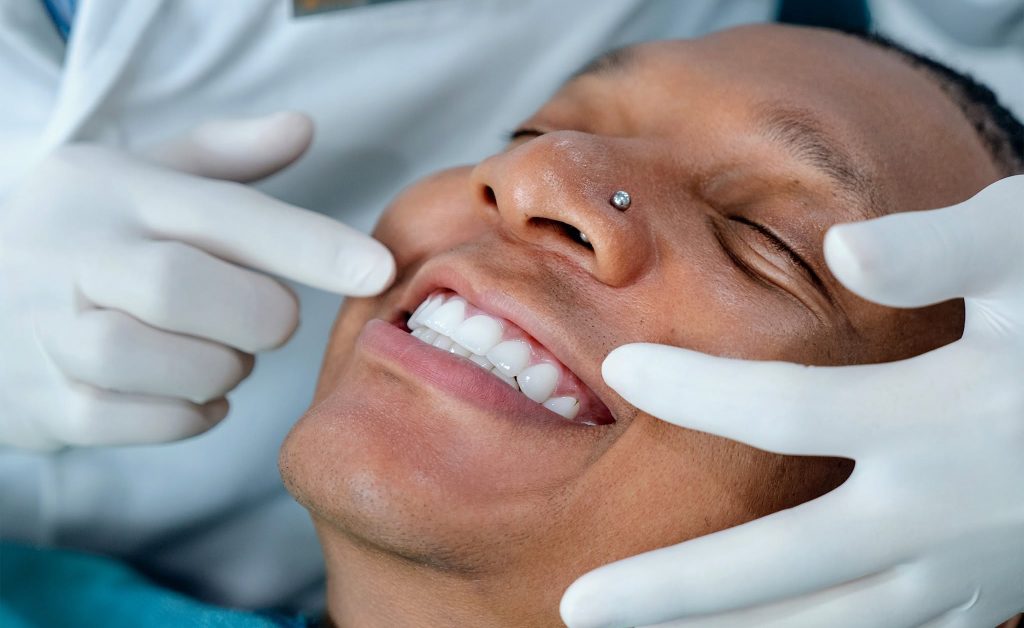
The appropriate crown count is found by comparing two different maps. The first is the aesthetic map: which teeth appear when the patient smiles and speaks. The second is the clinical and functional map: which teeth actually need restoration and which ones influence the bite.
A suitable treatment scope has to consider both.
How many teeth show when you smile and speak?
The visible smile zone differs considerably between patients. Some people mainly show six to eight upper teeth. Others expose the premolars farther back, a significant amount of the lower arch or more tooth surface when speaking than they do in a posed photograph.
A smile assessment should consider:
- The front view of a natural smile
- Both three-quarter views
- Lip movement during speech
- The amount of upper and lower tooth display
- The teeth visible at the outer edges of the smile
- Gum display and the relationship between the teeth and lips
These observations help establish how far an aesthetic change may need to extend to avoid a visible stopping point. However, they do not determine whether every tooth in that area should receive a crown.
Smile display identifies the design area. Tooth condition determines the treatment used within it.
Which teeth have a structural indication for crowns?
Each tooth should be assessed separately before it is added to a multi-crown plan. Possible reasons for considering full coverage include substantial loss of tooth structure, extensive decay, cracks, large failing restorations, severe wear or an existing crown that needs replacement.
Previous root canal treatment may also affect the restorative decision, but it does not mean every root-canal-treated tooth automatically requires the same restoration. Tooth position, the amount of remaining structure and the forces placed on it still matter.
The central question is not simply whether a crown could change the appearance of the tooth. It is whether full coverage is justified by the tooth’s condition and the overall restorative plan.
When a tooth remains structurally healthy and the concern is limited to colour, minor shape differences or alignment, the dentist should consider whether a more conservative option could meet the same goal. The separate guide to dental veneers versus dental crowns explains how the two restorations differ.
Where will the treated and untreated colours meet?
A colour transition occurs where the final crown ends and the neighbouring natural tooth begins. This transition is easy to miss when looking only at a straight-on photograph.
For example, eight bright upper crowns may appear uniform from the front but leave darker premolars visible when the patient smiles broadly or turns slightly. The lower natural teeth may also appear darker when speaking or laughing.
The answer is not automatically to crown more healthy teeth. Other possibilities may include:
- Choosing a crown shade that blends with the surrounding dentition
- Whitening suitable untreated teeth before final shade selection
- Using veneers or bonding on selected healthy teeth
- Extending treatment only when the additional teeth have a valid indication
Shade planning should therefore happen before the final crown count is confirmed. Whitening after new crowns have been made cannot change the colour of the ceramic restorations.
Do the posterior teeth need treatment for function?
Posterior teeth should not be crowned merely to turn an aesthetic plan into a larger package. They may need to participate, however, when the case involves widespread wear, damaged restorations, insufficient restorative space or an unstable bite.
Changing the length and shape of several front teeth can affect how the teeth contact during biting and jaw movement. In selected cases, the posterior teeth may need to be assessed or restored so the new anterior design works with the rest of the bite.
This becomes particularly important when the patient has:
- Extensive wear across both arches
- Loss of tooth height
- Multiple broken or heavily restored teeth
- Uneven or unstable biting contacts
- Difficulty chewing
- A proposed change in the vertical relationship between the jaws
In these cases, choosing the crown count from the smile display alone would be incomplete. The treatment must be planned as a connected functional system.

When Are 16 or 20 Crowns Part of Full-Mouth Rehabilitation?
Sixteen or 20 crowns may form part of full-mouth rehabilitation when the treatment is rebuilding several damaged or worn teeth and reorganising how the bite functions. This is different from placing crowns only to create a brighter, more uniform smile.
The American College of Prosthodontists describes prosthodontic care as involving diagnosis, treatment planning, rehabilitation and maintenance of oral function, comfort, appearance and health. Larger crown cases should reflect all of these considerations rather than appearance alone.
A function-led rehabilitation may be considered when the patient has widespread tooth wear, repeated restoration failure, multiple structurally compromised teeth or a bite that no longer provides stable contacts. The number of crowns then results from the diagnostic plan; it should not be selected before the cause and extent of the damage have been established.
Why are mock-ups and temporary crowns important?
A digital design can preview tooth proportions and the likely appearance of a new smile, but larger cases also need to be tested in the mouth.
A diagnostic mock-up or provisional restoration can help assess:
- Tooth length and proportion
- Lip support and smile appearance
- Speech with the proposed tooth shapes
- Comfort when closing the mouth
- Chewing contacts
- Side-to-side and forward jaw movements
- Areas that feel heavy or unstable
Temporary crowns are especially important when many teeth are being restored or the bite is being changed. They allow the design to be reviewed before the final restorations are completed.
A design that looks attractive on a screen may still require changes after the patient speaks, closes, chews and moves the jaw. This is why larger crown cases should include functional checkpoints rather than moving directly from a digital image to final cementation.
When Is a Mixed Plan More Conservative Than Crowning Every Tooth?
A mixed plan may be more appropriate when some teeth need structural protection but others remain healthy. Instead of placing crowns on every visible tooth, the dentist can choose a restoration according to the condition of each one.
A treatment plan might use:
- Crowns on badly damaged, heavily restored or severely worn teeth
- Veneers on selected healthy teeth requiring mainly a surface-level aesthetic change
- Whitening to bring untreated teeth closer to the planned crown shade
- Bonding for small chips or proportion changes
- Orthodontic treatment when tooth position is the primary concern
- No treatment on teeth that already fit the functional and aesthetic plan
Crowns and veneers can be used in the same case, but their colour, translucency, shape and margins must be planned together. The materials should form one coordinated smile rather than two visibly different groups of restorations. More detail is available in the guide to combining veneers and crowns in one treatment plan.
A mixed plan is not automatically preferable. If a tooth is too damaged to support a veneer predictably, choosing a veneer solely because it removes less tooth structure would not solve the structural problem. The conservative option is the least invasive treatment that can still meet the clinical requirement—not simply the restoration that sounds less extensive.
How Can You Check an 8-, 16- or 20-Crown Quote at Delia Dental Clinic ?
A reliable quote should show more than the number of ceramic units and the total price. It should allow you to understand the reason for treating each tooth and what remains uncertain until an in-person examination.
Before accepting the plan, ask:
- Which exact tooth numbers are included?
- Is each crown being recommended for a structural, aesthetic or functional reason?
- Are any of the proposed teeth healthy enough for a more conservative option?
- How are the crowns distributed between the upper and lower arches?
- Where will the transition between treated and untreated teeth appear?
- Why are any premolars or molars included?
- Will whitening be completed before the final shade is selected?
- Does the quote include imaging, temporary crowns, mock-up and try-in stages?
- Could decay treatment, root canal treatment, posts, core buildups or gum treatment change the quote?
- How will the bite be tested before the final crowns are cemented?
- What happens if the crown count changes after the clinical examination?
- What warranty and maintenance terms apply to the restorations?
Patients comparing budgets can review dental crown cost in Vietnam separately. The important point for this decision is that multiplying a per-tooth price by eight, 16 or 20 does not necessarily produce the complete treatment cost. Preliminary care and supporting procedures may still affect the quote.
International patients should also distinguish an initial remote review from a final diagnosis. Smile photos can help show tooth display and aesthetic concerns, while suitable X-rays may reveal previous treatment or obvious structural issues. They cannot fully test pulp health, cracks, gum condition, bite contacts or whether a tooth can be restored predictably.
At Delia Dental Clinic, patients can send records before travelling for an initial review. After arrival at the Hanoi or Ho Chi Minh City clinic, the treatment scope must still be confirmed through a clinical examination and appropriate diagnostic checks. Digital Smile Design, mock-up and try-in can then be used in suitable restorative cases to refine the plan before the final crowns are approved.
Patients planning a treatment trip should also allow enough time for provisional fitting and adjustments. The guide to how long dental crowns take in Vietnam explains why a larger crown case may need a longer clinical window than a single restoration.
Frequently Asked Questions
Does a full set of dental crowns include every tooth?
No. “Full set of crowns” is not a precise clinical term and does not identify a standard number of teeth. It may refer to the visible upper teeth, both smile arches or a broader rehabilitation. Ask for a treatment plan showing the exact tooth numbers.
Are wisdom teeth included in a 20-crown makeover?
Wisdom teeth are not automatically included. A 20-crown plan commonly refers to selected teeth across the upper and lower arches, but the distribution varies. The quote must identify each tooth rather than relying on the total number.
Can whitening reduce the number of crowns needed?
Whitening may reduce a colour difference between new crowns and suitable untreated teeth. It cannot repair a structurally damaged tooth or change the shade of existing ceramic crowns. Whitening should be planned before the final restoration shade is selected.
Do existing crowns always have to be replaced in a smile makeover?
Not necessarily. An existing crown may be retained if it remains clinically sound and can be integrated into the new design. Its margins, condition, material, colour, shape and bite relationship should be evaluated before deciding whether replacement is necessary.
Can the number of crowns change after an in-person examination?
Yes. Photos and X-rays can support an initial plan, but an examination may reveal decay, cracks, pulp problems, gum conditions or bite factors that alter the number or type of restorations required. Patients should ask how any change will affect the written quote.
Final Thoughts
The right number of crowns for a full smile makeover is not automatically eight, 16 or 20. Those figures describe the size of a proposed package, but they do not explain which teeth require full coverage or why.
A suitable plan should map the teeth visible in the smile, identify the clinical reason for treating each tooth, manage the transition to untreated teeth and confirm that the new design works with the bite. In some cases, 20 crowns may be justified as part of extensive rehabilitation. In others, eight crowns—or a mixed plan using fewer crowns—may be more appropriate.
Send your smile photos, dental photos, recent X-rays and existing treatment plan or quote via WhatsApp or Messenger. Delia Dental Clinic can review which teeth may need crowns, where a mixed approach may be considered and what must still be confirmed through an in-person examination before the final crown count is approved.


