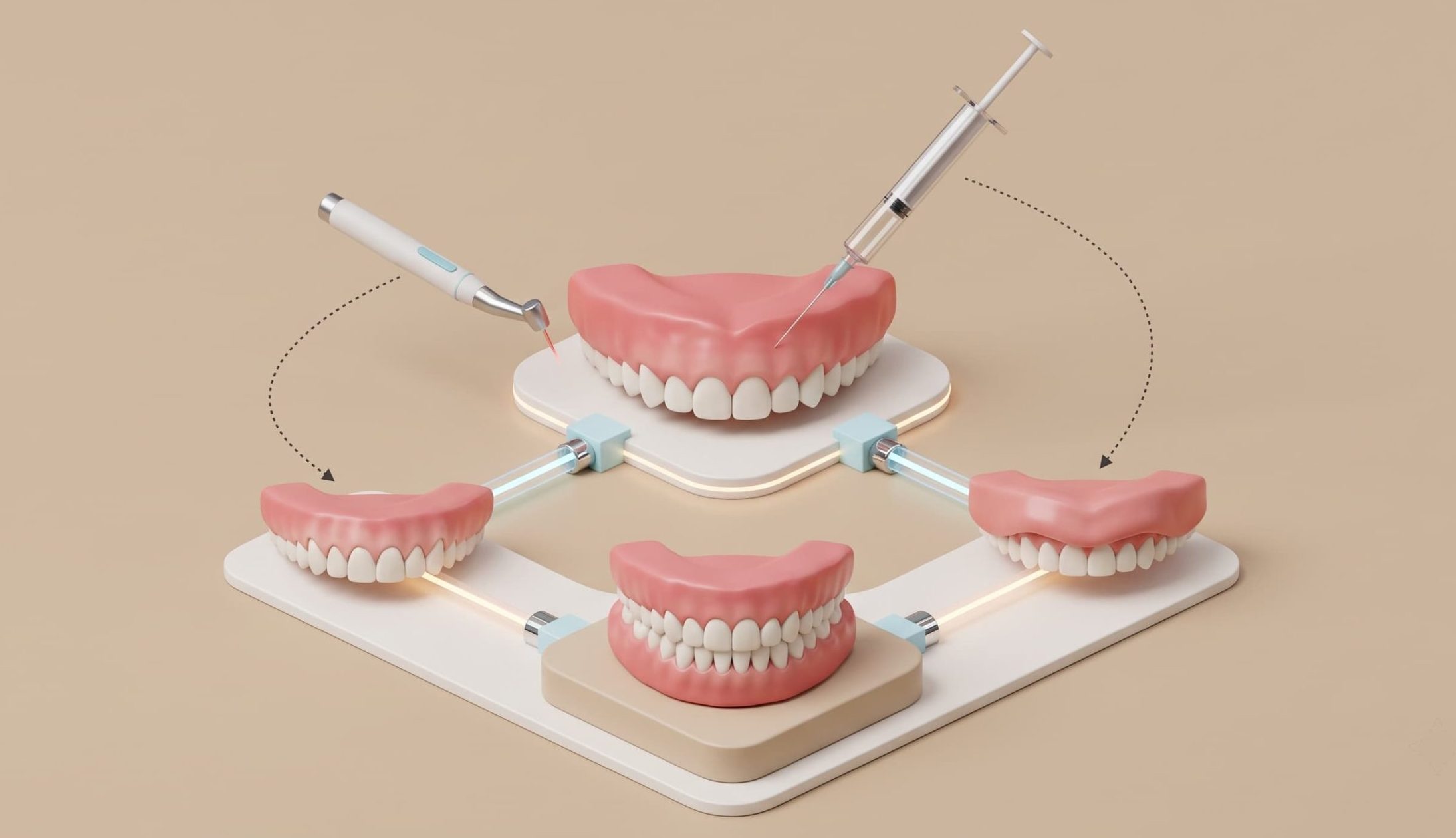
A gummy smile is not one problem with one fix. Some cases come from gum tissue that never fully receded after the teeth erupted. Others come from the jaw bone itself, a short or overactive upper lip, or teeth and bone that sit slightly too far forward. Each of these needs a different correction, and gum contouring, the treatment most people assume solves every gummy smile, only actually addresses one or two of them.
That distinction matters most right before veneers or crowns. Placing porcelain on teeth while the gum line is still in the wrong position locks in a proportion problem rather than fixing it, and changing the gum afterward usually means remaking the restorations. This guide covers what actually causes a gummy smile, how gum contouring differs from crown lengthening, when neither one will help, and why the order of treatment matters before any veneer is designed.
Quick Answer
A gummy smile can come from excess gum tissue that never receded, a jaw that grew too far vertically, a short or hyperactive upper lip, or teeth that sit too far forward, and each cause needs a different fix. Gum contouring or crown lengthening reshapes the gum line when tissue is covering more of the tooth than it should, but a jaw or lip related cause needs a different kind of assessment entirely. Veneers or crowns should be planned only after the gum position is finalized, since correcting it afterward usually means remaking the restorations.
What Counts as a Gummy Smile, and What Actually Causes It
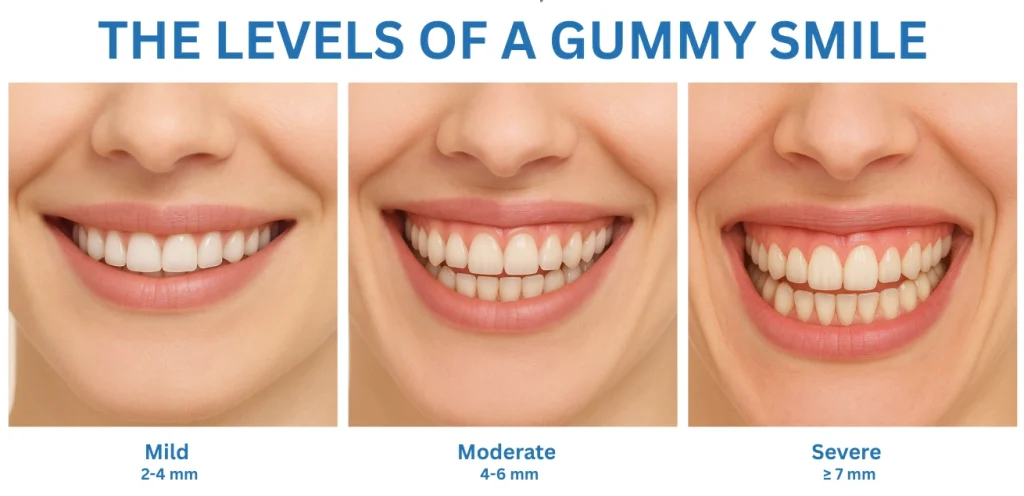
A typical smile shows around 1 to 2 millimeters of gum tissue above the upper front teeth. Once that display reaches 3 to 4 millimeters or more, it is generally classified as a gummy smile in dental literature, though the number itself matters less than what is producing it. Four causes account for most cases, and more than one can be present in the same patient at once.
Altered Passive Eruption
Teeth do not arrive at their final gum position the moment they finish growing. After a tooth erupts, the gum tissue around it is supposed to gradually recede over months and years until it settles at the neck of the tooth, exposing the full clinical crown. In some people this process stalls partway through, leaving the gum sitting higher on the tooth than it should, which makes otherwise normal length teeth look short and stubby. This is the cause most people picture when they think of a gummy smile, and it is also the one gum contouring or crown lengthening handles most reliably, since the underlying teeth are usually the correct length once the excess tissue is removed.
Dentoalveolar Extrusion
Sometimes the problem is not the gum tissue itself but the position of the tooth and the bone around it. If the teeth and their supporting bone have drifted or erupted further forward and downward than they should, the gum line follows them outward, creating the appearance of excess gum even though the tissue itself is a normal proportion. This pattern is usually identified through a bite and jaw relationship assessment rather than a visual gum check alone, and it often needs orthodontic evaluation before any gum or restorative work is considered, since cutting gum tissue on a tooth that is simply positioned wrong does not correct the underlying cause.
Vertical Maxillary Excess
This is a skeletal cause rather than a soft tissue one. The upper jaw bone itself has grown longer in the vertical direction than average, which pushes the entire gum and tooth complex down and increases how much gum shows during a full smile. Gum contouring does not change bone length, so a case that is genuinely skeletal in origin will not respond meaningfully to gum reshaping alone, no matter how carefully it is done. This cause typically requires a maxillofacial or orthodontic opinion, and setting that expectation early avoids a patient being disappointed by a gum procedure that was never going to solve a jaw sized problem.
Short or Hyperactive Upper Lip
Not every gummy smile involves the gum or the jaw at all. Some patients have an upper lip that is naturally shorter than average, or one where the muscle pulls the lip higher than usual during a full smile. In this pattern, the gum tissue and tooth proportions are completely normal, but the lip simply rises further than it needs to and exposes gum that would otherwise stay covered. Gum contouring cannot fix a lip that moves too far, since there is no excess tissue to remove in the first place. This cause is usually managed separately from gum surgery, either left alone if the patient is not bothered by it, or addressed with lip focused options rather than anything done to the gum line itself.
Gum Contouring vs Crown Lengthening: How They’re Different
Within the two causes that gum tissue reshaping can actually help, altered passive eruption and mild dentoalveolar cases where excess tissue is present, there are still two different procedures with different scope.
| Aspect | Gum contouring (gingival recontouring) | Crown lengthening |
|---|---|---|
| What is removed | Excess gum tissue only | Gum tissue and, when needed, a small amount of supporting bone |
| Typical use case | Uneven or slightly excess gum where the bone level underneath is already normal | Cases where bone sits too close to the gum edge and would regrow tissue back to the same position if bone were not also adjusted |
| Healing time | Generally faster, since it is soft tissue only | Longer, since bone remodeling is involved alongside soft tissue healing |
| Permanence | Can relapse if the underlying bone level was not the real issue | More stable long term when bone was the reason gum kept covering too much tooth |
| Relationship to veneers | Final gum shape should be stable before impressions are taken | Same requirement, generally with a longer wait before restorative work begins |
For lip related cases, the options sit outside this table entirely. Botulinum toxin injections or dermal fillers around the upper lip are sometimes used as a non surgical way to limit how high the lip rises when smiling, but these are temporary, with published results showing the effect wearing off within roughly 3 to 6 months and some relapse appearing within the first 6 to 8 weeks in certain patients. A more permanent lip repositioning procedure exists as a surgical alternative, but that decision sits with a specialist assessing the lip and muscle pattern specifically, not with a gum contouring plan.
Why the Order Matters Before Veneers or Crowns
Veneers and crowns are designed around a fixed gum line. The proportions a dentist uses to plan tooth length, shape, and how the smile looks when the lips are at rest all assume the gum edge shown at the time of the impression is the final one.
If gum contouring or crown lengthening happens after veneers are already cemented, the newly exposed tooth structure is porcelain rather than natural tooth, which is a different material to reshape and often means removing and remaking the restoration rather than simply adjusting it. If the gum correction happens first but the tissue has not finished healing and stabilizing before the impression is taken, the veneer can be designed around a gum position that continues to shift afterward, leaving a mismatch that shows up months later as tooth proportions that look slightly off compared to what was approved during the design stage.
This is why a gum related cause identified during smile planning is addressed before any preparation work on the teeth begins, not worked around or layered on top of the restorative plan. The healing window between a gum procedure and taking final impressions is what protects the accuracy of the veneer design, not a step that can be compressed to save a visit.
How Delia Dental Clinic Evaluates a Gummy Smile Before Veneer Planning
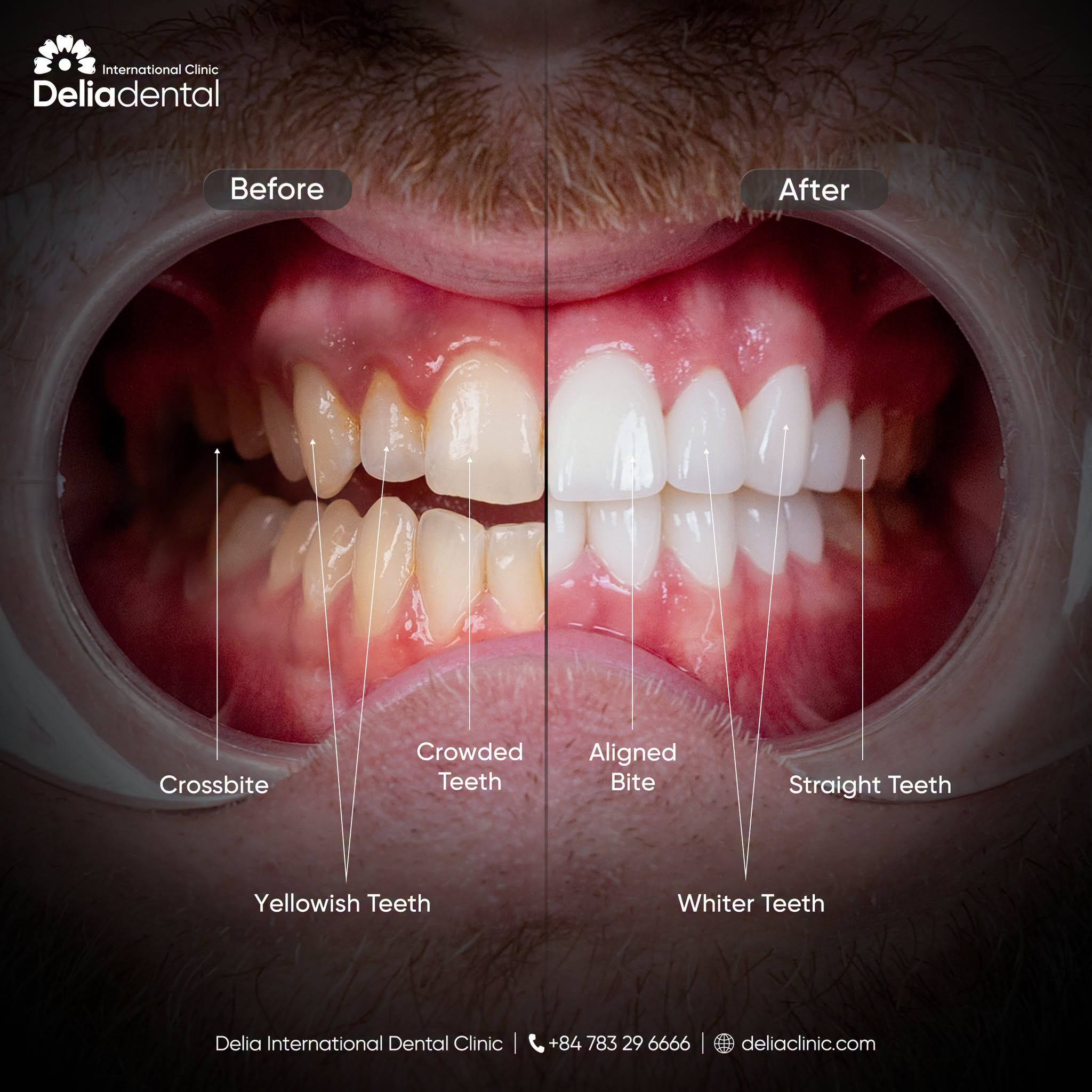
At Delia Dental Clinic, a gummy smile is assessed as part of the same Digital Smile Design process used for any veneer or crown based smile makeover in Hanoi or Ho Chi Minh City, rather than as a separate service booked on its own. The clinical exam looks at how much gum shows during a full smile, whether the underlying teeth appear short because of tissue coverage or because of their actual length, and whether the pattern looks like it involves tooth position, jaw structure, or lip movement rather than gum tissue alone.
When the cause looks primarily like excess gum tissue with a normal bone level, gum contouring can generally be planned as part of the same smile makeover sequence, with the veneer or crown design following once the tissue has settled into its final shape. When the assessment points toward a skeletal, orthodontic, or lip driven cause instead, that is flagged clearly before any restorative planning proceeds, since porcelain work cannot correct a jaw or lip related pattern regardless of how the teeth themselves are designed. Photos and a smiling image sent in advance give the international patient team a preliminary read on which category a case likely falls into, though a full determination depends on an in person examination once the patient is at the clinic.
Send your smile photos to Delia Dental Clinic for an initial assessment
Frequently Asked Questions
Is gum contouring painful, and how long does it take to heal?
Gum contouring is typically done under local anesthesia and most patients describe manageable discomfort in the days afterward rather than significant pain. Soft tissue healing generally settles within one to two weeks, though the gum continues to mature and take its final shape for several weeks beyond that, which is part of why restorative work waits until the tissue has fully stabilized.
Can veneers and gum contouring be done in the same trip?
They can be planned in the same overall visit sequence, but not on the same day, since the gum needs time to heal before an accurate impression can be taken for the veneer. A typical sequence involves the gum procedure early in the trip, a healing interval, and the veneer preparation and fitting once the tissue has settled, which is why the total timeline for a gummy smile case tends to run longer than a veneer case that does not involve gum work.
Is the result from gum contouring permanent?
It depends on what caused the original gum position. When the tissue itself was the excess and the underlying bone level is normal, the result tends to hold long term. When bone was actually close to the surface and was not adjusted alongside the soft tissue, the gum can gradually return toward its earlier position, which is one reason a proper assessment of bone level matters before deciding between gum contouring and crown lengthening.
How do I know if my gummy smile is caused by my gums or my lip?
A rough distinction is whether the excess gum only shows during a full, wide smile or whether it is also visible when the lips are relaxed and slightly parted. A lip driven pattern usually appears mainly during an animated smile and largely disappears at rest, while a tissue or bone related cause tends to show some gum even in a more neutral expression. This is only a general guide, and a clinical exam is what actually separates the categories with confidence.
Can veneers alone make a gummy smile look less noticeable without touching the gum?
To a limited degree, longer veneers can shift the visual proportion of a smile and reduce how gummy it appears, but this only works well when the underlying cause is mild and the gum itself is not significantly excessive. In more pronounced cases, lengthening the veneer without addressing the gum tends to create an unnatural, overly long looking tooth rather than a balanced smile, which is why identifying the actual cause matters even for patients hoping to avoid gum treatment altogether.
Final Thoughts
A gummy smile is a description of what shows during a smile, not a diagnosis on its own, and the difference matters because gum contouring only solves the causes rooted in soft tissue. A case driven by jaw structure or lip movement needs an entirely different kind of correction, and no amount of careful veneer design will compensate for treating the wrong cause.
If you are planning veneers or crowns and think your smile shows more gum than it should, send a few smiling photos to Delia Dental Clinic via WhatsApp or Messenger before booking treatment. The international patient team can give a preliminary read on what the pattern looks like, with the full assessment and treatment sequence confirmed once you are examined in person in Hanoi or Ho Chi Minh City.


