A Canadian dentist keeps the original dental X-Rays file, and the patient is entitled to a copy of it. For a dental trip to Vietnam, the part of that file that matters most is recent imaging, supplied in a format another clinic can open.
Getting your dental X-rays from a Canadian dentist is a standard records request. In Ontario, British Columbia, Alberta and Quebec, the rules differ on response time and copying fees, yet each gives patients a route to a copy of their imaging. The practical problems are usually speed, cost and file format rather than permission.
This guide covers who can ask, what a dental office may charge, which files to request, how to word the request and what to do if records are missing. It also explains what Delia Dental Clinic can review from those files before you book flights to Hanoi or Ho Chi Minh City.
Quick Answer
Canadian patients can ask their dentist in writing for copies of X-rays, CBCT scans and treatment notes, and the dentist keeps the originals. Offices may charge a reasonable copying fee, and in Ontario the dental regulator treats withholding records over an unpaid account as unacceptable. Ask for original digital files, with any CBCT scan as DICOM, and request them weeks before you plan to contact clinics abroad.
Can You Legally Get Copies of Your Dental X-Rays in Canada?
Yes. Patients in Canada can ask their dentist for copies of their dental X-rays and records, and the dentist keeps the original file. The Royal College of Dental Surgeons of Ontario (RCDSO) states that patients can obtain copies of some or all of their dental records, that a request for the complete file must be met, and that the request does not need to come from another dental office. The same guidance says dentists are required by law to keep records, which is why patients receive diagnostic quality duplicates of radiographs rather than the originals.
The position in other provinces rests on different legislation. In British Columbia, the BC Freedom of Information and Privacy Association (FIPA) explains that people have a right to access personal health information held by a private sector healthcare provider. In Alberta, the Health Information Act gives patients a right to their own health information, and the Alberta Medical Association notes that the request should be made in writing and refer to the Act. In Quebec, the Ordre des dentistes du Québec advises patients who change dentist to ask for a copy of the X-rays in their file, which spares them unnecessary retakes.
Other provinces and territories have their own health information or privacy laws. The dentist’s provincial regulatory college is the first place to confirm which rule applies to you.
How Much Can a Canadian Dentist Charge for Copies of Records?
A Canadian dental office may charge a reasonable fee for copies in the provinces covered here, but the fee rule and the response time differ by province. The table summarises what the regulators and provincial bodies state.
| Province | Rule that applies | Response time | Fee rule |
|---|---|---|---|
| Ontario | Personal Health Information Protection Act (PHIPA) | RCDSO guidance: one to two weeks from receipt of the request | Reasonable cost recovery, estimate given first, no regulated amount |
| British Columbia | Personal Information Protection Act (PIPA) | 30 business days from a written request | Minimal fee, written estimate first |
| Alberta | Health Information Act (HIA) | 30 days from a written request | Basic fee of $25 plus scheduled charges, custodian may excuse the fee |
| Quebec | Code de déontologie des dentistes | Ask the office, the sources reviewed do not state a period | Reasonable fees limited to the cost of copying or sending, approximate amount given first |
Ontario has no regulated fee. RCDSO explains that PHIPA allows a fee for duplication and transfer only after the patient receives an estimate, and that the Information and Privacy Commissioner reads reasonable cost recovery as an amount that is not excessive and does not create a financial barrier. Dentists may also reduce or waive the fee. For patients, the practical consequence is to ask for the estimate in writing before approving the release.
British Columbia works on a similar principle. Doctors of BC guidance written for physician offices describes the minimal fee under PIPA as a way to recover some actual and necessary costs without generating profit. The same Act governs private sector dental offices, so the same expectation of a written estimate applies.
Alberta is the one province here with a fixed figure. The Alberta Medical Association’s summary of the Health Information Regulation lists a $25 basic fee, additional scheduled charges and a custodian’s power to excuse payment. Ask the dental office which schedule it applies.
Quebec’s Code de déontologie des dentistes, in the amendment published in the Gazette officielle du Québec, limits fees to the cost of reproducing or transmitting a copy and requires the dentist to give the approximate amount before processing. That amendment dates from the early 2000s, so confirm the current wording with the Ordre des dentistes du Québec.
An unpaid account does not change the answer in Ontario. RCDSO states that withholding the transfer of records over an outstanding balance is unacceptable, because that is a separate business issue.
Which File Formats Should You Ask For?
Ask for original digital files, with any CBCT scan supplied as DICOM, rather than printouts, screenshots or photos of a screen. A clinic planning crowns or implants needs to see each image at the quality it was captured, and a second dentist can only judge what the file still contains.
| Record | Format to request | Why it matters |
|---|---|---|
| Bitewing, periapical and panoramic X-rays | Original digital files, DICOM or full resolution image files | Compressed or screenshot copies lose detail the reviewing dentist may need |
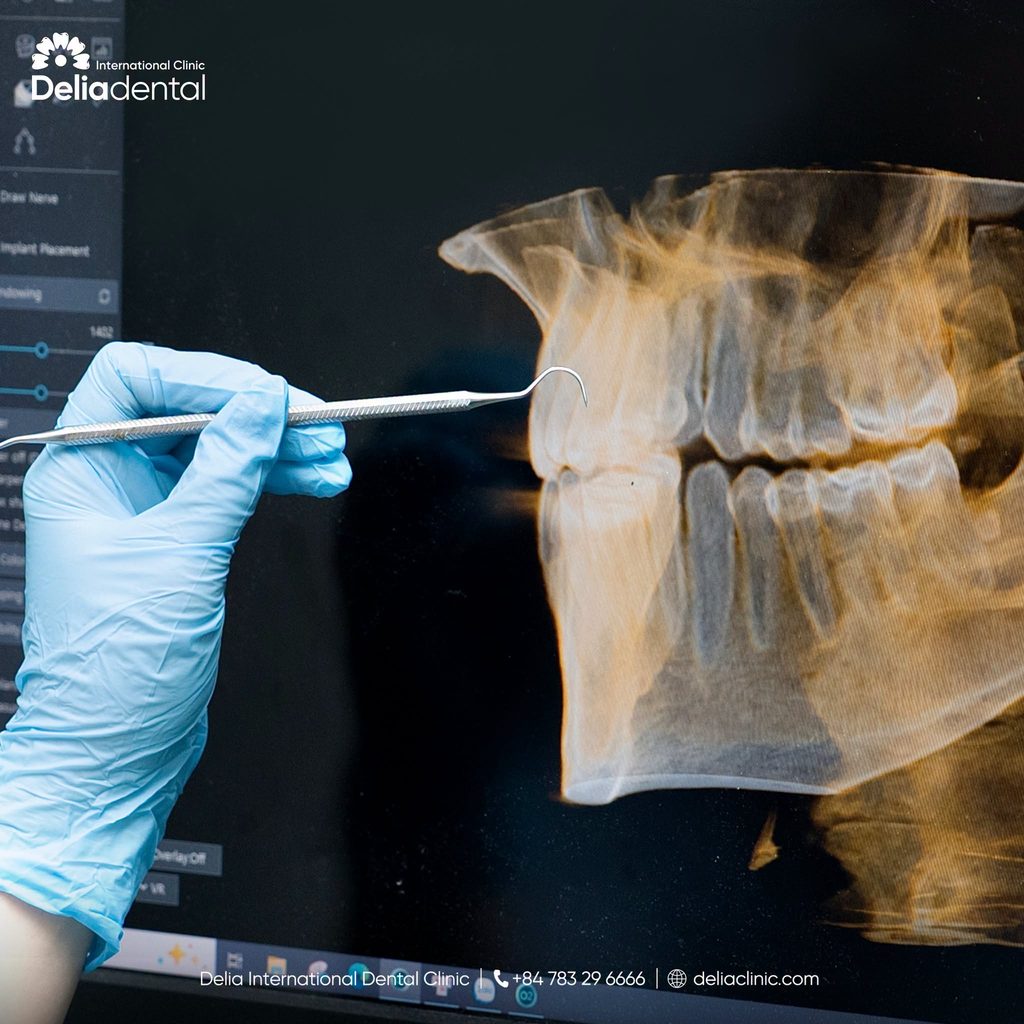
| CBCT scan | DICOM folder, usually several hundred files ending in .dcm | The reviewing dentist can scroll through the scan slice by slice |
| Clinical and smile photos | Original image files | Shows tooth shape, colour and gum line before any treatment |
| Treatment notes and medical history | PDF copy | Records earlier crowns, root canals, implants and the dates of each |
| Existing Canadian quote or treatment plan | PDF or clear photo | Lets a clinic compare like for like |
DICOM is the standard format for dental imaging, and each file carries patient identification, scan parameters and acquisition details alongside the image. One CBCT export can be large. The CBCT reporting service BeamReaders states that a multiple file export typically holds 150 to 600 or more .dcm files, with medium scans running 150 to 400 MB and large scans 400 MB to 1 GB, and that files ending in .xstd or .opt are proprietary rather than DICOM. A USB drive or a secure download link usually handles that size better than an email attachment.
Leave the files unedited once you have them. Delia Dental Clinic’s own guidance on remote review advises against editing, filtering or compressing diagnostic images where avoidable, because original files carry more usable information than screenshots.
How Do You Request Your X-Rays Step by Step?
Make the request in writing, name the exact records and formats, and ask for a fee estimate before the office processes anything. Written requests are required in British Columbia and expected in Alberta, and they leave a record in Ontario and Quebec as well.
- Find out what exists. Ask the office for the date of your last X-rays, whether a CBCT scan was ever taken and whether it holds clinical photos.
- Put the request in writing. Use the office’s records request form, secure patient portal or a signed letter, and state your full name and date of birth.
- List the records and formats. Ask for original digital radiographs, any CBCT scan as DICOM, treatment notes, medical history and your current treatment plan.
- Ask for a fee estimate. Request the amount in writing before the office prepares copies, which is the process PHIPA, PIPA and the Quebec code all describe in some form.
- Choose the delivery method. RCDSO notes that patients can collect the copies or have them sent by registered mail or courier, and that digital radiographs can be supplied on removable media.
- Check the files. Confirm that the dates match what you were told, that the CBCT folder contains many .dcm files and that the images open before you send anything.
A short request can read as follows.
I would like copies of my dental records, including all original digital radiographs, any CBCT scan in DICOM format, my treatment notes, medical history and current treatment plan. Please send an estimate of any copying or delivery fee before processing, and tell me the expected delivery date.
Allow up to 30 days in Alberta and 30 business days in British Columbia. Ontario guidance points to one to two weeks. Request the records well before the date you want to contact clinics abroad, since a missing file found late can delay the whole plan.
What if Your Dentist Is Slow, Refuses or Cannot Find the Records?
A dentist who cannot locate your records should say so and offer a fix. RCDSO instructs Ontario dentists to be honest about which records are unavailable and, where treatment elsewhere depends on them, to offer to retake just the radiographs needed, with a fresh examination, free of charge.
Records can also be genuinely gone. Ontario requires dentists to keep clinical records and radiographs for at least ten years after the last entry, and for at least ten years after a minor turns 18. A dentist you last saw more than a decade ago may no longer hold your imaging, so a gap in old X-rays is not always a sign of a problem.
If an office does not respond, the escalation route depends on the province. In Ontario, RCDSO notes that excessive fees can lead to complaints to the Information and Privacy Commissioner or to the College. In British Columbia, a complaint about response time, an extension or a fee can go to the Office of the Information and Privacy Commissioner. In Alberta, the Office of the Information and Privacy Commissioner publishes a request to access health information form and handles complaints about access. A missing set of old X-rays rarely stops a trip on its own, because implant planning at Delia Dental Clinic includes CBCT taken in clinic.
Which Records Matter Most for a Vietnam Dental Trip?
Recent, dated imaging of the area you want treated matters most, followed by clinical photos and a clear history of previous work. A clinic reviewing a case from abroad uses these to suggest a direction, and the dentist who examines you decides whether anything must be repeated.
Send as many of these as you hold:
- Recent panoramic or periapical X-rays, each with the date it was taken
- The original CBCT folder in DICOM format, if a scan was taken
- Clear photos of your smile, the teeth in question and your bite
- A list of earlier crowns, root canals, extractions and implants, with approximate dates
- Your current Canadian quote or treatment plan
- Your medical history and medication list
- The travel dates you have in mind
An older X-ray is still worth sending with its date. It may not show the site as it is today after an extraction, infection or healing, and the treating dentist decides whether updated imaging is needed. For a closer look at what each type of image can and cannot show, the guide to what an X-ray can confirm before an implant trip lays out the limits, and the implant quote and CBCT scan guide explains why a quote can change once a scan is taken in clinic.
How Does Delia Dental Clinic Use the Records You Send From Canada?
Delia Dental Clinic uses records from home to give a preliminary direction before you travel, and confirms the plan in person at its Hanoi or Ho Chi Minh City branch. Canadian patients can send X-rays, CBCT files where available, dental or smile photos and an existing quote. The international patient team reviews them and suggests a preliminary treatment direction, a likely number of trips and an estimated cost range.
A remote review has limits. Final implant positions, grafting needs and the itemised quote are confirmed after an examination, and implant cases begin with a CBCT scan taken in clinic. Records from your Canadian dentist therefore support early planning, and a missing or older file does not remove the chance to start the conversation.
Delia Dental Clinic has clinics in Hanoi and Ho Chi Minh City. If the DICOM folder is too large to send through chat, ask the team which transfer method they prefer rather than compressing the files yourself.
Frequently Asked Questions
Can the Dental Office Email My X-Rays, and Is It Safe to Forward Them Abroad?
An office can email them, but plain email is not a secure channel for personal health information. RCDSO states that email may be vulnerable to interception and that dentists should avoid it unless they use a secure service with strong encryption, with a CD or USB key as the alternative. Ask whether the office has an encrypted portal or download link. Once you hold the files, share them only with the clinic you are considering, and ask that clinic which channel it recommends for large DICOM folders.
What if My X-Rays Are on Film or Only Exist as Printouts?
Ask the office for a diagnostic quality digital duplicate. RCDSO states that patients are entitled to duplicate radiographs on film, photographic paper or appropriate digital formats, and a duplicate made by the office is a different thing from a phone photo of a film held up to a window. A photo of that kind may support a first conversation, yet a reviewing dentist cannot judge fine detail from it. If the office can only supply film, ask whether it can scan the images at full resolution.
Can I Request X-Rays for My Spouse or Child for a Trip Together?
You can ask, but consent rules apply. RCDSO states that a parent can generally request records for a child under 16, while records for a spouse or a person aged 16 and over normally need that person’s consent before release. For a couple travelling together, each partner should sign their own request. Each person’s records are then reviewed separately by the clinic.
My CBCT Was Taken at an Imaging Centre. Who Do I Ask?
Ask the imaging centre that holds the scan, not only your dentist. BeamReaders notes that CT scans from medical imaging centres are already in DICOM format and that the full contents of the disc should be copied. Request the complete disc or download link, including the folder of .dcm files, and keep any viewer software that came with it as a backup.
Is a Copying Fee Worth Paying if I May Be Scanned Again in Vietnam?
Usually yes when the fee is modest, because the records let a clinic give a preliminary direction before you commit to flights. The estimate you receive before the office processes the request lets you judge the amount first. Delia Dental Clinic takes CBCT in clinic for implant cases, so the copies guide early planning rather than replace that scan. If an estimate looks excessive, ask the office to explain it, and remember that Ontario dentists may reduce or waive the fee.
Can I Send What I Have Now and Add the Rest Later?
Yes, and starting early is sensible. A recent X-ray with photos is enough for the team to begin a preliminary review. Partial records limit what can be assessed, so the team may ask for further files, such as the CBCT folder, before it can suggest a likely number of trips or a cost range.
Records to Collect Before You Plan the Trip
These guides cover the next decisions once your files are in hand.
- The Dental Tourism Medical Checklist: What Health Records to Prepare Before Your Trip to Vietnam
- Dental Tourism in Vietnam for Canadian Patients: Cost, Safety and Treatment Timeline
- How Long Should You Stay in Vietnam for Dental Implants?
- How to Plan Your Holiday and Dental Treatment Together in Vietnam
Final Thoughts
Requesting your own records takes days in some provinces and weeks in others, which makes it the first task to start rather than the last. Delia Dental Clinic can only review what reaches it, and original dated files give the team more to work with than screenshots do.
Send your X-rays, CBCT files in DICOM format, dental photos or existing Canadian quote, together with your travel dates, to Delia Dental Clinic via WhatsApp or Messenger before booking your flight. The international patient team can review what you have, suggest a preliminary treatment direction and estimate the likely number of trips for Hanoi or Ho Chi Minh City. The final plan and quote are confirmed after an in person examination.


