
Picture an Canadian employee with the standard two weeks of vacation who books an implant trip to Vietnam, spends most of it on planes and in the clinic chair, and then learns that the final teeth need a second visit months later, with no leave left to take.
Dental implant treatment in Vietnam usually asks a Canadian employee for two separate blocks of vacation leave instead of one. The first trip covers examination and surgery, the implant then heals at home for a period commonly described as 3 to 6 months, and a shorter return trip covers the final crown or prosthesis. The first limit most patients hit is not the clinic schedule. It is the vacation entitlement on their pay stub.
Canadian entitlement grows with years of service. The Canada Labour Code gives federally regulated employees at least two weeks after one year of employment and three weeks after five consecutive years, and most provinces follow a similar pattern with their own thresholds. Both implant trips, plus long flights with no nonstop service from Canada, fit inside three weeks of vacation across a year but are a tight fit inside two.
This guide covers how many days each trip takes out of your leave, how to use your employer’s vacation year to split the trips, and what to arrange at home between visits. Entitlements and flight schedules change, so confirm current details with your employer and the airline.
Quick Answer
Most Canadian employees need two blocks of vacation leave for a two trip implant case: about 6 to 8 days in Vietnam for surgery, then 5 to 8 days a few months later for the final teeth. Together that usually means two to three weeks of vacation, so a two week entitlement is tight.
How Canadian Vacation Leave Works Across Two Trips
The weeks available for two trips depend on how long you have worked for your current employer and which jurisdiction covers your job, since vacation minimums are set by employment standards law and rise with service. Many employers offer more than the legal minimum through contracts or union agreements, so your own policy matters more than any general table.
Federal and Provincial Minimums
Federally regulated workplaces such as banks, airlines, telecommunications and railways follow the Canada Labour Code, while most other employees fall under their province or territory. The table shows the common pattern, and your province’s employment standards page has the exact current rules.
| Your situation | Commonly stated minimum | Planning note |
|---|---|---|
| Federally regulated job | 2 weeks after 1 year, 3 weeks after 5 consecutive years, 4 weeks after 10 | Vacation pay is 4%, 6% and 8% of wages at each stage |
| Most provincially regulated jobs | 2 weeks after 1 year, 3 weeks after a service threshold, often 5 years | Thresholds differ by province |
| Saskatchewan | 3 weeks from the first year | Higher starting entitlement than most provinces |
| Quebec | Third week commonly reached after 3 years | Shorter threshold than the federal rule |
An employee in the first few years of a job feels this most. Two weeks of vacation is ten working days, and a two trip implant plan commonly needs more than that once flights and an arrival day are counted.
Using Two Entitlement Years
Employees earn vacation over a 12 month entitlement year, and the healing gap between the two trips is often long enough to straddle two of them. A patient can take the first trip near the end of one entitlement year using the balance left, then take the return trip after the next year’s entitlement has been granted. Whether this works depends on your employer’s vacation year and on whether unused days carry over, so ask payroll or HR before relying on it.

How Many Days Each Trip Takes From Your Leave
Plan roughly 6 to 8 days in Vietnam for the first trip and 5 to 8 days for the return trip, and expect the combined total to land between two and three weeks of vacation once flights and weekends are placed on a calendar. These figures are planning arithmetic built on the ranges in the guide to how long to stay in Vietnam for dental implants, not a confirmed schedule for your case.
| Trip | Clinic days | Days to plan in Vietnam | What the trip covers |
|---|---|---|---|
| First trip | 5 to 7 | 6 to 8, including a day to arrive and rest | Examination, imaging, implant surgery, early review |
| Return trip | 3 to 5 | 5 to 8, including an arrival day and one or two buffer days | Final crown, bridge or prosthesis, fitting, bite check |
The healing interval sits between the two rows and is spent at home. Staying in Vietnam longer does not make bone heal faster, so stay long enough for treatment, early review and safe travel, not for the whole healing period.
Flights and the Clock Shift
There is no nonstop service between Canada and Vietnam, and the journey takes roughly 16.5 to 22 hours from Vancouver and 20 hours or more from Toronto, as set out in the guide to flights from Vancouver or Toronto to Vietnam for dental work. Vancouver sits 14 or 15 hours behind Vietnam depending on daylight saving, so a late departure commonly lands one or two calendar days later. A Friday evening departure can therefore arrive on a Sunday, which lets the weekend absorb part of the journey and saves leave days, though the exact timing depends on the route you book.
Full Arch and Larger Cases
The ranges above suit a single implant or a small number of implants. A full arch case is more case specific, because the first trip may run longer and the return trip can need extra time while a prosthesis is fitted and adjusted. Patients with a larger plan should ask for a day estimate for each trip before asking an employer for dates.

Timing the Two Trips Around Your Work Calendar
The most workable pattern is a first trip in a quieter stretch of your work year, a gap of several months at your desk, and a return trip in a second stretch that you flag to your employer early. The return date is the awkward one, because it depends on how healing goes and cannot be fixed on the day of surgery.
Long weekends such as Victoria Day, Canada Day, Labour Day and Thanksgiving can stretch a short block of leave, but they are also the dates colleagues ask for first, and flights are busier around them. The Christmas period and school summer holidays create the same competition. A first trip placed outside those windows has a better chance of approval, and it leaves the return trip more room to move.
Asking Your Employer Early
Ask for both blocks in one conversation, as soon as you know the likely month of surgery. Give a month for the first trip and a window of several weeks for the second, and explain that the exact return date is confirmed after healing is reviewed. A clear window plus a firm end date is usually what a manager needs to plan cover.
If your entitlement falls short, raise the options directly rather than assuming. Some employers allow vacation in advance, unpaid leave for part of the second trip, banked overtime taken as time off, or unused days carried into the next year, and each depends on your contract and workplace policy. Book the second flight late, once the dentist has given a case specific healing window, and choose a flexible fare if you must book earlier.
Dental Work Abroad Aftercare in Canada Between the Trips
The healing months happen at home, so the arrangements that make dental work abroad aftercare in Canada manageable need to be in place before you leave Vietnam the first time. Three things matter most: your records, a local dentist and your written warranty terms.
Dental Records From an Overseas Clinic
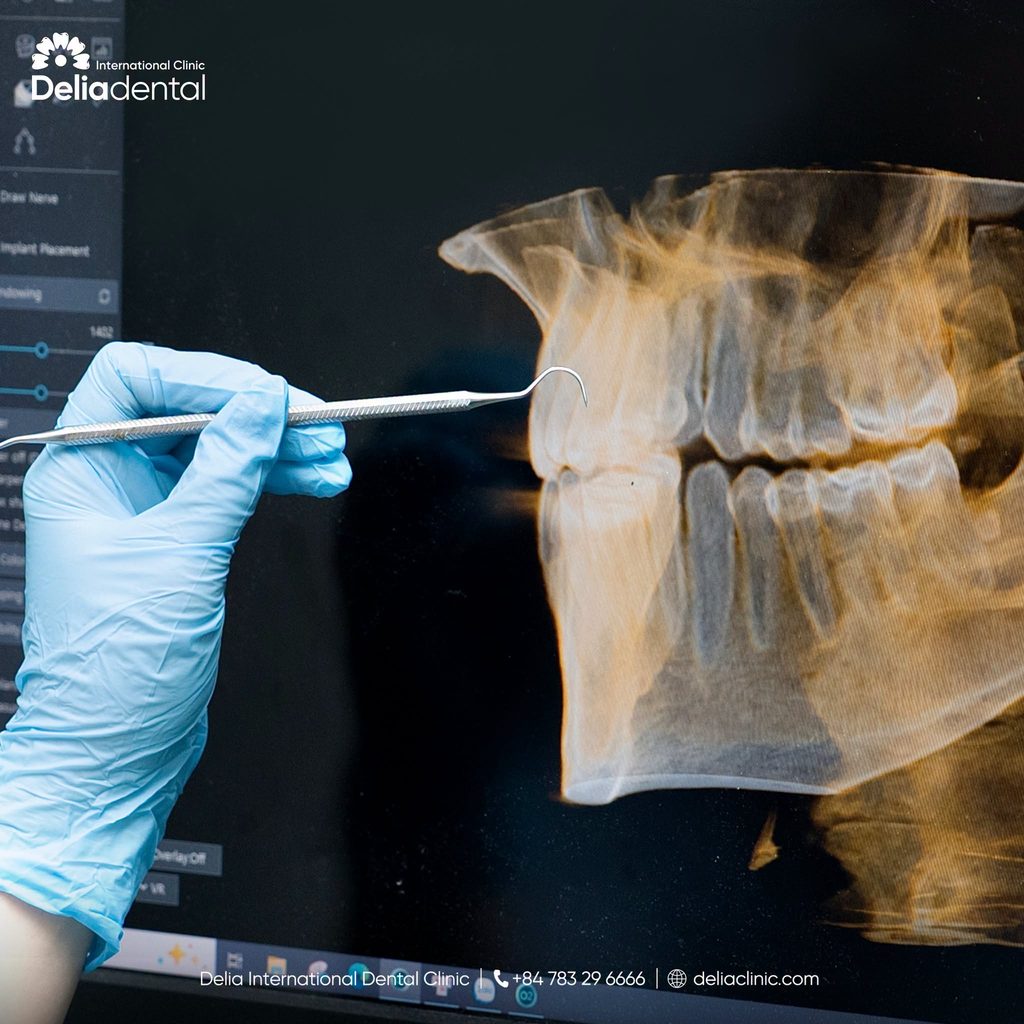
Dental records from an overseas clinic are what let a Canadian dentist understand exactly what is in your mouth without guessing. Before you fly home from the first trip, ask for digital copies of the following.
- The implant passport showing the serial and lot number of each implant placed
- Your CBCT files in a format a dentist’s imaging software can open
- X-rays taken before and after surgery
- Your itemised treatment plan, marked with what was completed
What each document contains is covered in the guide to the implant passport and records you take home.
Local Dentist Implant Maintenance
A Canadian dentist can usually handle routine examinations and hygiene appointments between trips. Some dentists are cautious about working on implants placed elsewhere, which is another reason to arrive with complete records. Anything beyond routine care, particularly work on the crown, bridge or abutment, deserves a question to the clinic first, because a written warranty can be affected by work done outside the clinic. The guide to whether a local dentist can work on implants placed in Vietnam covers what to ask before booking.
Implant Warranty Documents
Implant warranty documents should state which component each term covers, since the fixture, abutment, crown and any full arch bridge carry separate terms. Delia Dental Clinic’s published policy asks for regular checkups, commonly every 3 to 6 months for implant and bridge coverage, and describes claims being assessed through an in person examination, as explained in Delia Dental Clinic’s warranty policy explained.
Two questions are worth asking before the first trip, with the answers in writing. Does the restorative visit count as one of the required checkups, since the return trip often falls inside the same 3 to 6 month rhythm? And how are checkups handled for a patient who lives abroad and cannot attend every interval?
How Delia Dental Clinic Plans Both Trips Around Your Leave
Before you book anything, Delia Dental Clinic can review X-rays, CBCT files or dental photos sent through WhatsApp or Messenger. The international patient team can suggest a preliminary direction, indicate whether the case looks like one implant or several, and estimate how many days each trip is likely to need at the Hanoi or Ho Chi Minh City branch. That estimate is what you take to your employer, so ask for it before requesting dates.
Tell the team which months you can realistically take off and which periods are closed to you, such as year end or a seasonal peak at work, so those limits shape the plan from the start. The clinic lists opening hours across the whole week, so it is also worth asking whether a weekend appointment suits your case when you are trying to save leave days.
The return date is confirmed closer to the time. Once healing has been reviewed, the team can give a firmer window for the final restoration. The final number of trips, the length of each stay and the cost are confirmed after an in person examination, and a remote review is a preliminary direction, not a final diagnosis.
Frequently Asked Questions
Can I Take Both Trips in One Block of Leave?
Not for a conventional implant case, because the implant needs time to integrate with the jawbone before the final restoration is fitted, and that happens over months. Staying in Vietnam for the whole interval would use far more leave than two short trips and would not speed healing. A small number of selected cases may follow earlier restoration protocols, but the clinic confirms that after examining you.
What If My Employer Approves Only One Trip This Year?
The return trip is the flexible one, so the usual solution is to place the first trip late in one vacation year and the second early in the next. Ask the clinic how long the gap can safely run for your case before you commit, since the answer depends on healing and the type of restoration. If the gap cannot stretch, unpaid leave for part of the second trip is worth raising.
Should I Book the Second Flight When I Book the First?
It is usually safer to wait until after surgery, when the dentist can give a case specific healing window. A non refundable fare bought on a rough estimate is a common way patients end up paying change fees. If you must book early, choose a flexible or refundable fare and treat the dates as provisional.
Can a Canadian Dentist Do the Checkups the Warranty Requires?
The published policy describes claims being assessed through an in person examination, and it does not set out how a local checkup is treated. A local dentist can still give you routine care and a record of how the implant is doing, which is useful for your own monitoring. Ask Delia Dental Clinic in writing, before treatment, how checkups work for patients who live abroad.
Will a Longer First Trip Mean I Can Skip the Second?
Usually not. A longer stay cannot replace the healing interval, although selected patients may be suitable for a temporary tooth placed on the first trip. A temporary tooth is not the final restoration, and it may need to stay out of heavy biting contact while the implant heals.
Planning the Rest of the Two Trip Journey
Leave is only one part of a staged case, and a few more guides cover the visa, flight and tax questions that tend to follow once the dates are set.
- Vietnam Visa Buffer for Two-Trip Dental Implants
- Changing Your Flight When Dental Treatment Runs Late
- Canada’s Medical Expense Tax Credit and Dental Work Abroad
Final Thoughts
A staged implant case turns Canadian vacation leave into a calendar problem more than a clinical one. The clinic days are short and the healing months pass at home, so the plan holds up when both blocks of leave are requested early, the second flight is booked late, and the records, local dentist and warranty terms are settled before the first flight home.
Send your recent X-rays or CBCT files, your departure city, the months you can take leave and any existing Canadian quote to Delia Dental Clinic via WhatsApp or Messenger before requesting time off. The international patient team can review what you send, suggest a preliminary treatment direction and help estimate the likely number of days for each trip to Hanoi or Ho Chi Minh City. The final treatment plan and quote are confirmed after an in person examination.


