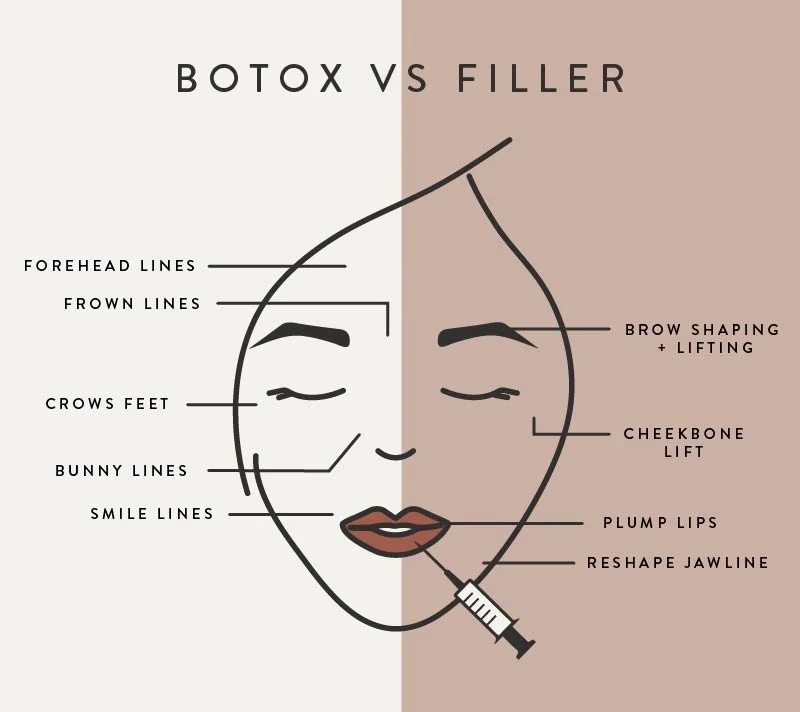
Botox and dermal filler are not the same risk question when a dental trip is involved. Botox carries a low, mostly cosmetic timing concern unless it is injected into the masseter muscle for jaw clenching, in which case it can change bite force during the same weeks a dentist may be adjusting your bite. Filler carries a different and better documented risk: published case reports describe facial filler becoming infected after a nearby dental procedure, through bacteria travelling from the mouth into the injected area.
Delia Dental Clinic does not provide Botox or dermal filler treatment. This guide is for patients who plan to book those treatments with a separate medical spa or injector while also completing dental work on the same Vietnam trip, and it focuses on how to sequence the two safely.
The rest of this guide separates what the evidence supports for filler, what it supports for Botox, and which order tends to reduce the chance that one treatment complicates the other.
Quick Answer
Botox and dental treatment can usually be combined on the same trip with simple spacing, except when Botox targets the masseter muscle for jaw clenching, which can shift bite force during the weeks a dentist may be checking or adjusting your bite. Dermal filler carries a documented infection risk when a dental procedure is done in the same facial region soon before or after injection, so most published guidance and clinical trial protocols keep at least two weeks between the two.
Why Botox and Filler Are Not the Same Risk Question
Botox and dermal filler work through different mechanisms, and that difference is the reason they do not carry the same timing rule around dental work. Grouping them together as one category of “cosmetic injectable” hides the part of the evidence that actually matters for planning a trip.
Botox for Wrinkles Versus Botox for the Masseter Muscle
Botox injected into forehead lines, crow’s feet or frown lines works on small muscles that have no direct connection to chewing or biting, so it carries little documented interaction with dental treatment beyond routine bruising precautions. Botox injected into the masseter muscle is a different case, because that muscle is one of the main muscles used for biting and chewing.
A single-arm clinical study measuring bite force before and after masseter Botox for bruxism found that occlusal bite force dropped from an average of 500.5 newtons at baseline to 422.0 newtons by four weeks after injection, alongside a reduction in masseter muscle thickness measured by ultrasound. That change matters specifically for patients who are also having a crown, bridge, denture or implant restoration adjusted for bite during the same period, since the muscle producing the bite force is actively changing while the dental work is being fitted.
Dermal Filler and the Infection Pathway
Dermal filler carries a different and more specific risk: infection introduced through a nearby dental procedure. A 2021 case report in Case Reports in Dentistry described a 44-year-old patient who developed an infected facial filler after dental treatment on an upper premolar, with the authors attributing the mechanism to bacteria from the mouth travelling through the bloodstream to the filler material and adhering to it. A separate 2015 review in the Journal of Maxillofacial and Oral Surgery, examining dental procedures as a risk factor for filler complications, found that dental work performed near an existing filler can trigger infections that closely mimic a dental abscess, which then require prolonged antibiotic treatment, drainage or removal of the filler itself.
This is not a rare curiosity confined to one paper. A separate case series published in the Journal of Oral and Maxillofacial Surgery documented a broader pattern of infected facial fillers linked to dental sources, and a case report involving a dental local anaesthetic injection described a similar filler complication traced back to the dental appointment itself. The mechanism is consistent across these reports: the filler material can act as a site where bacteria settle once they reach it, whether the dental work happens before or after the injection.
What the Evidence Says About Filler and Dental Procedures
The clearest real world benchmark for spacing filler and dental work comes from clinical research design rather than marketing guidance. A dermal filler trial registered on ClinicalTrials.gov excluded participants with planned dental procedures, including teeth cleaning, tooth extraction and gum grafts, in the two week period before and after filler treatment. That exclusion criterion reflects the same infection concern described in the case reports above, applied as a firm research rule rather than a general suggestion.
| Dental procedure | Why it raises filler infection concern | Reasonable spacing to discuss with your injector |
|---|---|---|
| Routine cleaning or checkup | Low bacterial disturbance, lowest concern | Same day is commonly considered acceptable |
| Fillings, crown or veneer preparation | Some bacterial exposure near the gum line | A few days of separation is a reasonable starting point |
| Tooth extraction | Open healing site with direct bacterial exposure | At least two weeks, based on published exclusion criteria |
| Implant placement or bone grafting | Surgical site, swelling and infection risk overlap with facial tissue | At least two weeks, longer if swelling has not resolved |
| Active dental infection or abscess | Bacteria already present and can spread through the bloodstream | Filler should wait until the infection is fully treated |
This table reflects the pattern described in the sources above rather than a single official protocol, since no medical body has issued a universal mandatory interval. The two week window appears repeatedly in both the case report literature and the clinical trial exclusion criteria, which makes it a reasonable reference point rather than an arbitrary number.
If filler is already in place and dental work cannot be delayed, the case reports do not suggest dissolving the filler as a routine precaution. Hyaluronic acid filler can be dissolved with hyaluronidase if an infection or complication does occur, with effects typically becoming apparent within 24 hours, but that is a treatment for a problem that has already developed rather than a preventive step every patient needs before dental work.
What the Evidence Says About Masseter Botox and Dental Work
Masseter Botox and dental work interact through bite mechanics rather than infection, which changes what matters for sequencing. Because the bite force reduction from masseter Botox builds over the first few weeks after injection and is not instant, a dentist adjusting a crown, bridge, denture or implant restoration during that window is working with a bite that may still be settling into its new pattern.
For patients not having any bite altering dental work, standard Botox for wrinkles carries only routine precautions, such as avoiding lying down for several hours after injection and avoiding pressure on the treated area, none of which are specific to dental appointments. For patients having a crown, veneer, bridge, denture or implant restoration fitted or adjusted, the more relevant question becomes which order lets the dentist confirm a stable bite before or after the muscle activity changes, and that is a conversation to have directly with the treating dentist rather than a rule to apply the same way for every patient.

Which Should You Book First: Dental Work or Injectables?
The right order depends on which stage of dental treatment is involved, and the two risk types above point to different answers depending on the case.
| Dental trip scenario | Suggested sequencing | Reasoning |
|---|---|---|
| Cleaning, whitening or a routine checkup | Either order is generally reasonable | Minimal bacterial disturbance and no bite altering step |
| Crown, veneer or bridge preparation and fitting | Complete the dental work first, then book filler after a short interval | Reduces bacterial exposure near the injection site during active dental work |
| Tooth extraction | Wait at least two weeks after extraction before filler in the same facial region | Matches the interval used in filler trial exclusion criteria |
| Implant placement or bone grafting | Complete dental work first, wait for swelling to resolve before filler | Surgical healing and facial swelling overlap with the injection area |
| Masseter Botox for jaw clenching, alongside a bite adjustment | Discuss timing directly with your dentist before booking either | Bite force is still changing in the weeks after injection |
| Botox for wrinkles only, no bite altering dental work | Either order is generally reasonable | No documented interaction with routine dental procedures |
Patients combining a longer dental trip with cosmetic injectables should also read the guide to what to do in Vietnam during a 10 day dental trip for how to structure downtime around appointments generally, since spacing filler or Botox around dental visits is one part of a wider trip schedule.
What a Medspa or Injector Should Know Before Treating You on a Dental Trip
An injector who does not know you are also having dental work cannot factor that into their own precautions, so the responsibility to share this information sits with the patient. A short list of details covers what matters:
- The exact dental procedure, including whether it involves extraction, implant surgery or bone grafting
- The date of the dental procedure relative to the planned injectable appointment
- Whether any swelling, bruising or healing is still visible in the facial area
- Whether the dental work is expected to change your bite, such as a new crown, bridge or implant restoration
- Any antibiotics prescribed around the dental procedure, since the timing of those can also matter to the injector
An injector working without this information may proceed as if no dental treatment were happening at all, which is exactly the situation described in the case reports where filler complications were traced back afterward to a dental appointment the injector had not been told about.
What Delia Dental Clinic Can and Cannot Advise On
Delia Dental Clinic does not provide Botox or dermal filler treatment, and the clinic does not partner with or recommend a specific medical spa or injector for these services. What the dental team at the Hanoi or Ho Chi Minh City branch can do is confirm the dental side of the timing question: whether a procedure involves extraction or surgery, when swelling is expected to resolve, and whether a bite adjustment is planned that would benefit from being finished before an injectable appointment.
Patients planning both dental treatment and cosmetic injectables on the same Vietnam trip should treat these as two separate bookings with two separate providers, and should share the full picture with each one rather than assuming either provider already knows about the other appointment. If your dental plan includes extraction, implant placement or a bite adjustment, sending your treatment schedule to Delia Dental Clinic in advance allows the team to tell you which days involve surgical healing, so you can share that information with your chosen injector when arranging the separate appointment.
Frequently Asked Questions
Can I get Botox for wrinkles the same day as a dental cleaning?
For a routine cleaning with no extraction or surgery involved, the same day is generally considered low risk based on the sources reviewed here, since a cleaning does not create the kind of bacterial exposure linked to filler complications, and standard forehead or crow’s feet Botox has no documented interaction with dental cleanings. If the cleaning uncovers an infection or requires an unplanned extraction, it is worth checking with your injector before proceeding with Botox that day.
How long should I wait to get lip or cheek filler after a tooth extraction?
Based on the exclusion criteria used in a dermal filler clinical trial and the infection mechanism described in published case reports, at least two weeks between a tooth extraction and filler injection in the same facial region is a reasonable starting point. Patients with a more complex extraction, ongoing swelling or an infection at the extraction site should wait longer and confirm healing with their dentist before booking the injectable appointment.
Will masseter Botox affect my new crown or implant restoration?
It can, because masseter Botox gradually reduces the bite force produced by one of the main jaw closing muscles over the weeks following injection. If a dentist is adjusting a crown, bridge, denture or implant restoration for bite during that same window, the bite may still be settling as the muscle activity changes. Raising this directly with your treating dentist, and telling your injector about the planned dental work, allows both providers to plan around it rather than treating the two appointments as unrelated.
Does Delia Dental Clinic offer Botox or filler treatments?
No. Delia Dental Clinic focuses on dental treatment and does not provide Botox, dermal filler or other injectable cosmetic services, and does not have a specific partner medical spa to recommend for these treatments. Patients wanting to combine dental work with injectables need to book that separately and share their dental schedule with the injector they choose.
What if I already have filler and need dental work done urgently?
An urgent dental problem, such as an infection or a broken tooth, should not be delayed to protect existing filler, since untreated dental infection carries its own risks and can itself be a source of the bacterial spread described in the filler case reports. Tell your dentist that you have filler in the treatment area so they are aware, and mention the dental treatment to your original injector afterward in case any monitoring is advisable.
Can I combine HIFU or other skin treatments with dental work on the same trip?
The sources reviewed for this guide focus specifically on Botox and dermal filler, not HIFU or other energy based skin treatments, and Delia Dental Clinic does not provide any of these services. If you are combining several medical spa treatments with dental work, ask your chosen provider directly how they sequence their own treatments around dental appointments, since that guidance can differ by technology and is outside what a dental clinic can confirm.
Planning the Rest of Your Trip
Sequencing injectables around dental work is one part of a longer Vietnam trip, and the guides below cover related planning questions.
- Wellness and Spa Spots in HCMC and Hanoi for Dental Tourism
- What to Do in Vietnam During a 10 Day Dental Tourism Trip
- The Dental Tourism Medical Checklist: What Health Records to Prepare Before Your Trip to Vietnam
- Flying After Dental Implant Surgery
Final Thoughts
Botox and filler raise different questions around a dental trip, and treating them as one category misses the part of the evidence that matters. Filler carries a documented infection risk tied to nearby dental procedures, generally managed with at least two weeks of spacing, while Botox mostly matters when it targets the masseter muscle during a period when a dentist is also adjusting your bite.
Send your dental treatment plan and dates to Delia Dental Clinic via WhatsApp or Messenger, and the team can confirm which days involve surgical healing so you can share that information with the medical spa or injector you book separately.


