Regional and rural Australians have access to far fewer dentists per person than people living in Sydney, Melbourne, or Brisbane, and that gap is a documented workforce problem rather than a perception. According to the Australian Institute of Health and Welfare, major cities have close to 70 dentists per 100,000 people in the private sector, while the most remote parts of the country sit closer to 20 per 100,000. For someone living outside a capital city, that gap usually shows up as a long wait for an appointment, a multi hour drive to reach a clinic, or both.
This is the actual starting point for why a growing number of regional Australians are looking at Vietnam for dental treatment, rather than simply chasing a lower price. When the nearest available dentist is months away or several hours down the highway, comparing that against a direct flight to Ho Chi Minh City or Hanoi from a state capital becomes a more reasonable calculation than it would be for someone who already has three dental practices within walking distance.
This article covers how uneven the dental workforce actually is across Australia, why that specifically affects wait times and travel burden for regional patients, and where Perth, Brisbane, and Melbourne fit into this picture as departure points rather than as places facing a shortage themselves.
Quick Answer
Regional and remote Australians have access to roughly a third of the dentists per person that major cities have, based on AIHW workforce data, and close to 119,000 people do not have a general dental service within a 60 minute drive according to the Royal Flying Doctor Service. For patients already facing long waits or long drives at home, a direct flight to Vietnam through Perth, Brisbane, or Melbourne can end up being a shorter and more predictable path to treatment than waiting for a regional appointment.
How Uneven Australia’s Dental Workforce Really Is
The dentist shortage in Australia is not a shortage everywhere. Nationally, the workforce numbers are close to balanced, but that average hides a sharp divide based on where people actually live. AIHW data shows private sector dentist coverage at around 56.9 to 69.5 per 100,000 people in major cities, compared with roughly 20.5 per 100,000 in the most remote areas of the country. That is close to a threefold difference in access between a resident of inner Sydney and a resident of outback Queensland or the Kimberley region of Western Australia.
The Royal Flying Doctor Service has measured this gap directly. Using a 60 minute drive time as a reasonable benchmark for access to a general dental service, RFDS research found close to 119,000 Australians fall outside that range entirely. For these patients, a dental appointment is not a short trip to the next suburb. It is a planned journey, often requiring time off work, a full day of travel, or an overnight stay in a larger town just to see a general dentist, before any specialist referral for something like an implant or a full arch case even enters the picture.
The problem also extends beyond dentists themselves. Allied dental practitioners, including dental hygienists, dental therapists, oral health therapists, and dental prosthetists, are projected to see their national shortfall widen from around 227 in 2025 to around 763 by 2038. Regional and rural areas, which already rely more heavily on these allied roles to extend limited dentist capacity, are the areas most exposed to that widening gap.
Why This Pushes Wait Times and Travel Burden Higher for Regional Patients
A workforce gap of this size does not stay abstract for long once someone actually needs treatment. AIHW research confirms that oral health outcomes decline as remoteness increases, and part of the reason is straightforward: when there are fewer practitioners per person, appointment slots fill up further in advance, and more complex cases like extractions, root canals, or implant consultations get pushed even further down a shorter queue of specialist availability.
For a straightforward checkup, this might mean a few extra weeks of waiting. For a case involving multiple missing teeth, a full arch rehabilitation, or anything requiring both a dentist and a specialist referral, the wait and the travel add up in a way that starts to compete directly with the time and planning a trip to Vietnam would require. A patient in regional Western Australia weighing a four to six week wait for a specialist appointment two hours away, followed by a second visit for treatment, is not comparing a fast local option against a slow overseas one. In many cases, they are comparing two options that both require real planning, one of which happens to include a flight.
Perth, Brisbane, and Melbourne as Gateway Cities
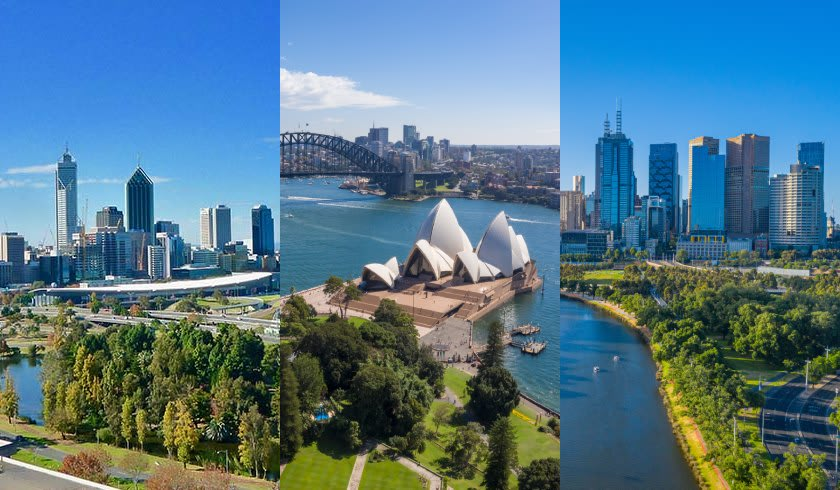
It is worth being precise here. Perth, Brisbane, and Melbourne are not the parts of Australia experiencing a dentist shortage. As major capital cities, they sit on the well supplied side of the access gap described above, with dentist density closer to the 56.9 to 69.5 per 100,000 figure than to the remote area figure. The shortage described in this article applies to the regional, rural, and remote areas surrounding these cities, not to the cities themselves.
What Perth, Brisbane, and Melbourne actually offer this group of patients is something more practical: they are the nearest international airport with a direct or reasonably short connecting route to Vietnam. A patient in regional Western Australia is far more likely to be already routing through Perth for any long distance travel, medical or otherwise, than through Sydney. The same applies to regional Queensland patients routing through Brisbane, and regional Victorian or southern New South Wales patients routing through Melbourne. These cities function as the exit point from a low access region, not as an example of the access problem.
This distinction matters for how a regional patient should actually think about the decision. The relevant comparison is not “my city versus Vietnam.” It is “my current wait time and travel burden at home versus a flight from my nearest capital city plus treatment in Vietnam,” which is a very different calculation once the real numbers for each side are put next to each other.
When Flying to Vietnam Actually Makes Sense for This Group
Flying internationally for a single filling or a routine checkup rarely makes sense for anyone, regional or otherwise, and this guide is not suggesting it does. The calculation changes for cases that already require significant local wait times, multiple appointments, or a referral to a specialist that is not readily available near home. Full arch implant treatment, multiple missing teeth, extensive crown or veneer work, and cases that would otherwise mean a long series of trips to a regional specialist over many months are the situations where comparing local wait times against an international trip starts to make practical sense.
For patients weighing this option, the flight and route details from Perth, Brisbane, and Melbourne, including current direct services, fares, and booking timing, are covered in full in Delia Dental Clinic’s dedicated Australia to Vietnam flight guide rather than repeated here. What matters for this article is the decision point that comes before booking any flight: understanding whether the treatment needed is substantial enough, and the local wait long enough, to justify the trip in the first place.
Delia Dental Clinic’s Process for Regional Australian Patients
Delia Dental Clinic, with branches in Hanoi and Ho Chi Minh City, works with international patients before they book any flight by reviewing available X-rays, dental photographs, or existing treatment plans sent through WhatsApp or Messenger. For a regional patient who may not have easy access to a specialist for an initial opinion, this remote step can provide a preliminary sense of the treatment involved and the likely number of visits required, which is useful information before comparing it against a local wait time.
This initial review is preliminary and does not replace an in-person examination. What it does provide is enough information for a regional patient to weigh a realistic estimate of the Vietnam option against the wait and travel they are already facing at home, rather than comparing a known local delay against an unknown overseas process.
Frequently Asked Questions
Is the dentist shortage the same across every part of regional Australia?
No. The gap between major cities and remote areas is well documented, but the degree of shortage varies by state and by how remote a specific area is. Inner regional areas generally have better access than outer regional or remote areas, and the workforce data referenced in this article reflects national averages across these categories rather than a single figure that applies identically everywhere.
Why not just travel to a bigger Australian city instead of flying to Vietnam?
For many regional patients, this is already the default option, and it comes with its own cost in flights, accommodation, and time off work to see a specialist in Sydney, Melbourne, or another capital. Once a patient is already planning a multi day trip and cost around a domestic flight and city accommodation, comparing that against a trip to Vietnam for a case that would otherwise need multiple domestic trips becomes a more direct comparison than it might first appear.
Does this apply to routine dental care or only major procedures?
This is really a consideration for more substantial treatment, such as full arch implants, extensive restorative work, or cases requiring specialist referral that is not readily available locally. Routine checkups and minor treatment are almost always better handled locally or during a domestic visit, since the time and cost of international travel is not proportionate to a small procedure.
How does a regional patient get an initial idea of cost and treatment scope before committing to anything?
Sending existing X-rays, photographs of the affected teeth, or any prior specialist notes through WhatsApp or Messenger allows Delia Dental Clinic’s team to give a preliminary sense of the treatment involved. This is not a final diagnosis or quote, but it gives a regional patient enough information to decide whether pursuing the option further is worthwhile before any flight is booked.
Which Vietnamese city should a Western Australian patient fly into?
Perth’s most practical connection is currently to Ho Chi Minh City. Patients preferring Delia Dental Clinic’s Hanoi branch from Perth would need to connect either domestically within Vietnam after landing in Ho Chi Minh City or via another Australian gateway city. The full route and timing details are covered in Delia Dental Clinic’s Australia to Vietnam flight guide.
Final Thoughts
The dental workforce gap between Australia’s major cities and its regional and remote areas is a measurable, ongoing issue, not a matter of impression. For patients already facing long waits and long drives for treatment that involves more than a routine checkup, comparing that reality against a direct flight to Vietnam through Perth, Brisbane, or Melbourne is a reasonable exercise, not an extreme one.
If you are a regional Australian patient facing a long wait or a limited local specialist option, send your X-rays, dental photographs, or any existing treatment notes to Delia Dental Clinic via WhatsApp or Messenger. The team can give a preliminary sense of the treatment involved and how it might fit around a trip to Hanoi or Ho Chi Minh City, before you compare it against what is currently available closer to home.


