Patients in the USA looking at dental treatment abroad usually check Mexico or Costa Rica first, since both sit a short flight away and are already well established for dental tourism. Vietnam is not the obvious first choice for an American patient, but it becomes worth comparing once the treatment plan is substantial: multiple implants, a full arch case, or several crowns and veneers completed in one visit. A single filling or one straightforward crown rarely justifies a 15 hour flight.
This guide covers what USA patients should know before comparing Vietnam seriously: treatment costs against USA private dental fees, the one nonstop flight route currently available, e-visa requirements, realistic timelines, and what to check before choosing a clinic.
At Delia Dental Clinic, USA patients can send X-rays or dental photos before travelling to receive an initial treatment direction and cost estimate. That makes the comparison against an existing USA or Mexico quote more concrete before anyone books a flight.
Quick Answer
Vietnam is worth considering for USA patients who need multiple implants, a full arch case, several crowns or veneers in one visit, a full smile makeover, or treatment their USA dental plan will not come close to covering. Vietnam Airlines operates the only nonstop route between the USA and Vietnam, San Francisco to Ho Chi Minh City, around 3 to 4 flights a week, taking roughly 15 to 16 hours. USA passport holders need a Vietnam e-visa before travelling, since the USA is not on Vietnam’s visa exemption list. Crowns and veneers often fit into one trip of around five to ten days, while implant cases usually need two trips with a healing period of roughly three to six months before the final restoration. Mexico remains closer and often more practical for smaller cases, but Vietnam becomes a realistic comparison once the treatment plan is large enough.
Why USA patients look at dental treatment abroad
Dental coverage in the USA is uneven, and it has stayed uneven for years rather than improving. The CareQuest Institute’s State of Oral Health Equity in America survey puts the share of USA adults without any dental insurance at roughly 27 percent, close to 72 million people, a rate nearly three times higher than for general health insurance. Even Medicare and Medicaid do not close the gap: about 31 percent of Medicare recipients and 33 percent of Medicaid recipients have no dental coverage at all.
For patients who do carry a dental plan, coverage often does not stretch far once real treatment starts. Most private plans cap annual benefits somewhere between $1,000 and $1,500, a ceiling that has barely moved in decades and is usually used up by a single crown or one implant. A private implant in the USA, crown included, commonly runs $3,000 to $5,000 once extractions, bone grafting or a full arch approach are factored in. Multiple crowns or a full set of veneers can push a treatment plan into five figures quickly, and none of that reflects the plan’s annual cap.
This is the point where some USA patients start comparing options outside the country rather than treating it as a passing thought. Vietnam has become one of the destinations patients look at, mainly for lower cost on complex procedures, the use of internationally recognized implant brands, English speaking clinic support, and the option to combine treatment with a planned trip.
As with any major purchase abroad, the real question is not whether Vietnam is cheaper in general. It is whether the total cost, treatment plus travel, works out lower than paying for the same plan at home.
Is Vietnam worth the long trip from the US?
Vietnam is not the nearest dental tourism option for USA patients. For many Americans, Mexico or Costa Rica are easier to reach, especially for smaller procedures or cases that need frequent follow up visits close to home.
Vietnam still becomes worth comparing when the treatment plan is large, planned well in advance, and not urgent. The strongest cases are usually implants, full arch restorations, multiple crowns, veneers, or full mouth rehabilitation, where the potential savings have enough room to absorb the cost of a long haul trip.
| Case type | Is Vietnam worth considering? | Why |
|---|---|---|
| Cleaning or simple filling | Usually no | Travel cost is likely higher than the savings |
| One crown | Case-dependent | More practical if combined with other treatment or travel |
| Multiple crowns | Often yes | Batching several teeth can improve the cost difference |
| Porcelain veneers | Often yes | Smile makeover cases can justify a planned trip |
| Single implant | Case-dependent | Compare full treatment cost, not implant-only price |
| Multiple implants | Often yes | Larger cases may offset long-haul travel costs |
| All-on-4 or All-on-6 | Often worth comparing | Full-arch treatment is a high-value case |
| Full-mouth rehabilitation | Strong candidate | Complex treatment may create a larger cost difference |
USA patients with dental pain, swelling, infection or trauma should get local care first. Vietnam works as a planned dental trip, not an emergency option.

Vietnam vs Mexico for USA dental patients: which fits which case
Mexico is the destination most USA patients think of first, and for good reason. It sits a short flight from most of the country, follow up visits are easy to arrange, and the market is well established. For a single crown, a quick cosmetic touch up, or a case that needs frequent check ins, Mexico is usually the more practical choice.
Vietnam competes on a different basis. The longer journey means it generally needs a bigger treatment plan to be worth it, so the comparison is less about distance and more about scale: multiple implants, full arch work, or a case complex enough that the cost gap outweighs the extra travel time.
| Treatment plan | Mexico may fit better when | Vietnam may be worth comparing when |
|---|---|---|
| Check up or filling | The patient wants a short, low cost trip | Usually not worth long haul travel |
| One crown | The case is simple and follow up matters | The crown is part of a larger treatment plan |
| Several crowns | The patient wants a quick regional trip | Multiple crowns are batched together for a bigger cost gap |
| Veneers | The patient prioritizes a fast cosmetic trip | The patient wants a planned smile makeover with time for design and trial |
| Single implant | Follow up convenience is the priority | There is a clear full package quote and a manageable travel plan |
| All-on-4 or All-on-6 | The patient prefers a closer destination | The case is high value and the patient accepts two stage treatment |
| Full mouth rehabilitation | Frequent local follow up is needed | The case is complex enough for detailed planning and a larger cost comparison |
For our detailed side by side comparison, including specific price ranges and typical stay lengths, see Vietnam vs Mexico dental tourism for USA patients.
Dental treatment cost in Vietnam vs the US
Before comparing individual prices, think about total trip value rather than per tooth cost. A low headline price does not make a dental trip worthwhile on its own. The treatment plan needs to be large enough to justify flights, accommodation, recovery time and time away from work.
Implants
The prices below cover the implant post and abutment only. This is not the same as the final full arch, All-on-4, All-on-6 or full mouth package price.
| Implant brand | Origin | Standard price | Warranty |
|---|---|---|---|
| Osstem | South Korea | $700 | 10 years |
| Dentium | USA | $800 | 15 years |
| HIOSSEN | USA | $1,200 | 30 years |
| ETK | France | $1,300 | 30 years |
| SIC | Switzerland | $1,400 | 30 years |
| Straumann SLA | Switzerland | $2,000 | Lifetime |
| Straumann SLActive | Switzerland | $2,300 | Lifetime |
A private dental implant in the USA, crown included, commonly costs $3,000 to $5,000 or more, and that figure is usually before extractions, bone grafting or a full arch approach are added. This is exactly why the comparison needs to sit at the full treatment plan level rather than at the implant post.
Crowns and veneers
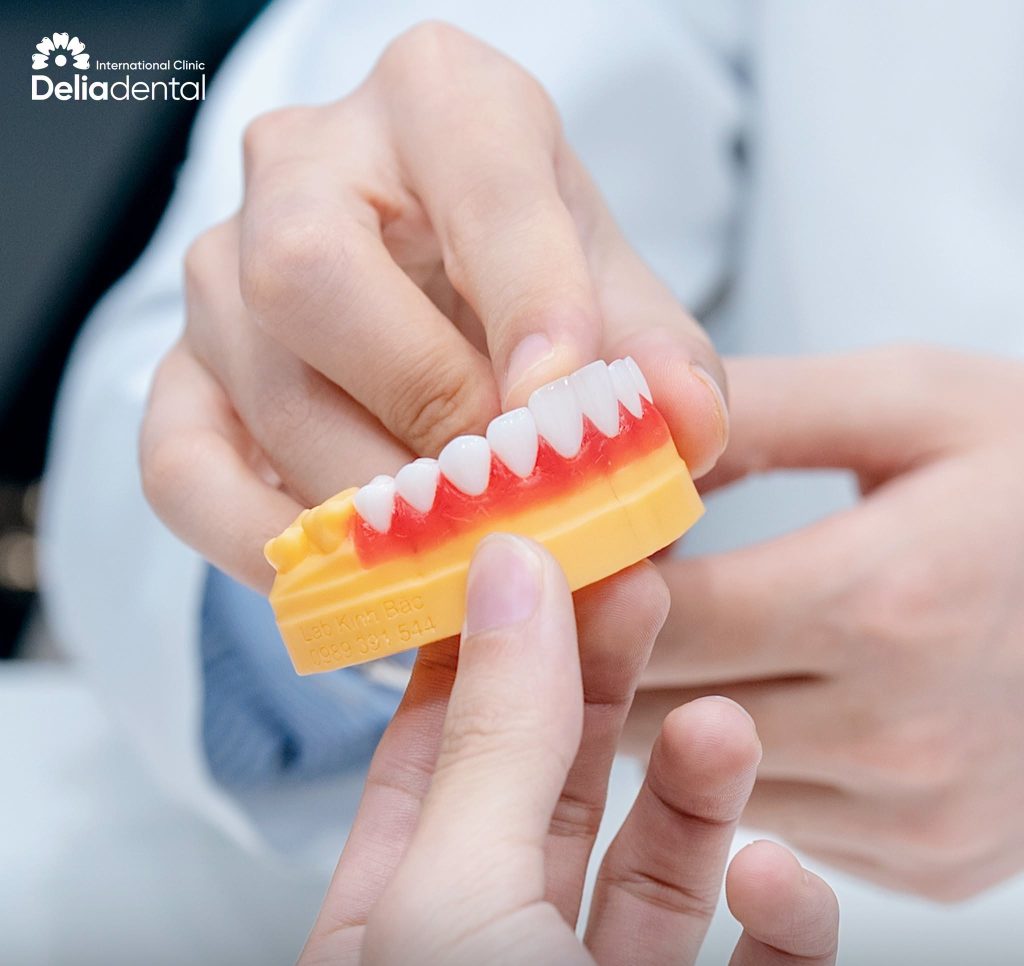
Crowns and veneers are often more suitable for one trip dental travel than implant treatment, depending on the condition of the teeth and gums. Many USA patients consider these procedures when several teeth need restoring or when they want a planned smile makeover.
| Treatment | Delia price from | Best for |
|---|---|---|
| Ceramill crown | $190 per tooth | Budget-friendly ceramic crown option |
| E.max crown | $290 per tooth | Front teeth and aesthetic cases |
| Lava Plus crown | $350 per tooth | Strong zirconia crown option |
| Lava Esthetic crown | $600 per tooth | Higher-aesthetic zirconia cases |
| E.max Press veneer | $300 per tooth | Cosmetic smile improvement |
| Lisi veneer | $550 per tooth | Premium veneer option |
The right choice between a crown and a veneer depends on tooth position, bite force, enamel condition, existing fillings, root canal history and cosmetic goals. A veneer may suit a tooth that is structurally healthy and mainly needs an aesthetic change. A crown becomes more appropriate once the tooth needs more strength or coverage.
Implant-only cost vs full package cost
When comparing implant pricing, separate the implant only cost from the full treatment package. At Delia Dental Clinic, the figures above are calculated per implant post. An All-on-4 case uses four posts, an All-on-6 case uses six, and multiplying the post price by four or six is not the final full arch price.
A complete plan may also include CBCT scans, extractions, bone grafting, temporary teeth, the final prosthetic arch, medication and follow up visits. The final cost depends on bone density, the number of missing teeth and the choice of final material, which is why an accurate quote needs a case review rather than a price list alone.
Flights and e-visa for USA patients
There is currently one nonstop route between the USA and Vietnam: San Francisco to Ho Chi Minh City, operated by Vietnam Airlines on a Boeing 787, roughly 3 to 4 flights a week, taking around 15 to 16 hours. There is no nonstop service to Hanoi from any USA airport.
Patients flying from other parts of the country connect through hubs such as Tokyo, Seoul, Taipei, Hong Kong or Singapore. Total travel time from the East Coast is often 20 to 24 hours including layovers, and sometimes more depending on the connection. Booking a few months ahead generally gives better fares, and prices tend to rise around USA holidays and around Tet, the Vietnamese New Year, which usually falls in late January or February.
USA passport holders are not on Vietnam’s visa exemption list, unlike travelers from the UK, Japan or South Korea. Every USA citizen needs a valid visa to enter, regardless of the purpose of the trip. The Vietnam e-visa is the most practical route for almost every case: it is fully online, valid for a single or multiple entry stay of up to 90 days, costs $25 for single entry or $50 for multiple entry, and standard processing takes 3 to 5 working days. That 90 day window comfortably covers a longer single visit or two shorter trips scheduled months apart for an implant case.
Typical treatment timeline
Crowns and veneers usually take a few days to a week per visit, since the case runs through digital design and lab work. Many USA patients combine this with a single trip.
Implant cases work differently. After the implant is placed, the bone needs time to fuse around it, a process called osseointegration, which typically takes 3 to 6 months. Most implant and full arch cases involve two visits: one for consultation, scanning and surgery, and a second visit later to fit the final teeth. Be cautious of any clinic offering to complete a full mouth implant case in a single short trip, since this is not realistic for most cases.
| Treatment | Typical stay | Number of trips | Notes |
|---|---|---|---|
| Single crown | 4 to 7 days | 1 trip | Preparation, lab work, fitting |
| Multiple crowns | 5 to 10 days | 1 trip | Extra time may be needed for bite checks |
| Veneers | 5 to 10 days | 1 trip | Smile design, trial and final fitting |
| Smile makeover | 7 to 14 days | 1 trip | Depends on the number of teeth and complexity |
| Single implant | 5 to 10 days | Often 2 trips | Final crown usually placed after healing |
| Multiple implants | 7 to 14 days | Often 2 trips | Depends on bone condition and surgical plan |
| All-on-4 or All-on-6 | 10 to 14 days first trip | Usually 2 trips | Surgery and temporary teeth placed first |
| Final full arch restoration | 7 to 14 days | Second trip | Usually after osseointegration |
What to check before choosing a clinic in Vietnam
Dental tourism carries real risk if patients skip due diligence. Communication gaps, unclear warranty terms and unrealistic timelines are the most common problems reported by patients who had a bad experience abroad.
Vietnam is rated Level 1, Exercise Normal Precautions, by the USA State Department, the same tier as most of Western Europe. That rating covers general travel safety, not clinical quality, so it does not replace checking a specific clinic’s credentials directly.
One point worth understanding before booking: if something goes wrong, a USA patient generally cannot sue a Vietnamese clinic in a USA court. Disputes are handled under Vietnamese law and the clinic’s own warranty terms. This is why written warranty documents, itemized treatment records and implant serial or batch numbers matter more for treatment abroad than they would at home.
| Safety check | What USA patients should confirm |
|---|---|
| Written treatment plan | The clinic explains the procedure, number of visits, materials, cost range and expected timeline |
| CBCT scan for implant cases | CBCT helps assess bone density, nerve position, sinus location and implant placement before surgery |
| Implant brand transparency | Patients should know the implant brand, origin, warranty terms and whether serial or batch information will be provided |
| Written warranty terms | Ask what is covered, how long the warranty lasts and what conditions may void it |
| Realistic treatment timeline | Be cautious of promises to complete complex full mouth implant treatment in one short trip |
| English speaking support | Clear communication reduces the risk of misunderstanding the treatment plan, consent forms and aftercare instructions |
| Post treatment records | Ask for X-rays, invoices, implant details, material information and treatment notes to bring back to a USA dentist |
| Follow up process | Confirm how the clinic supports patients after they return to the United States |
A clinic does not need to promise perfect results to be trustworthy. What matters more is whether the team explains the risks, limitations, timeline and follow up responsibilities clearly before treatment begins.

What to prepare before booking
USA patients can send X-rays or recent dental photos to Delia Dental Clinic before travelling to get an initial treatment direction and cost estimate. An online consultation can help clarify implant brand, crown material, treatment timeline and whether the case is likely to need one trip or two before any flights are booked.
Before booking, prepare:
- Recent dental X-rays or CBCT scans if available
- Clear photos of the teeth, bite and smile
- Any current USA dental quote
- A short description of the main concern
- Medical history and current medications
- Smoking status
- Diabetes, heart condition, blood thinner use or other relevant medical details
- Previous implant, crown, root canal or gum treatment history
- Preferred travel dates
- Whether a second trip is realistic if implants turn out to be needed
- The main goal: chewing function, appearance, pain control or full mouth restoration
Under IRS rules, HSA and FSA funds can generally be used for qualified dental expenses regardless of where the treatment takes place, including abroad, as long as the treatment is medically necessary rather than purely cosmetic and is legal in both countries. The rules vary slightly by plan and administrator, so patients should confirm eligible expenses and documentation requirements with their plan before booking.
Why US patients choose Delia Dental Clinic
For USA patients, choosing a dental clinic in Vietnam is not only about treatment cost. Because the trip is long, the clinic should help patients understand the likely treatment plan, number of visits and possible extra procedures before they book flights.
Delia Dental Clinic supports international patients through its branches in Ho Chi Minh City and Hanoi. USA patients can send X-rays, dental photos or an existing USA or Mexico dental quote before travelling, so the team can review the case and suggest an initial treatment direction.
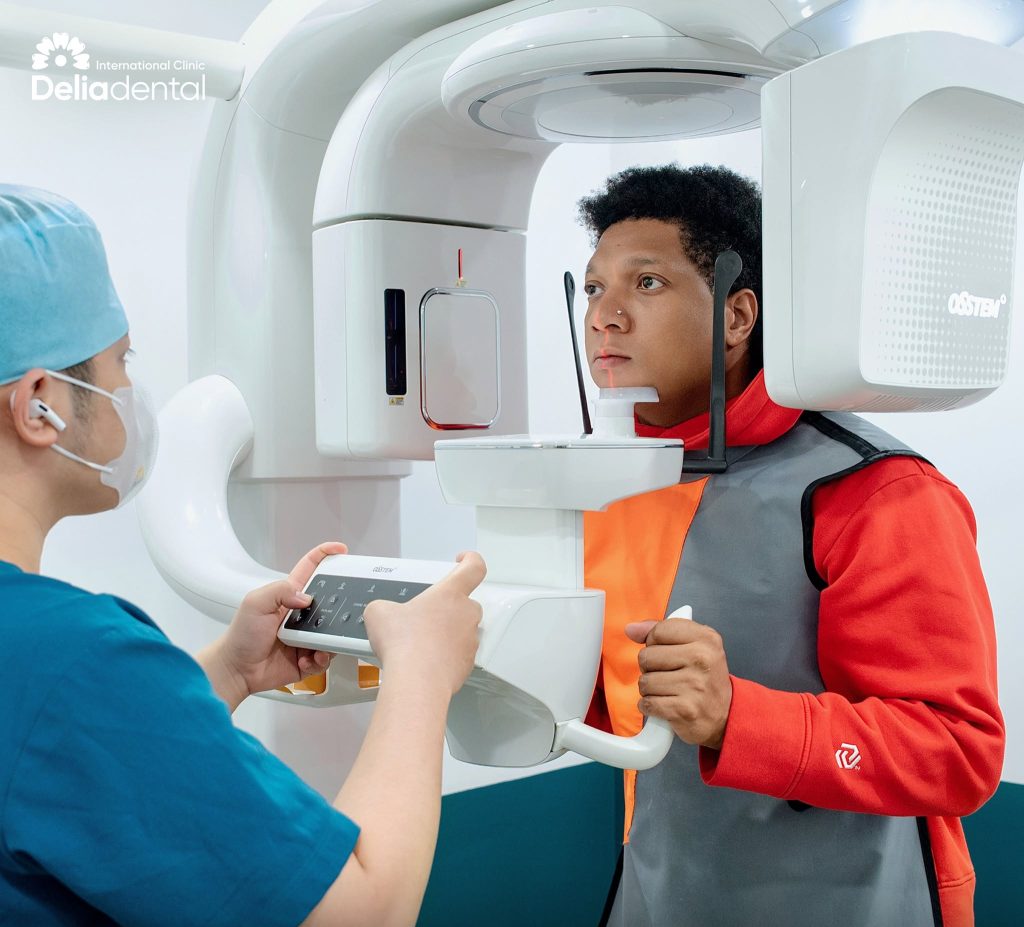
For implant and full arch cases, Delia uses CBCT assessment as part of treatment planning. This helps evaluate bone density, nerve position, sinus location and whether bone grafting or additional procedures may be needed before implant placement. USA patients can also compare implant systems at Delia, including Osstem, Dentium, HIOSSEN, ETK, SIC, Straumann SLA and Straumann SLActive, which allows a comparison of implant origin, warranty period and budget before deciding on a plan.
Delia also provides English speaking support, treatment timeline planning, hotel coordination when needed and written warranty documentation. After treatment, patients can request records such as X-rays, implant brand details, invoices and treatment notes to support follow up care once they are back in the United States.
Frequently Asked Questions
How much can USA patients save on dental treatment in Vietnam?
Savings depend on the procedure and the USA price it is being compared against, but implants, crowns and veneers in Vietnam are commonly priced well below USA private rates, even after flights and accommodation are added. The gap tends to be largest on complex cases such as full arch implants or a full smile makeover, since the treatment value has more room to absorb the cost of the trip.
Is there a direct flight from the USA to Vietnam?
Yes, one: San Francisco to Ho Chi Minh City on Vietnam Airlines, around 3 to 4 flights a week, taking roughly 15 to 16 hours. There is no nonstop service to Hanoi, and patients from other USA cities need at least one connection through a hub such as Tokyo, Seoul or Taipei.
Do USA patients need a visa for Vietnam?
Yes. The USA is not on Vietnam’s visa exemption list, so every USA passport holder needs a valid visa regardless of trip purpose. The Vietnam e-visa is the practical option for most patients: fully online, valid for up to 90 days, costing $25 for single entry or $50 for multiple entry, with standard processing of 3 to 5 working days.
How many trips are needed for dental implants?
Most implant cases need two trips, separated by roughly 3 to 6 months for healing while the bone fuses around the implant. Crowns and veneers can usually be completed in one trip.
Is Vietnam cheaper than the USA for dental implants?
Dental implants in Vietnam may cost less than private implant treatment in the USA, but patients should compare the complete treatment cost rather than only the implant post price. A full implant plan may include the implant post, abutment, crown, CBCT scan, extraction, bone grafting, temporary tooth, medication, follow up visits and warranty documentation, and the final quote depends on the patient’s oral condition.
Is Vietnam better than Mexico for USA dental tourism?
Neither destination is better in every case. Mexico is closer for most USA patients, so it tends to be more convenient for smaller treatments or cases that need frequent follow up visits. Vietnam is worth comparing for larger planned cases, such as multiple implants, All-on-4, All-on-6, several crowns, veneers or full mouth rehabilitation, where the cost difference can be large enough to justify the longer flight.
Can HSA or FSA funds be used for dental treatment in Vietnam?
Generally yes, under IRS rules, as long as the treatment is a qualified medical expense rather than purely cosmetic and is legal in both the USA and Vietnam. Plan administrators can vary in what documentation they require, so patients should confirm eligible expenses with their plan before booking and keep detailed receipts and treatment records.
Final Thoughts
For USA patients facing high private dental costs, Vietnam is a realistic option for implants, crowns and multi tooth cases, where the savings are large enough to justify the trip. Getting a case based estimate before booking, understanding whether the case needs one trip or two, and confirming warranty terms upfront all help avoid surprises once travel is underway.
If you are comparing dental treatment costs between the USA and Vietnam, send your X-rays or dental photos to Delia Dental Clinic via WhatsApp or Messenger before booking your flight. The team can review your case, suggest an initial treatment direction, and help you understand whether your treatment is likely to require one trip or two.


