
Dental travel gets stressful mostly because of uncertainty: how many days to book, whether the quote will hold, where to stay, who to talk to and what happens after the flight home. Delia Dental Clinic handles these in four stages, which are a remote review before travel, scheduling built around the treatment, practical support on arrival and follow up once the patient is back home.
No support structure removes every variable in treatment abroad, and this guide says where an estimate ends and clinical confirmation begins. That distinction matters most for implants and larger restorative cases, where the plan can change after examination.
The sections below follow the patient’s journey in order, then show what that support looked like in three published patient cases.
Quick Answer
Delia Dental Clinic supports international patients before, during and after treatment in Hanoi or Ho Chi Minh City. Patients can send records for a preliminary treatment direction and estimated cost, arrange airport pickup and hotel coordination, work with English speaking staff and receive remote follow up. The final plan is confirmed after examination.
Starting Before You Leave Home
The process begins before any flight is booked. Patients can send existing X-rays, CBCT files, smile and bite photos, a current quote from their home dentist and a medical summary through WhatsApp or Messenger. From those records, the international patient team can suggest a preliminary treatment direction, estimate the likely cost and outline a realistic travel timeline.
This removes one of the most common worries in dental tourism, which is arriving to find that the plan looks different from the one discussed online. A patient who sends a photo of a chipped front tooth, for example, can hear early whether the case looks like a simple crown or something that needs more steps. It also lets the patient compare the estimate against a home quote before spending anything on travel.
The estimate is still preliminary. Photos and 2D X-rays cannot show bone density or volume, so implant cases begin with a CBCT scan at the clinic, and the final itemised plan and quote are confirmed after the in person examination. If the examination finds something the records did not, such as thin bone, infection or gum disease, the plan and cost can change before treatment starts.
Scheduling Built Around Your Trip
Time away from home is the practical limit for most patients, and it decides which treatments fit into one visit. Crowns and veneers can often be completed within a single trip, and for multiple teeth a stay of roughly 5 to 10 days is a common planning estimate, depending on the number of teeth, bite adjustments and any preparation such as root canal treatment or gum care. A case with infection or an unstable bite will usually need longer than that range. The client review of Greying, who had 20 zirconia crowns, shows what a large crown case looks like from the patient side.
Implants follow a different pattern because the implant needs time to integrate with the jawbone. The first visit commonly covers the examination, CBCT scan, surgery, bone grafting where needed and temporary teeth. Healing then continues at home, commonly for around 3 to 6 months, and the second visit is for fitting the final teeth. Both trips can be planned from the start, and the second trip can be rescheduled if the patient tells the coordinator in advance.
Some cases do not fit that pattern. Bone grafting can lengthen the healing period and occasionally adds a third trip, which is confirmed on the scan. A clinic should not promise full mouth implant treatment in one short visit, and Delia Dental Clinic plans the schedule around the clinical steps rather than forcing the steps into a fixed travel window.
What Happens When You Land
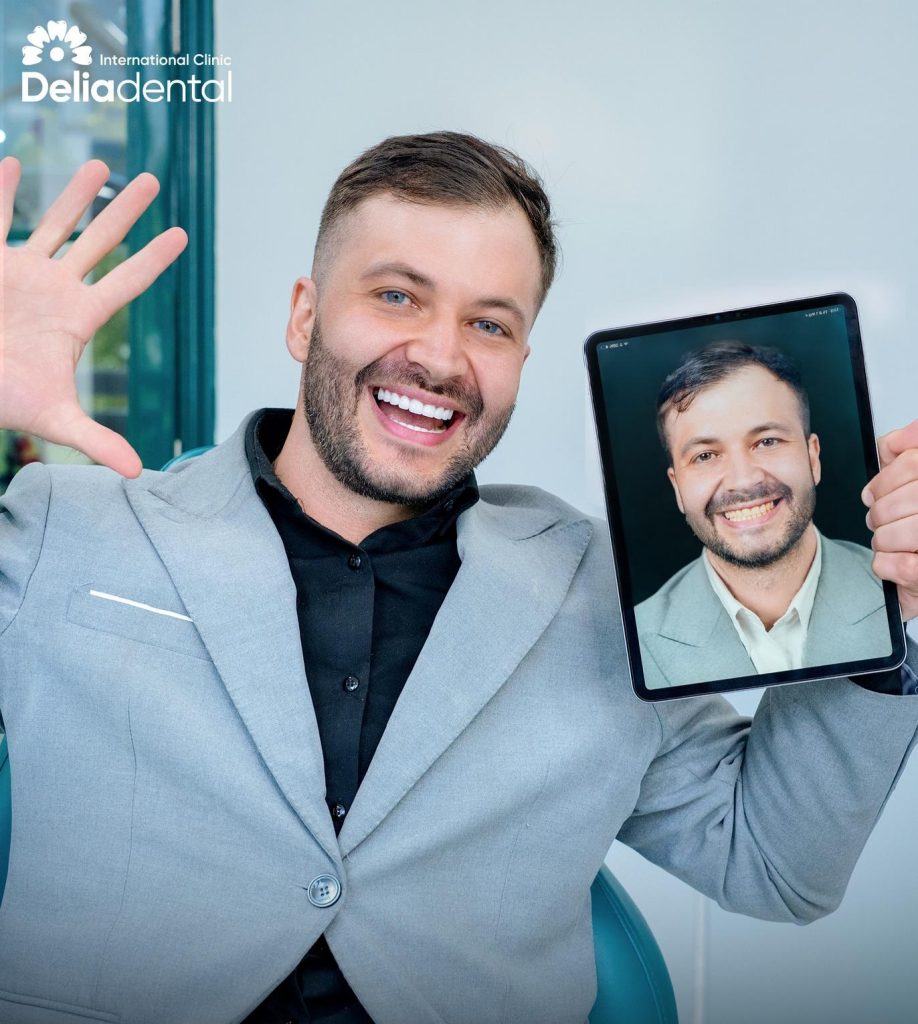
Arriving in a new country adds its own stress to a medical trip, so the practical details are handled by the team. Delia Dental Clinic arranges airport pickup for international patients, and the patient support team can help with hotel coordination near the clinic. The clinics are in Hanoi, on Ton Duc Thang Street, and in Ho Chi Minh City, on Vo Van Tan Street.
Communication is in English from the first WhatsApp message to the final check up, and the team explains each step before clinical work begins. That lowers the chance of a misunderstanding, though patients should still ask for anything unclear to be written down.
A simple planning rule helps here: arrive at least one day before the first appointment. That gives time to rest after a long flight and attend the consultation without rushing from the airport. It is also safer to avoid booking a flight for the same day as the final fitting, because any adjustment then leaves no margin.
During Treatment: What to Expect
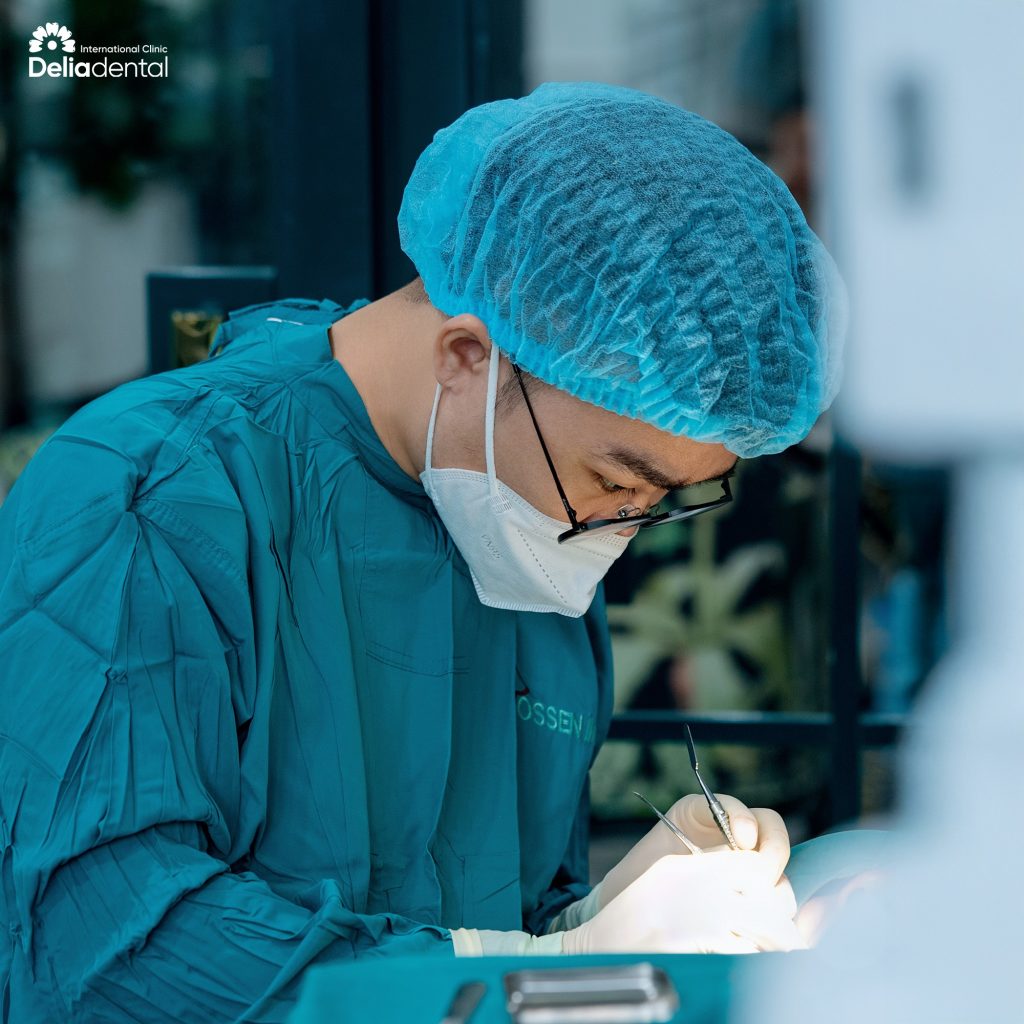
Every implant case begins with a 3D cone beam CT scan at the clinic, which confirms the anatomical details behind the plan before surgery. For cosmetic work, Delia Dental Clinic uses Digital Smile Design, a mock up and a try in, so the patient can review the proposed shape and alignment before the final restorations are completed.
The cosmetic workflow leaves room for second thoughts. A provisional crown or veneer is fitted first so shape and color can be adjusted, it is held with temporary cement, and the patient can review it, including with family, before permanent cement is used. A patient who dislikes the tooth length at that stage can ask for a change while it is still easy to make.
Comfort is discussed before injections. Topical anesthetic can be applied first, allergy history is checked, and an alternative anesthetic is available if a patient reacts to the usual one. Individual experience varies, so patients with dental anxiety or a history of reactions should mention it at the first consultation.
After You Complete Your Dental Trip
Support continues after the flight home. Delia Dental Clinic provides written warranty documentation, and warranty cards carry a QR code patients can use to check details online. Coverage differs between the implant, the abutment and the crown or prosthesis, so patients should read what each part covers and under what maintenance conditions. A local dentist can use the treatment records for routine check ups or future care.
Remote follow up is available through WhatsApp or Messenger. A patient who notices a bite that feels slightly high or has questions about recovery can send photos and a short description to the team. For implant patients, that communication can continue between the first and second visits.
Remote follow up has limits. It helps decide what to do next, but it is not a diagnosis, and some problems need an in person check. Severe pain, fever or swelling that spreads should be seen by a local dentist or emergency service without waiting for an online reply.
Real Patient Cases: What the Support Looked Like
The three cases below are published on Delia Dental Clinic’s client review pages, and the details come from those pages.
Case 1: Hannah (Porcelain Restoration)
Hannah, a model from the Philippines, sought treatment after years of feeling self conscious about the yellowish shade and uneven alignment of her teeth. After a digital consultation, the team recommended 20 zirconia crowns to address the color, correct the alignment and balance her gummy smile. She described the result as a natural looking smile that fits her facial features, and said she felt confident in front of the camera afterwards.
Case 2: Ayhan David (Smile Makeover)
Ayhan David, a businesswoman also from the Philippines, presented with yellowed teeth, cavities and a gummy smile that affected her confidence at work. The clinical team recommended 18 porcelain crowns. She said the straighter, brighter smile improved how she felt in corporate meetings and presentations.
Case 3: Rean (Corrective Treatment)
Rean came to Delia Dental Clinic after having 16 veneers placed at a different provider that looked artificial to him. The team redesigned his smile and replaced the earlier work with custom porcelain veneers matched to his natural facial proportions. His case shows that a smile makeover can be planned around the result the patient wants, not just around the number of teeth.
Each case is individual, and results, tooth counts and timelines depend on the patient’s own records and examination.

What to Send Delia Dental Clinic Before You Book
A useful first message to Delia Dental Clinic contains records the team can actually review. Patients can send:
- Dental X-rays or CBCT files, if available
- Clear smile and bite photos
- A current quote from their home dentist
- A medical summary and a list of medications and allergies
- Preferred travel dates and main treatment goals
From these, the international patient team can suggest a preliminary direction, estimate cost and outline whether the case looks like a one trip or two trip plan. What cannot be confirmed remotely is the final diagnosis, the exact plan and the final quote, which are set after examination in Hanoi or Ho Chi Minh City. Book an online consultation to have your records reviewed before making travel plans.
Book a free online consultation here.
Frequently Asked Questions
Is the Quote I Receive Before Travel the Final Price?
It is a preliminary estimate based on the records you send, and the final itemised quote is confirmed after the in person examination. Treatment that only becomes clear on the chair or on the scan can change the total. Depending on the case, root canal treatment, core buildup, gum treatment, bone grafting, a sinus lift or sedation may be billed separately from the base treatment. Patients should ask which of these items are included in the estimate and which are not. Comparing that list against a home quote gives a fairer picture than comparing headline prices. Anything that changes the plan should be explained to you before work continues.
How Early Should I Contact Delia Dental Clinic Before Booking Flights?
Contact the team before buying any flights, since the review shapes how many days and how many trips you need. Send your records first and allow time for the team to look at them, because a more complex case needs more review than a single crown. Once you have a preliminary direction, pick dates that leave a buffer at the start and end of the stay. Peak periods such as Christmas, New Year and Tet can raise flight and hotel prices and make scheduling tighter. Check your entry requirements on Vietnam’s official e-visa portal close to your travel date, since rules depend on nationality and can change. Delia Dental Clinic can clarify treatment dates, but it does not process or guarantee visas.
What if My Implant Takes Longer to Heal Than Planned?
Healing time varies from patient to patient, and the second trip date is an estimate until the plan is confirmed. If healing takes longer, the second visit can be moved, provided the coordinator is told in advance. Bone grafting cases in particular may need a longer healing period. Choose flights that can be changed or booked late, and avoid locking in a return date months ahead without a fallback. If your entry permission for Vietnam is time limited, check that it still covers the revised dates before you fly. Patients generally do not stay in Vietnam during the whole healing period, so a delay usually affects the second trip, not the first.
What Records Should I Ask For Before Leaving Vietnam?
Ask for a treatment summary listing what was done and which teeth were treated, along with the implant brand or restoration material where relevant. Request copies of your CBCT scan and X-rays, and the written warranty documentation with its conditions. Check that the warranty separates the implant, the abutment and the crown or prosthesis, since they can carry different terms. These records are what a local dentist needs for routine care or a future problem, and having them saves time if anything needs attention at home. Ask the team before you fly if any of them are missing. Keeping them together in one folder also helps if you switch dentists later.
Can I Combine Treatment With Sightseeing?
Many patients add a few days around treatment, but the schedule should follow the clinical plan and not the other way round. After surgery such as implant placement or extractions, a lighter program is sensible, and physical or long tours are better left until you know how you feel. Crowns and veneers are usually less demanding, though tooth preparation days can leave sensitivity and tiredness. Ask the team what level of activity suits your case before booking any tours. Keep a buffer day after the final appointment before your flight, in case an adjustment is needed. Treat any estimated travel time or tour schedule as something to confirm with the provider.
Planning the Rest of Your Trip
Once you understand the support around treatment, the next question is how many days and trips your own case is likely to need.
- How to Plan Your Holiday and Dental Treatment Together in Vietnam
- Dental Implants in Vietnam and Angkor Wat in One Trip
- Why Patients Trust Delia Dental Clinic Vietnam for Dental Tourism
- Flying to a Thailand Holiday After Dental Implant Surgery in Vietnam
Final Thoughts
Most travel stress in dental care comes from questions that go unanswered until the patient is already abroad. Getting a preliminary direction, a realistic timeline and a clear idea of what is still uncertain before flights are booked takes much of that away.
Send your X-rays, photos or current quote via WhatsApp or Messenger, and book flights once you have a preliminary plan.


