Dental clinic sterilization and infection control in Vietnam is something you can check yourself, before you pay a deposit and again on the day of your first appointment. Most of what matters is visible or can be answered in one short message: how instruments are cleaned, how they are packaged, what is thrown away after each patient, and whether the clinic is willing to show you.
A polished waiting room tells you very little. Infection control happens in the sterilization area and at the chair, and a clinic with good systems will usually explain them without hesitation. A clinic that dodges the question, or answers with general claims like “we use the best equipment,” has given you useful information too.
This guide covers how to check clinic cleanliness remotely, what to look for in person, which dental clinic hygiene standards are reasonable to expect, and what counts as a warning sign. It is written for international patients planning surgery, implants or several appointments in Hanoi or Ho Chi Minh City, where a weak process costs more than it does for a simple filling.
Quick Answer
To judge dental clinic sterilization in Vietnam, ask how reusable instruments are cleaned and sterilized after each patient, whether sterile pouches are opened in front of you, which items are single use, and whether the sterilization area can be seen. A specific, confident answer is a good sign. Vague answers, or a refusal to explain the process, are reasons to look elsewhere.
What infection control covers in a dental clinic
Infection control is the set of routines that stops bacteria and viruses passing from one patient to the next, or from the environment to the patient. In dentistry it has four main parts: cleaning and sterilizing reusable instruments, using disposable items once, protecting surfaces and equipment between patients, and keeping staff hygiene consistent, including hand washing and fresh gloves.
Sterilization is different from disinfection, and the difference matters when you read a clinic’s claims. Disinfecting a surface lowers the number of germs. Sterilizing an instrument, usually with pressurized steam in an autoclave, is meant to destroy all microbial life, including spores. Instruments that enter the mouth and contact tissue or blood, such as surgical tools, burs and handpieces, are expected to be heat sterilized between patients, not just wiped.
The CDC’s summary of infection prevention practices in dental settings sets out the baseline that reputable clinics in any country build on: heat sterilize heat tolerant instruments after every use, use disposable items once, and monitor the sterilizer. The CDC guidance recommends testing sterilizers with biological indicators, commonly called spore tests, at least weekly. Quality varies between clinics in Vietnam as it does everywhere, so checking is reasonable, and the questions below make the check easy.
How to check clinic cleanliness before you book
You can learn a lot without leaving home. A short message to the clinic and a look at what it publishes will show whether infection control is treated as a system or as an afterthought.
Questions to ask by message
Send these together and see how specific the reply is. A good answer describes the process, not just the result.
- How are reusable instruments cleaned and sterilized between patients?
- Are instruments packed in sealed sterile pouches, and are they opened in front of the patient?
- Which items are single use dental instruments or disposables, and which are reused?
- Are handpieces sterilized between patients, or only wiped?
- Can I see the sterilization area when I visit?
You are not looking for technical vocabulary. You are looking for a clinic that answers the question asked instead of redirecting to marketing language. If the reply comes from an English speaking coordinator, ask them to confirm with the clinical team and answer in writing.
What to look for in photos and videos
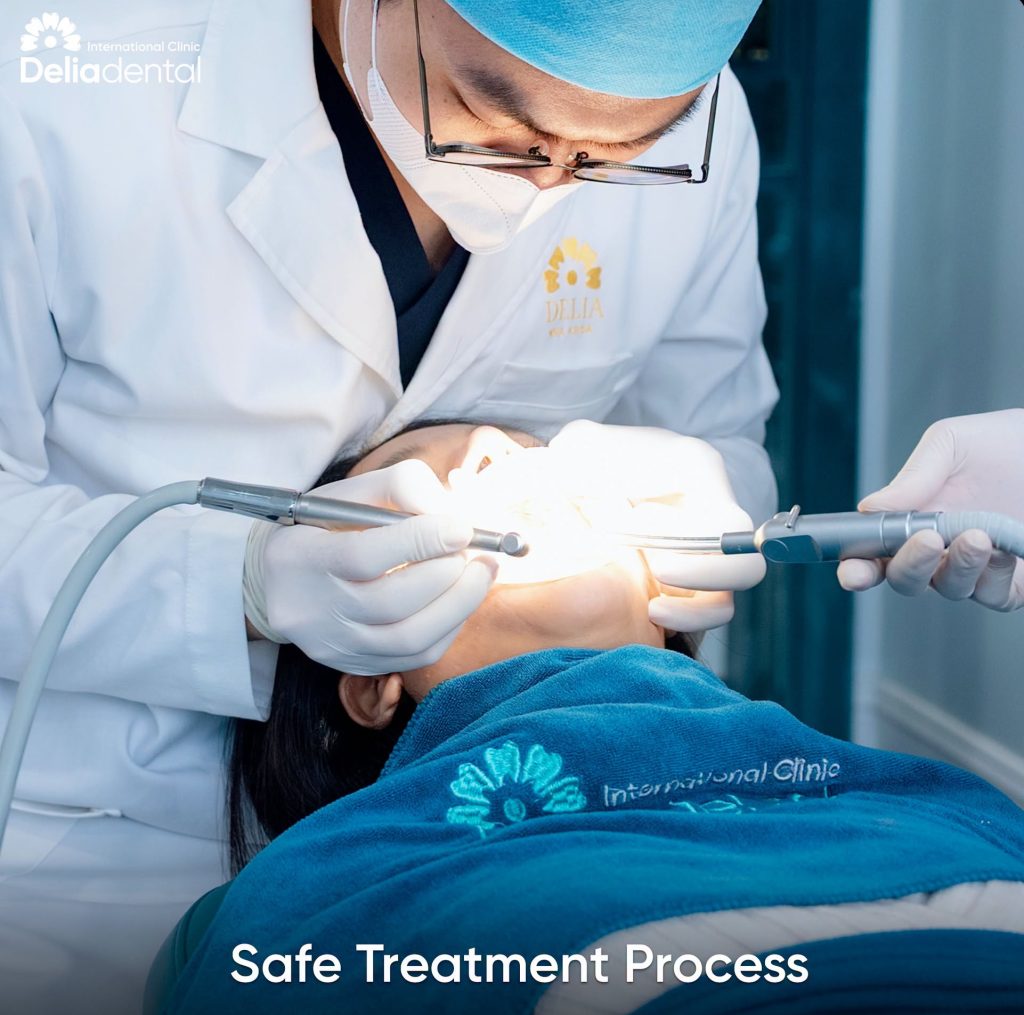
Clinic websites and social pages often show treatment rooms. Look for clear surfaces without clutter, separate areas for instruments and patients, and staff wearing gloves, masks and eye protection while treating. A published video of the sterilization area is a stronger signal than any written claim, because it shows the clinic is comfortable being seen. Reviews that describe the process, such as “they opened the sealed tray in front of me,” are more useful than reviews that only say the clinic looked clean.
What to check in person on the day
The first visit is your best chance to confirm what you were told. You do not need to inspect anything dramatically. Notice what is in front of you, and ask politely about what is not.
Is the sterilization room visible?
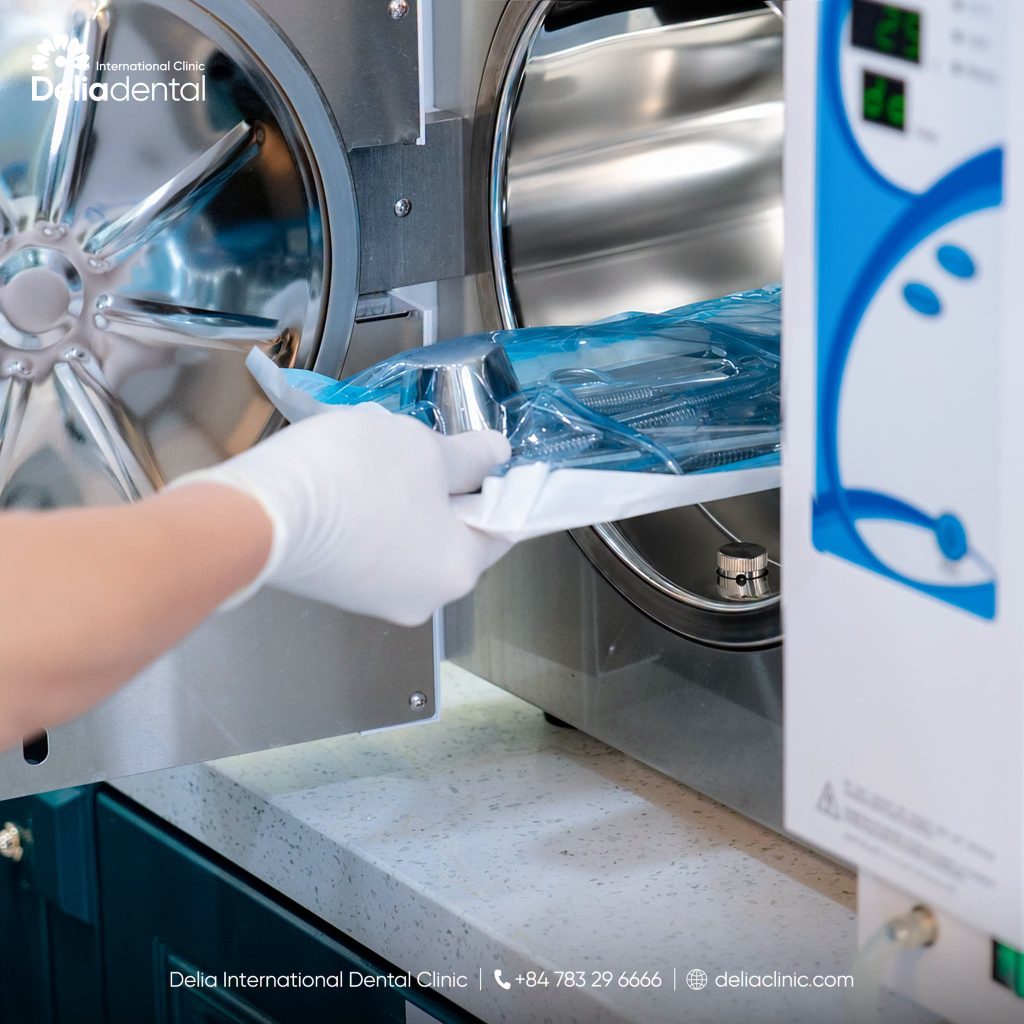
Many good clinics have a sterilization room that patients can see or be shown. A sterilization room visible from the corridor, or open to a request, suggests nothing is being hidden. Look for a clear flow from dirty to clean: used instruments go into one area for cleaning, then to the autoclave, then to storage in sealed pouches. If everything happens on one crowded counter, the risk of mixing used and sterile items rises.
You can simply ask, “May I see where instruments are sterilized?” Some areas may be closed to patients for operational reasons, so a polite no is not automatically a problem if staff can explain the process clearly and show a photo or video instead.
Instruments and sterile pouches
Before treatment begins, instruments should arrive in a sealed pouch or tray that is opened where you can see it. Sterilization pouches usually carry a colored indicator that changes after a successful cycle. Seeing the pouch opened is the simplest way to confirm that the instruments about to go in your mouth came out of an autoclave and not out of a drawer.
Handpieces deserve a specific question, because they contact saliva and blood and are harder to clean than flat instruments. Ask whether they are heat sterilized between patients. That is the standard expected in current clinical guidance.
Single use dental instruments and disposables
Some items should never be reused: needles, anesthetic cartridges, suction tips, saliva ejectors and patient bibs, along with surgical drapes and, depending on the clinic’s protocol, certain cutting burs. Implant drills are worth asking about specifically. Some systems use single use drills, while others allow limited reuse under strict cleaning and tracking, so ask which approach the clinic follows and how it tracks use.
What you want to see is a new needle and cartridge opened for you, fresh disposable covers on the bib and light handles, and a clear answer about drills if you are having implants. The point is not that everything must be disposable. It is that the clinic can tell you exactly which items are, and which are sterilized and tracked.
Surfaces, gloves and hand hygiene
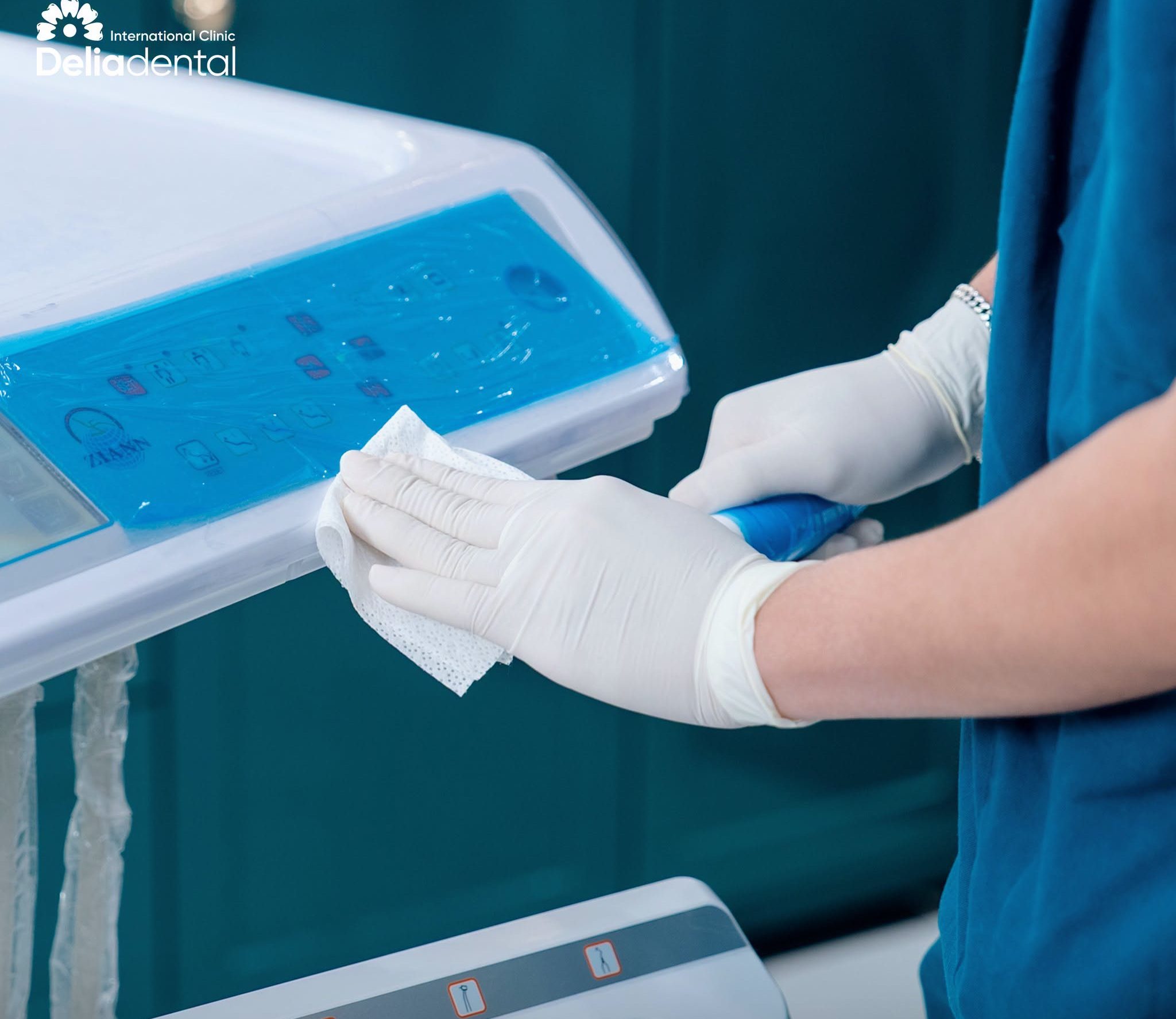
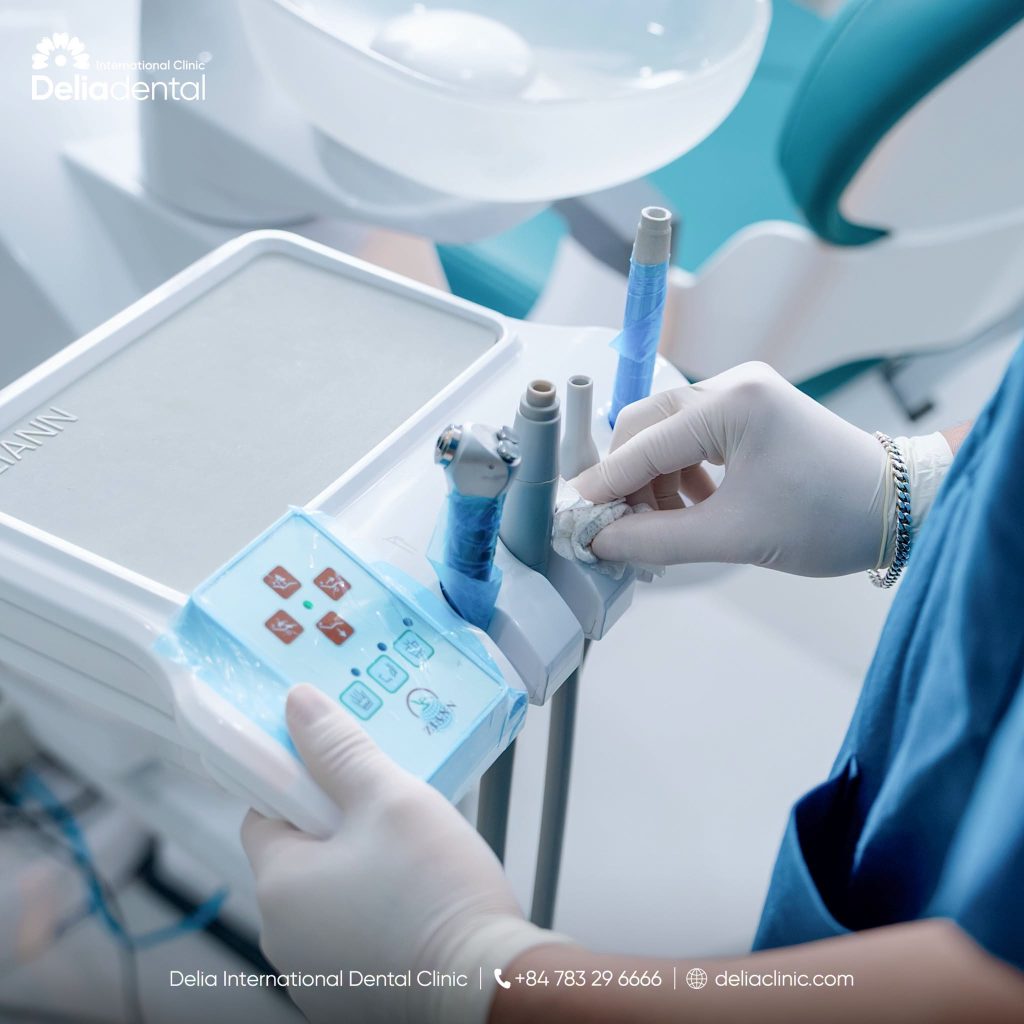
Between patients, chair surfaces, light handles, trays and touch points should be cleaned and disinfected or covered with fresh barriers. Staff should wash or sanitize their hands and put on new gloves in front of you. A dentist who touches a phone, a keyboard or a drawer handle with treatment gloves and then returns to your mouth has broken the chain, and that is worth noticing.
Dental clinic hygiene standards: what is reasonable to expect
Clinics organize themselves differently, so treat the table below as a practical guide, not a legal checklist.
| What you see or hear | What it usually means | Concern level |
|---|---|---|
| Sealed pouch opened in front of you | Instruments came from a sterilization cycle | Good sign |
| Clinic describes or shows its autoclave process | Process is documented and understood | Good sign |
| New needle and cartridge opened for you | Disposables are used once | Good sign |
| Clear answer on implant drill reuse and tracking | A protocol exists for reusable cutting tools | Good sign |
| Instruments pulled from an open drawer or loose tray | Sterility cannot be confirmed | Ask before treatment |
| Staff touch phones or screens with used gloves | Cross contamination risk | Raise it politely |
| Refusal to explain or show the sterilization process | Process may be weak or undocumented | Consider another clinic |
| Only claims like “hospital grade” with no detail | Marketing without specifics | Ask for specifics |
A clean looking room does not prove safe sterilization, and a modest looking room does not prove the opposite. The routine matters more than the decor. Good process in a plain room is a better sign than a glossy room with vague answers.
How Delia Dental Clinic handles sterilization and treatment rooms
Delia Dental Clinic runs the same clinical standard at its Hanoi and Ho Chi Minh City branches, including instrument processing and treatment room setup. Reusable instruments go through a mechanical cleaning machine with specialist detergents, are sealed in pouches or perforated trays, and are then sterilized in automatic autoclaves, with a W&H packaging machine handling the sealing step. Each patient is treated with a separate set of instruments, and treatment takes place in private rooms rather than open shared bays.
The clinic also states that its surgical room and sterilization room can be observed from outside, that instruments, gloves, suction tips and bibs are single use for each patient, and that rooms are cleaned between cases. Materials and implant components come from a single supply source, which makes it easier to explain what was used when a patient asks. The Delia Dental Clinic standard article explains how the two branches stay consistent.
International patients can put any question from this article to the team before booking. Send your questions about sterilization, single use items or implant instruments through WhatsApp or Messenger and the international patient team will answer in writing. What can be confirmed remotely is the process and the clinic’s willingness to explain it. What can only be confirmed in person is what you see on the day, so asking to look at the sterilization area when you arrive is still a sensible step.
Frequently asked questions
Can I ask a dentist to open the instruments in front of me?
Yes, and it is a normal request. Sterile instruments are packed in sealed pouches or trays, and opening them at the chair is routine in many clinics, so a good team will not be surprised by the question. Ask before the procedure starts, not after the anesthetic is given. If the request is treated as unusual or irritating, that tells you something about the clinic’s culture. A clinic confident in its process usually takes a few seconds to show you.
Are implant drills single use in Vietnam?
It depends on the clinic and the implant system. Some systems supply single use drills, while others allow limited reuse with cleaning, sterilization and a record of how many times each drill has been used. Neither approach is automatically wrong, but the clinic should be able to say which one it follows and how drills are tracked. If the answer is vague, ask for it in writing before surgery.
Does an autoclave mean everything is sterile?
Not by itself. An autoclave works only when instruments are cleaned first, loaded correctly, run through a full cycle and stored in sealed packaging afterward. Good clinics also monitor the machine with indicators and periodic spore tests to confirm it is performing. Ask whether the clinic monitors its sterilizer, and treat a clear answer as a stronger signal than the machine’s brand name.
What if the clinic will not show me the sterilization area?
Do not assume the worst automatically. Some clinics restrict access for workflow or hygiene reasons, and a photo, video or staff walkthrough can serve the same purpose. The concern is a clinic that cannot or will not explain the process at all. If you are not comfortable after asking, you have not committed anything yet, and you can compare another clinic.
Is infection control different for implant surgery than for a crown?
The principles are the same, but the stakes are higher for surgery because instruments enter bone and soft tissue, and an infection can threaten the implant itself. Surgical sets, drills, gloves and drapes should all be sterile and handled with strict technique. If you are planning implants, ask about the surgical setup specifically, including how sterile technique is maintained during longer procedures.
Can a remote review tell me if a clinic is hygienic?
Only partly. Photos, videos, written answers and reviews can show whether a clinic has a defined process and is willing to discuss it. They cannot confirm how that process is carried out on a given day. Use the remote stage to filter clinics, and use the in person visit to confirm what you were told before you agree to treatment.
What should I do if something looks wrong during my appointment?
Say so before treatment continues, in a calm and specific way, for example, “Could you open a fresh sterile pouch for this?” A good team will fix the issue and thank you for raising it. If the response is dismissive, you can pause the appointment and leave without proceeding. It is far easier to stop before a procedure starts than to deal with a complication afterward.
Keeping the clinic check going after infection control
Infection control is one check among several, and these guides cover the others that usually follow it.
- Is Dental Care in Vietnam Safe? What International Patients Should Know
- Dental Care in Vietnam: Hidden Fees to Avoid Before You Book
- From First Message To Final Smile: The Delia Dental Clinic Patient Journey
Final thoughts
Checking infection control does not need clinical training. It needs a few specific questions, a willingness to look at the process, and attention to how the clinic responds. A good clinic welcomes the questions, because clear answers are part of how it earns trust.
If you are comparing clinics, send your questions to Delia Dental Clinic via WhatsApp or Messenger before booking your flight. The international patient team can explain the sterilization process, answer questions about single use items and implant instruments, and discuss your treatment plan once they have reviewed your X-rays or photos. Final treatment details and quotes are confirmed after an in person examination.


