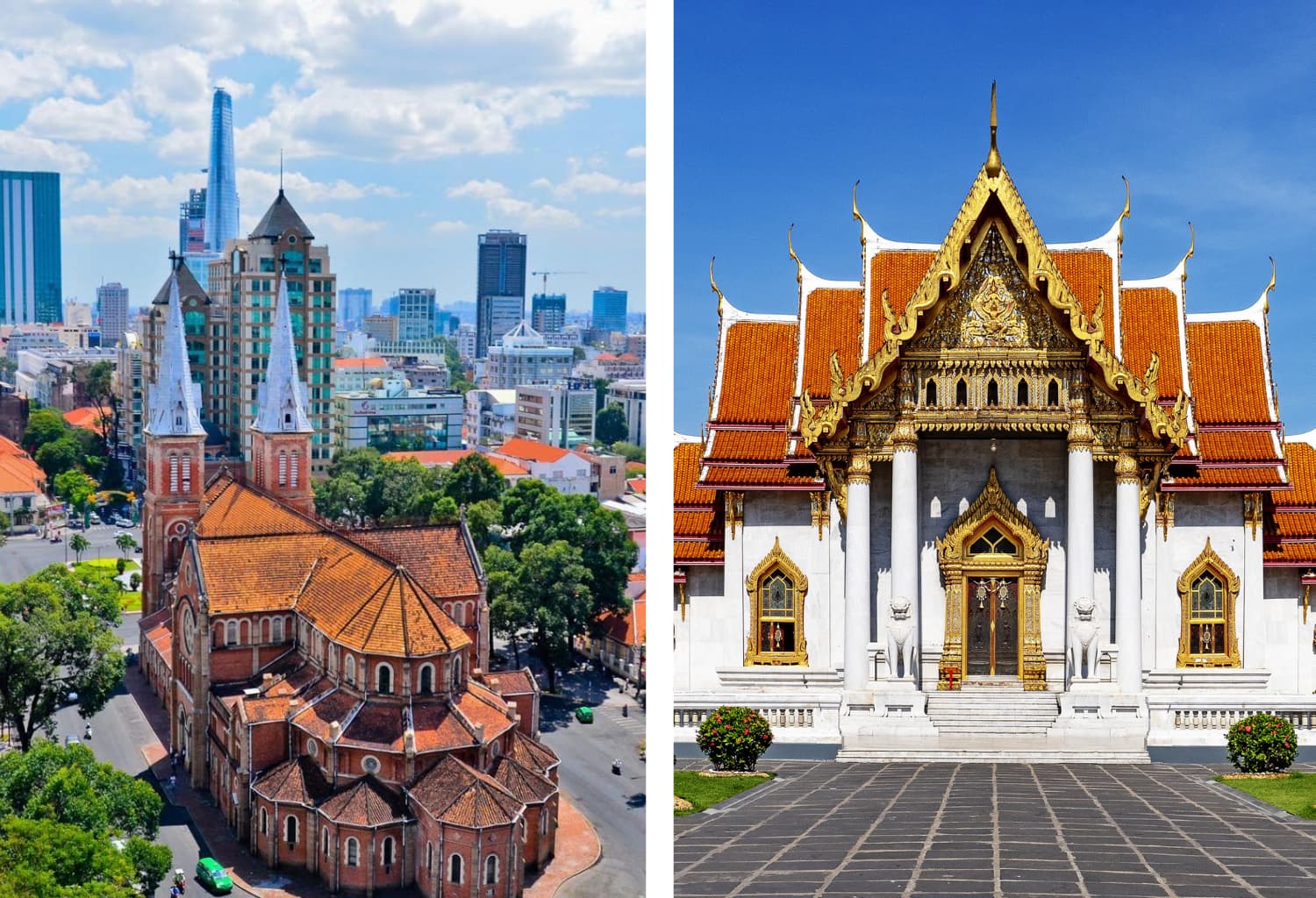
Thailand built its dental tourism reputation over two decades and still attracts close to a million international patients a year. Vietnam is newer to the market but has closed the gap quickly, and for many procedures it now undercuts Thailand on price while offering the same implant brands and clinical standards. This guide breaks down where each country actually wins.
The comparison matters because these two destinations are consistently shortlisted together by patients from Australia, the US, and the UK who are planning a dental trip to Asia. The answer is not as straightforward as one country being universally better. It depends on what treatment you need, where you are flying from, and what you want from the trip beyond the dental chair.
Why patients compare these two destinations
Thailand was among the first Asian countries to deliberately position itself as a medical tourism hub, and dentistry became one of its flagship draws. The Thai dental tourism market was valued at approximately $777 million in 2023 and is projected to reach $3.2 billion by 2030, with an estimated 972,000 international dental patients visiting annually. Bangkok’s established clinic network, JCI-accredited hospitals, and two decades of international patient experience have made it the default choice for many Western patients who discover dental tourism through general research.
Vietnam dental tourism has grown rapidly in its wake. The country’s dental services market reached $4.21 billion in 2024 and is projected to grow to $5.5 billion by 2034, driven in large part by international patients discovering 20 to 40 percent lower prices than Bangkok alongside equivalent clinical standards. Dental tourism in Vietnam is increasingly paired with travel to cities like Ho Chi Minh City, Hanoi, and Da Nang, all of which have developed strong international hospitality infrastructure alongside the dental sector. Vietnam dental travel is still newer than Thailand’s as a concept, but the clinic infrastructure behind it is no longer new
Dental costs Vietnam vs Thailand
This is where most patients start, and the numbers tell a clear story at comparable quality tiers.
Single implants and crowns
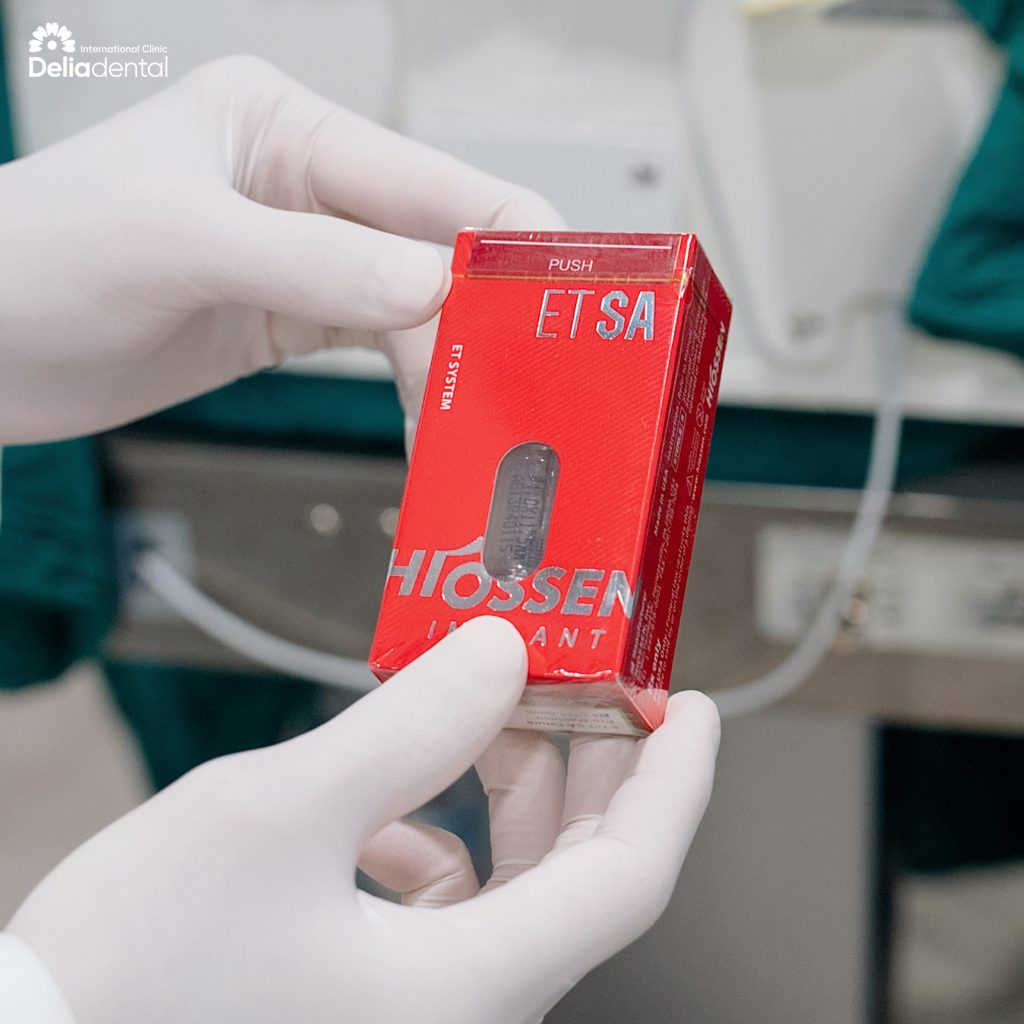
At top Bangkok clinics, a Straumann implant with a crown runs $2,200 to $3,200. At Delia International Dental Clinic in Vietnam, the equivalent Osstem implant starts from $700 and a Straumann SLA from $2,000 under current promotional pricing, positioning Vietnam at a consistent discount to Bangkok for identical brand systems.
For crowns, Bangkok’s leading clinics charge $400 to $700 for zirconia and Emax options. Delia’s range runs from $190 for entry-level zirconia up to $1,150 for premium lifetime-warranty materials.
Veneers and cosmetic work
Porcelain veneers in Vietnam at Delia Clinic start from $300 per tooth for Emax Press and $550 for the higher-tier Lisi ceramic. Bangkok’s equivalent porcelain veneer pricing runs $500 to $800 per tooth. For a full set of 20 veneers, that gap represents $4,000 to $10,000 in Vietnam’s favour before flights and accommodation are considered.
All-on-4 and full-arch restoration
All-on-4 per arch at top Bangkok clinics runs $10,000 to $15,000 depending on implant brand and prosthetic material. At Delia, the same treatment starts from $6,300 per arch using Osstem, placing Vietnam consistently below Thailand’s floor price for equivalent Korean-brand full-arch cases.
| Procedure | Delia Vietnam | Thailand (Bangkok) |
| Single implant, Osstem | from $700 | $1,500–$2,200 |
| Single implant, Straumann | from $2,000 | $2,200–$3,200 |
| Zirconia crown | from $190 | $400–$700 |
| Emax veneer | from $300 | $500–$800 |
| 20 veneers | from $6,000 | $10,000–$16,000 |
| All-on-4, per arch | from $6,300 | $10,000–$15,000 |
Implant brands and clinical standards
Both countries’ reputable clinics use the same globally distributed implant brands: Straumann, Nobel Biocare, Osstem, Dentium, and similar systems. At this tier, brand selection is a clinic-level decision in both destinations, not a country-level one. The meaningful price differences sit within the same brand across the two markets, not between different brands, and Vietnam generally offers those brands at a lower average price point than Bangkok’s premium clinic network.
What matters more than geography is what any individual clinic provides: in-house CBCT scanning, a written treatment plan with fixed pricing before you travel, an implant passport with manufacturer serial numbers, and a written warranty. These are the non-negotiables regardless of which country you choose.
Visa, flights, and logistics
Flights
Vietnam now rivals Thailand for international connectivity. Vietnam’s three international airports, Hanoi Noi Bai (HAN), Ho Chi Minh City Tan Son Nhat (SGN), and Da Nang (DAD), collectively serve over 60 international airlines. For most major source markets, flight times to Vietnam are equal to or slightly shorter than to Bangkok.
| From | To Bangkok | To Vietnam | Difference |
| Sydney | 9h direct | 8h 30m to SGN direct | Vietnam 30m shorter |
| London | 11h 30m direct | 11h to HAN direct | Vietnam 30m shorter |
| Tokyo | 6h 30m direct | 5h 30m to HAN/SGN direct | Vietnam 1h shorter |
| Seoul | 5h 30m direct | 4h 30m to HAN/SGN direct | Vietnam 1h shorter |
| Singapore | 2h 30m direct | 2h to SGN direct | Vietnam 30m shorter |
| Dubai | 6h 30m direct | 7h to SGN direct | Thailand 30m shorter |
| New York | 17h+ via connection | 17h+ via connection | Comparable |
Visa
Thailand grants visa-free entry to citizens of 93 countries for up to 60 days, which covers most Western dental tourists without any application. Vietnam’s visa-free program covers 13 countries for up to 45 days, including the UK, Germany, France, Italy, Spain, Japan, and South Korea, but not Australia or the US. For those nationalities, Vietnam’s e-visa is the practical route: available to 80+ nationalities, valid for 90 days, costs $25, and can be applied for online before departure. In practice, neither country presents a real barrier for dental tourism from any major Western market.
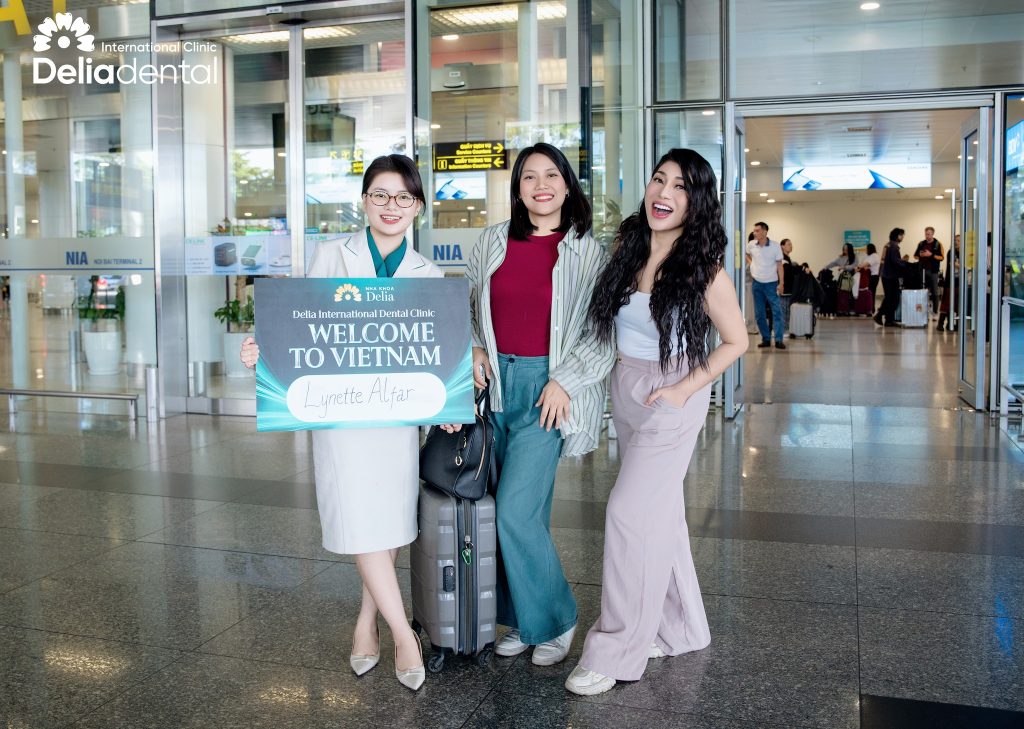
Dental holiday packages in Vietnam through Delia Dental Clinic include airport transfers, hotel recommendations near the clinic, and itinerary support for combining treatment days with city exploration, which removes most of the logistics burden for patients visiting Vietnam for the first time.
What dental tourism Vietnam reviews actually say
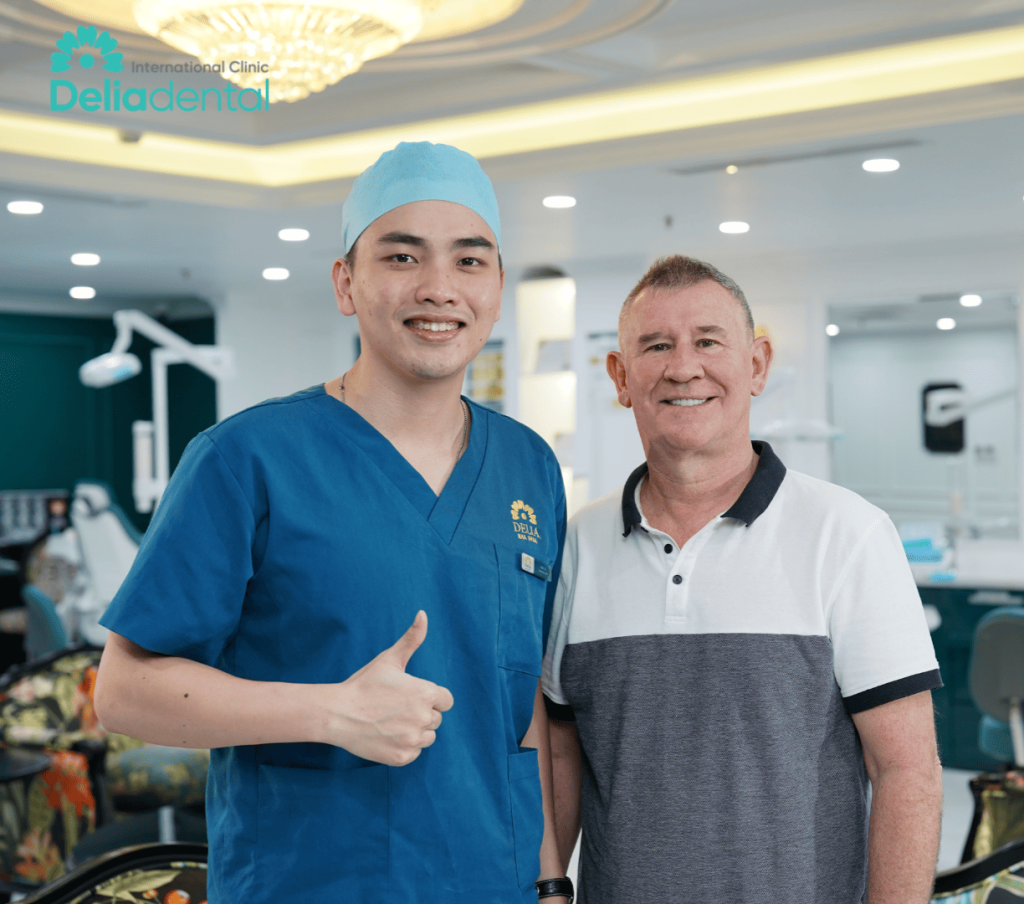
International patients who have completed treatment in Vietnam consistently highlight a few patterns across verified review platforms. English communication at reputable clinics is reliable across the full process, not just the initial inquiry. Fixed pricing agreed before travel matches the invoice on arrival. The two-visit timeline for implant cases is explained clearly upfront. Remote follow-up between visits, typically via WhatsApp with direct access to the treating dentist, is a recurring positive that patients note distinguishes Vietnam clinics from home-country follow-up experiences.
Delia dental clinic reviews from international patients reflect the same themes: transparent pre-travel quotes, no cost surprises, and responsive aftercare from abroad. Delia International Dental Clinic Ho Chi Minh City reviews in particular mention consistent English-language service across both clinical and administrative staff. The most common negative experiences across any dental tourism destination, Vietnam or Thailand, trace back to patients selecting a clinic on price alone without verifying implant brand, warranty documentation, or CBCT capability before booking.
Total trip cost: Vietnam vs Thailand
Procedure prices alone do not reflect what a dental trip actually costs. Vietnam’s lower cost of living amplifies the clinical savings. A 4-star hotel in central Bangkok runs $80 to $120 per night; the equivalent in Ho Chi Minh City or Hanoi runs $40 to $70. Food and transport costs follow the same ratio.
Three scenarios using Delia’s promotional pricing and current flight data illustrate the full picture.
Scenario A: Single Straumann implant, two visits from Sydney
| Cost component | Delia Vietnam | Bangkok |
| Return flights x2 | $1,000–$1,400 | $1,200–$1,600 |
| Accommodation, 10 nights | $400–$700 | $800–$1,200 |
| Treatment, Straumann complete | $2,000–$2,300 | $2,200–$3,200 |
| Food and transport | $200–$350 | $400–$600 |
| Total | $3,600–$4,750 | $4,600–$6,600 |
Saving in Vietnam: approximately $1,000 to $1,850.
Scenario B: 20 Emax veneers, one visit from London
| Cost component | Delia Vietnam | Bangkok |
| Return flights | $550–$850 | $600–$900 |
| Accommodation, 7 nights | $280–$490 | $560–$840 |
| Treatment, 20 Emax veneers | from $6,000 | $10,000–$16,000 |
| Food and transport | $140–$245 | $280–$420 |
| Total | from $6,970 | $11,440–$18,160 |
Saving in Vietnam: $4,470 to $11,190 depending on Bangkok clinic tier.
Scenario C: All-on-4 both arches, two visits from New York
| Cost component | Delia Vietnam | Bangkok |
| Return flights x2 | $1,800–$2,800 | $2,000–$3,000 |
| Accommodation, 14 nights | $560–$980 | $1,120–$1,680 |
| Treatment, All-on-4 both arches (Osstem) | from $12,600 | $20,000–$30,000 |
| Food and transport | $280–$490 | $560–$840 |
| Total | from $15,240 | $23,680–$35,520 |
Saving in Vietnam: $8,440 to $20,280 across the full trip.
Vietnam’s multi-city advantage
Thailand’s dental tourism is almost entirely concentrated in Bangkok. Vietnam offers three distinct cities with international airports and established clinic infrastructure, each suited to a different patient preference.
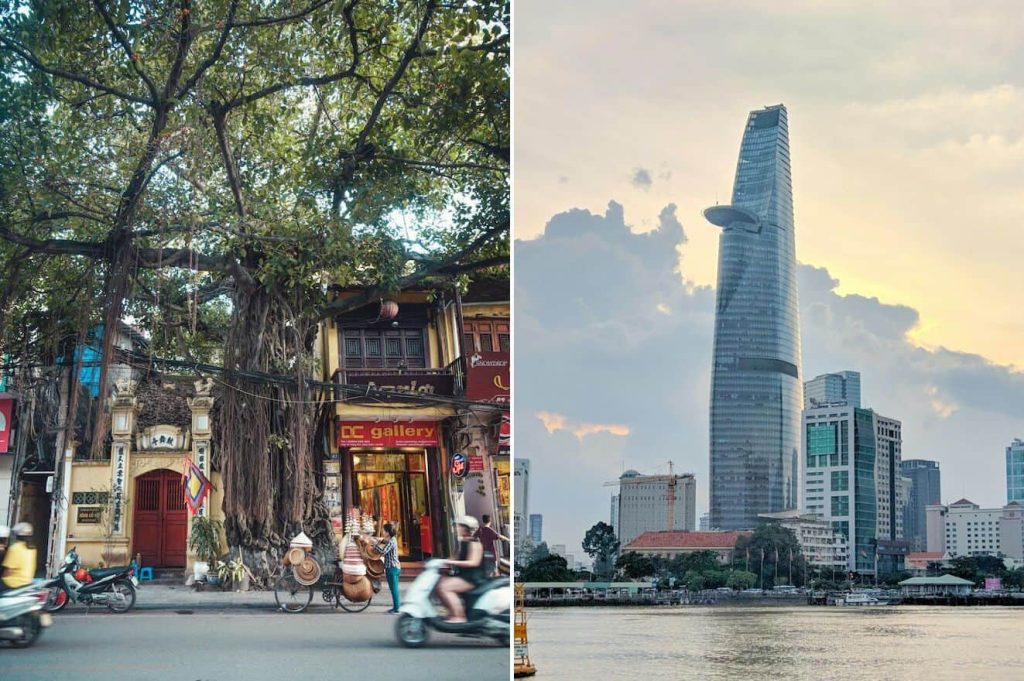
Ho Chi Minh City is the most accessible from Australia and Southeast Asia, with direct flights from Sydney, Melbourne, Singapore, and multiple Asian hubs. It suits patients who want a cosmopolitan base with strong restaurant and hotel options during recovery.
Hanoi is the most convenient entry point for patients coming from Europe, Japan, and South Korea, with direct routes from London, Paris, Seoul, and Tokyo. It has the most developed international district outside HCMC and a cooler climate for patients who prefer that during recovery.
This geographic spread is a meaningful practical advantage. A Bangkok-only dental tourism market means patients fit their preferences around the city. Vietnam lets patients choose a city that fits what they actually want from the trip.
Delia International Dental Clinic: what to know before you go
Delia Dental Clinic operates across Ho Chi Minh City, Hanoi, and Thanh Hoa. It has treated more than 5,000 international patients since opening in 2018 and offers seven implant systems from Korean, American, French, and Swiss manufacturers across a price range designed to match the clinical need rather than default to a single tier.
For patients looking at dental tourism Vietnam, Delia’s process starts remotely. Send your X-rays or OPG scan via WhatsApp and you receive a written treatment plan with fixed USD pricing within 48 hours. That quote does not change on arrival. The clinic uses CBCT 3D scanning and Digital Smile Design before any preparation begins, CAD/CAM in-house fabrication for crowns and veneers, and a structured aftercare protocol that includes an implant passport and written warranty documentation for every implant case.
Vietnam dental travel to Ho Chi Minh City works well as a combined trip. The city has a strong international hospitality infrastructure, with direct flights from Sydney, Melbourne, Singapore, and several European hubs. Delia assists with hotel recommendations and airport transfers to remove the logistics burden for first-time visitors.
Book a free online consultation here.
Final thoughts
Thailand is a well-established dental tourism destination with excellent clinics, and for patients who already know it well or prefer Bangkok as a destination, it remains a strong option. Vietnam’s case is not that Thailand is worse. It is that Vietnam offers the same implant brands and clinical standards at a price point that is consistently lower, with simpler visa access and lower total trip costs when accommodation is factored in. For patients who have not yet committed to a destination, dental tourism in Vietnam deserves more serious consideration than its current international profile suggests.


