
Porcelain crowns is a custom made ceramic cap that covers a damaged or weakened tooth and restores its shape, strength and appearance. Dentists usually recommend one when decay, a crack, heavy wear or root canal treatment leaves too little tooth for a filling to hold.
This guide covers when a crown is needed, how the procedure works, what each material costs at Delia Dental Clinic and how to care for the crown.
Quick Answer
A porcelain crown protects a tooth that is too damaged for a filling, commonly after deep decay, a crack or a root canal. Treatment usually involves tooth preparation, a scan or impression, a temporary crown and a final fitting. Standard prices at Delia Dental Clinic range from $190 to $1,150 per tooth, and how long a crown lasts depends on the material, your bite and daily care.
When Do You Need a Porcelain Crown?
A crown is usually needed when the tooth requires more protection than a filling can give. A molar with a large cavity under an old filling is a typical case, because the remaining walls may not withstand chewing force. Root canal treatment can also leave a tooth more fragile, and crowns can anchor a bridge. The dentist decides after an examination and X-rays, and a weak tooth may need a core buildup first so the crown has enough solid tooth to grip.
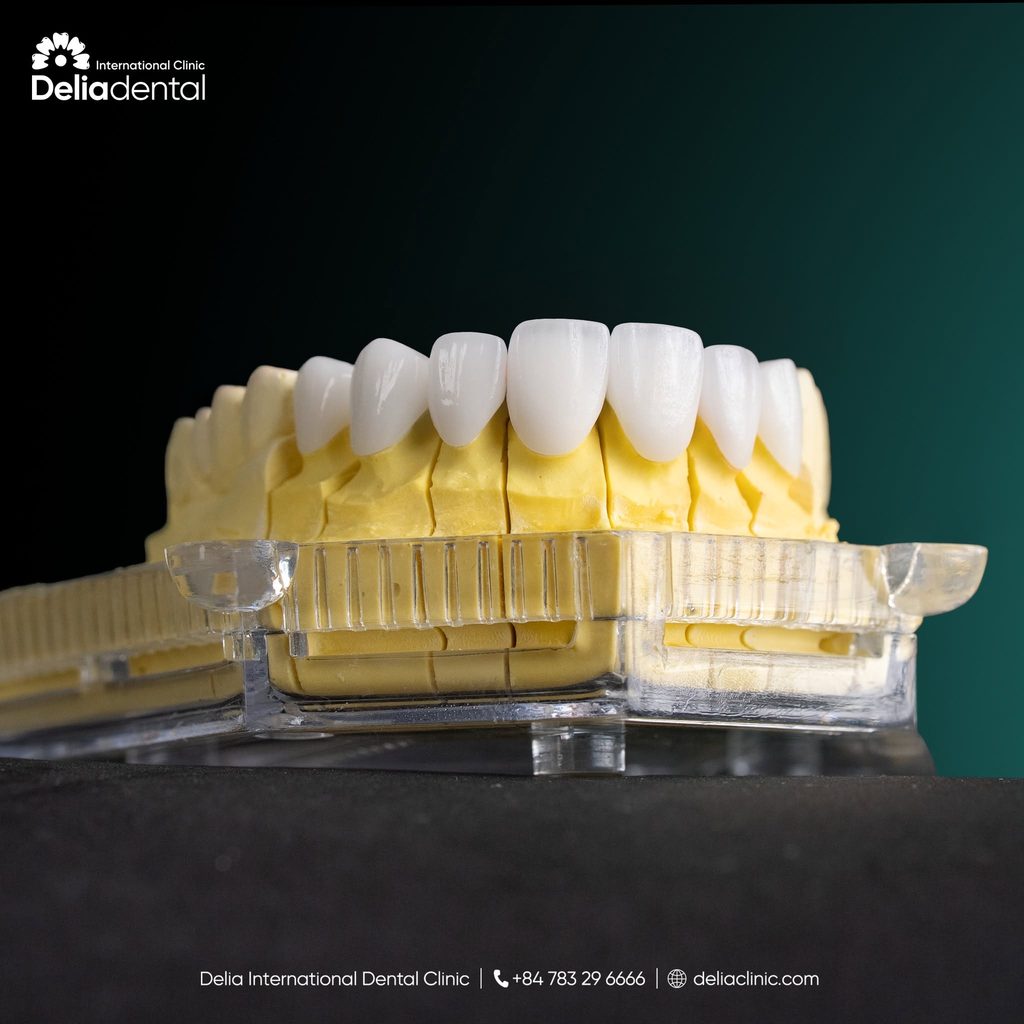
How the Porcelain Crown Procedure Works
After an examination with X-rays or scans, the tooth is reshaped to make room for the crown, which is why the procedure cannot be reversed. A scan or impression follows, and a temporary crown protects the tooth while the final one is made. At the final fitting, the crown is checked for fit and bite, adjusted and bonded.
For visitors from abroad, a single crown commonly takes around 4 to 7 days and several crowns 5 to 10 days. These are estimates, and infection, gum disease or root canal needs usually extend them.
Porcelain Crown Cost and Material Options
The right ceramic depends on tooth position, bite force and how visible the tooth is. Delia Dental Clinic offers all ceramic and zirconia options, and the table shows standard prices per tooth for each.
| Material | Typical use | Standard price per tooth (USD) | Final price with 8% VAT | Warranty |
|---|---|---|---|---|
| Ceramill | Entry all ceramic option | $190 | $205.20 | 10 years |
| Emax | Often used for visible teeth | $300 | $324 | 10 years |
| Lava Plus | Strong zirconia option | $380 | $410.40 | 15 years |
| Lava Esthetic | Aesthetic zirconia option | $600 | $648 | 15 years |
| Orodent Bleach | Premium aesthetic option | $950 | $1,026 | 19 years |
| Orodent Innovation | Premium crown option | $1,150 | $1,242 | 19 years |
The per tooth price covers consultation, a scan or impression, a mock up, a temporary restoration and a try in. Root canal treatment, core buildup and gum treatment depend on the case and are billed separately when needed. A warranty period is not the same as service life, so ask for the written warranty terms before treatment. Prices are in USD, before VAT, and can change, so confirm the current figure with the clinic.
Caring for Your Crown
The ceramic cannot decay, but the natural tooth at the crown’s edge can. Brush twice a day with fluoride toothpaste, floss carefully around the crown, avoid biting ice or pens, and keep regular check-ups so the dentist can spot early decay or a loosening margin.
How Delia Dental Clinic Plans, Fits and Verifies Your Crown
Delia Dental Clinic works from its Hanoi and Ho Chi Minh City branches, and patients can send photos or X-rays beforehand for a preliminary review. The final plan is confirmed after an in person examination.
For cosmetic cases, the team uses a scan, X-ray and 3D design, then fits a provisional crown with temporary cement so you can review shape and color. Permanent cement is used only after you approve the result.
Patients can ask to see the original material packaging before preparation and receive photos or video of the lab fabrication. Warranty cards carry a QR code for checking details online.
Book a Consultation Now
Frequently Asked Questions
How Long Do Porcelain Crowns Last?
There is no single figure, because lifespan depends on the material, the tooth’s position, your bite and how well you clean around the crown. Many crowns commonly last 10 to 15 years or more with good care, while some fail earlier from decay, cracking or grinding. The 10 to 19 year periods in the price table are warranty terms, which cover defined conditions and are not a promise of service life. Heavy grinding or clenching may shorten a crown’s lifespan. A dentist can give a better estimate once they have examined the tooth and your bite.
Does Getting a Porcelain Crown Hurt?
The tooth is numbed with a local anesthetic before it is reshaped, and a topical gel can be applied first to ease the injection. Experiences vary between patients, so it is not possible to promise a pain free visit. Mild sensitivity to hot, cold or biting is common in the first days, particularly while the temporary crown is in place. Tell the dentist beforehand about any anesthetic allergy so an alternative can be arranged. If sensitivity is strong, keeps getting worse or comes with swelling, contact your dentist.
What Should I Do if My Crown Feels High or Comes Loose?
A crown that feels high often needs a bite adjustment, so avoid chewing hard on that side until a dentist has checked it. A dislodged crown should be kept safe, and the tooth protected from cold and hard food until you are seen. Do not try to glue it back yourself, since a poorly seated crown can trap bacteria against the tooth. If you have already travelled home, send photos and a description to Delia Dental Clinic through WhatsApp or Messenger so the team can advise on next steps. Photos cannot replace an examination, and a local dentist may need to see you if the problem is urgent.
Does a Tooth Need a Core Buildup Before a Porcelain Crown?
Not always. A tooth with enough healthy structure can often be prepared directly for a crown, while a tooth with a large filling, a fracture or deep decay may need rebuilding first so the crown has something solid to grip. The dentist often only knows how much tooth remains once decay and old filling material are removed. At Delia Dental Clinic, core buildup is billed separately from the per tooth crown price when it is needed. A photo cannot settle the question, so send X-rays and photos for a preliminary view and expect confirmation after examination.
Porcelain Crown or Veneer: Which Suits a Damaged Tooth?
A veneer is a thin facing, so it generally suits a structurally healthy tooth where the goal is a change in color or shape. A crown covers the whole tooth, which makes it the more usual choice when a tooth is cracked, heavily filled, worn or has had root canal treatment. The choice therefore depends on how much protection the tooth needs, not only on appearance. Delia Dental Clinic list prices for veneers are $380 per tooth for Emax Press and $550 for LiSi, before VAT. A dentist can suggest a preliminary direction from photos, and the final decision is made after an in person examination.
Deciding What Your Tooth Needs Next
These guides cover the decisions that usually come next: whether the tooth needs rebuilding first, when a filling is no longer enough and how a crown fits into a larger plan.
- Is a Core Buildup Really Necessary Before Crowns?
- How to Spot Critical Signs a Filling Demands a Crown
- Replacing Old Metal Ceramic Crowns With Zirconia in Vietnam
- How Many Crowns Do You Need for a Full Smile Makeover?
Final Thoughts
A porcelain crown is worth considering once a tooth needs protection that a filling cannot give, and the examination decides which material suits it. Send your recent X-rays or dental photos via WhatsApp or Messenger so Delia Dental Clinic can suggest a preliminary direction and tell you whether your tooth may need a core buildup first, before you book travel. The final plan and quote are confirmed after an in person examination.


