
The question of how many dental implants are required to restore a smile does not have one universal answer. The exact number depends entirely on how many teeth are missing, where those gaps are located in the mouth, and whether the missing teeth are clustered together or spread across different areas. Understanding how these patterns break down helps clarify why treatment plans vary so much from one patient to another.
One missing tooth
This is the simplest case.
- 1 implant replaces 1 missing tooth, regardless of which tooth it is.
- The implant supports a single crown placed directly on top.
- No additional implants are needed even if neighbouring teeth are weak, unless those teeth are also being replaced.
There is no scenario where a single missing tooth needs more than one implant.
Replacing a Few Missing Teeth in a Row
When several missing teeth sit directly next to each other, the required implant count does not need to match the number of lost teeth on a one-to-one basis. Instead, a strategic approach allows a smaller number of implants to anchor a larger dental restoration.
For example, two dental implants can successfully support a fixed dental bridge designed to replace three to four missing teeth in a row. The two implants are surgically placed at either end of the gap to act as strong anchors, while the artificial teeth in the middle float cleanly above the gumline, supported entirely by the bridge framework.
This configuration is known as an implant-supported bridge, and it serves as the standard clinical approach whenever missing teeth are adjacent rather than scattered throughout the jaw
Managing Several Missing Teeth in a Row
When multiple teeth are missing but are not all adjacent to one another, the diagnostic calculation becomes highly case-specific. Rather than using a single blanket formula for the entire mouth, dental specialists treat each individual gap as its own separate scenario.
The overall pattern of the open spaces matters far more than the total count of missing teeth. To visualize how these combinations work in practice, consider the typical clinical breakdowns below:
| Missing teeth pattern | Typical implants needed |
| 2 separate single gaps | 2 implants (1 per gap) |
| 1 single gap + 1 three-tooth gap | 1 implant + 2 implants (bridge) = 3 total |
| 4 missing teeth, all adjacent | 2 implants (bridge) |
| 4 missing teeth, two separate pairs | 2 to 4 implants depending on each pair’s width |
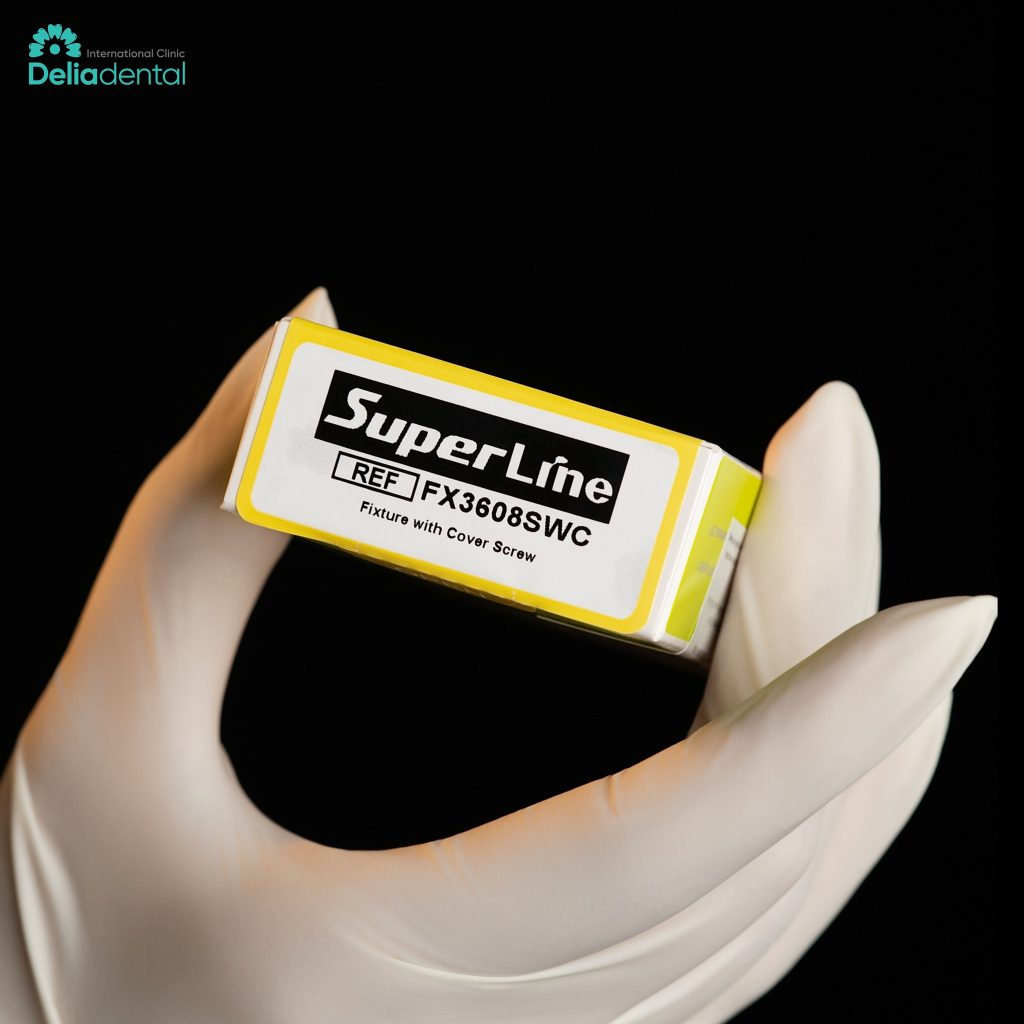
Full Arch Restorations for an Entire Upper or Lower Jaw
This is where the number of implants varies the most, because several different approaches exist for replacing an entire arch.
| Approach | Implants needed per arch |
| Individual implants (1 per tooth) | 10–14 |
| Implant-supported bridge | 6–8 |
| All-on-6 | 6 |
| All-on-4 | 4 |
All-on-4 uses two implants placed vertically at the front and two angled at roughly 45 degrees at the back, a positioning that often avoids the need for bone grafting even in patients with reduced bone volume. All-on-6 uses the same general principle with two additional implants for extra support, typically recommended for long-span bridges or cases needing more anchorage.
Each approach has its own clinical indications and trade-offs, which is a big enough topic to deserve its own breakdown rather than a short summary here.
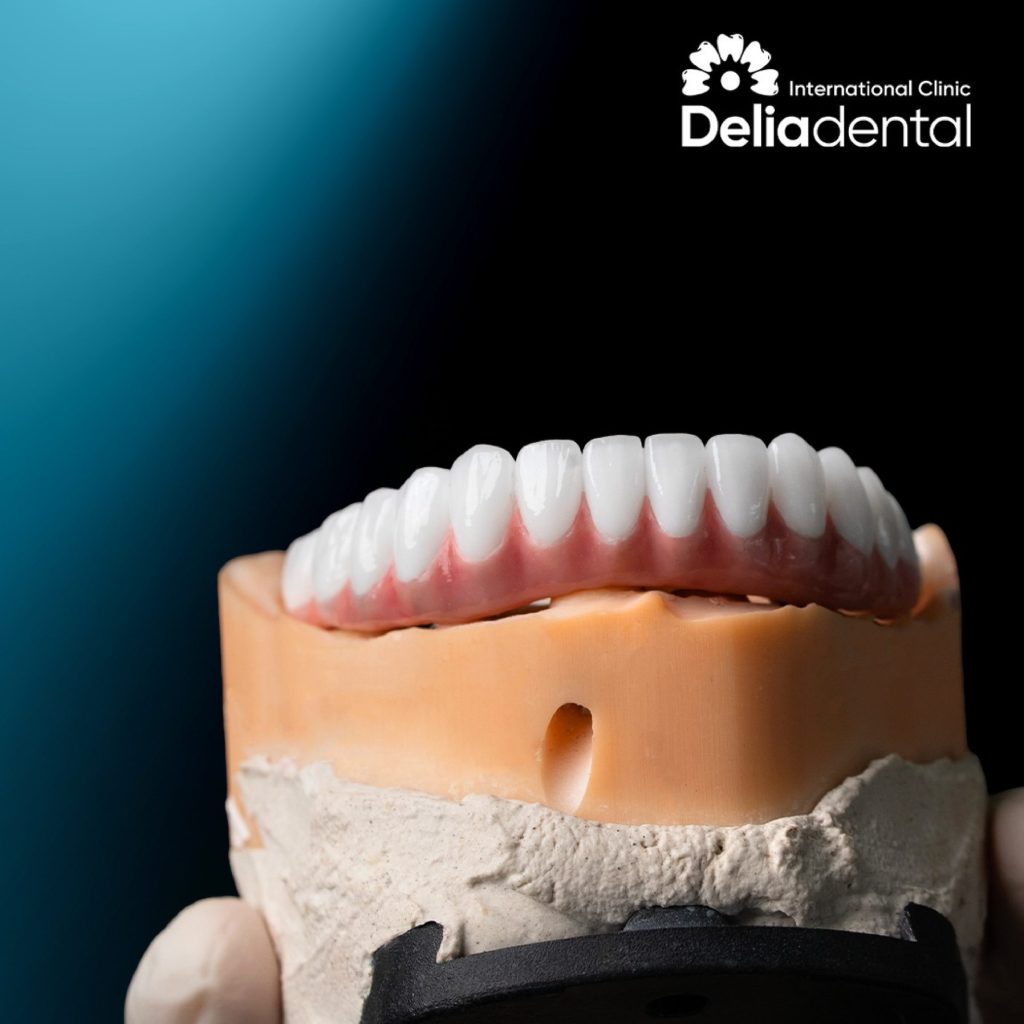
Full Mouth Reconstruction for Both Arches
When both the upper and lower arches require complete tooth replacement, the implant count for each individual jaw is calculated independently and then combined for the final treatment plan. This full-mouth approach completely rehabilitates both oral function and facial aesthetics.
The total number of implants placed during a full-mouth reconstruction depends heavily on the patient’s underlying jawbone density. The most common structural configurations include:
| Full Mouth Configuration | Total Implants Needed (Both Arches) |
| All-on-4 on Both Arches | 8 implants total (4 per arch) |
| All-on-4 + All-on-6 Combo | 10 implants total (4 on one arch, 6 on the other) |
| All-on-6 on Both Arches | 12 implants total (6 per arch) |
Mixed approaches are highly effective when bone degradation is more advanced in one jaw than the other. For instance, a patient might receive an All-on-6 setup on the upper jaw where bone tissue is naturally softer, and an All-on-4 setup on the denser lower jawbone.
What full mouth implants cost in Vietnam
At Delia International Dental Clinic, All-on-4 full arch pricing starts from $6,300 per arch using certified, international-standard implant systems. This starting price provides a highly transparent benchmark for international patients calculating their potential savings.
To put this pricing into perspective, it helps to review what the exact same All-on-4 treatment typically costs across major Western countries:
| Country | All-on-4 per arch |
| Australia | AUD 25,000–32,500 |
| United Kingdom | £12,000–25,000 |
| United States | $20,000–35,000 |
| Delia (Vietnam) | from $6,300 (USD) |
For a full-mouth case using All-on-4 on both arches, the total in Vietnam typically lands well under half of what the same treatment costs in any of these three countries, even after factoring in flights and accommodation for two visits.

How Delia Dental Clinic determines your exact number
The numbers and configurations detailed above represent standard clinical patterns, but they are not a substitute for a personalized medical diagnosis. The precise number of dental implants your mouth requires can only be determined by assessing several unique biological factors.
During an evaluation, a dentist must analyze key elements that affect structural success:
- Bone density and volume in the specific area of the jaw
- Whether bone grafting is needed before implants can be placed
- The position and angle available for implant placement
- Your bite force and any history of grinding or clenching
None of this can be determined from a description alone. At Delia, a CBCT scan and clinical evaluation are required before any implant count is confirmed, which is also why a written treatment plan is provided before you travel rather than estimated over a phone call.
If you want to know exactly how many implants your case requires, sending a recent X-ray or photos for a remote assessment is the most reliable starting point.
Book a free consultation here.
Final thoughts
The number of implants you need comes down to how many teeth are missing, whether the gaps are adjacent or scattered, and which full-arch approach fits your bone condition if you are replacing an entire arch. A single missing tooth never needs more than one implant, and a full arch rarely needs more than four to six. The exact number for your case is something only a CT scan and clinical review can confirm.


