
Most international patients do not doubt that dental care in Vietnam can be good. What holds them back is logistics: how many days to book, where to stay, what happens if the plan changes on arrival, and who to contact once they are home. Dental travel in Vietnam works when those questions are answered before the flight, not after it.
This guide explains how Delia Dental Clinic organises a dental trip from the first message to the return home. It covers trip length by treatment, what an online case review can and cannot confirm, how crown and veneer stages fit into a short stay, and how implant patients plan around two trips.
The timelines and inclusions below describe typical cases. Your dentist confirms the real schedule after an in person examination.
Quick Answer
A dental trip to Vietnam with Delia Dental Clinic is organised in stages: an online case review, a written plan with a preliminary timeline, hotel and schedule coordination, treatment, and aftercare documents. Crowns and veneers commonly need about 4 to 10 days, while implants usually need two trips. The final schedule is confirmed after an in person exam.
How Long a Dental Trip to Vietnam Takes
The length of a dental trip depends on the treatment, from about 4 days for a single crown to about 14 days for a full arch implant case. Implants and full arch cases also need a second trip after the jawbone heals. The table shows typical estimates, not guarantees.
| Treatment | Typical stay in Vietnam | Return visit |
|---|---|---|
| Single crown | 4 to 7 days | Often none, if teeth and gums are healthy enough |
| Multiple crowns | 5 to 10 days | Often none, if teeth and gums are healthy enough |
| Porcelain veneers | 5 to 10 days | Often none, if teeth and gums are healthy enough |
| Crown and veneer smile makeover | 7 to 10 days | Often none, if teeth and gums are healthy enough |
| Single implant | 5 to 10 days on the first trip | After about 3 to 6 months of healing |
| All-on-4 or All-on-6 | 10 to 14 days on the first trip | After about 3 to 6 months for the final teeth |
These ranges exist because each treatment has steps that cannot be compressed. Crowns and veneers need lab work, a trial fitting and bite adjustment. Implants need time to bond with the bone. A patient who books eight veneers into a fortnight has a comfortable margin, while one who books six days for the same case may run out of time if a bite adjustment is needed.
Several findings can extend a stay beyond the table, including infection, gum disease, an unstable bite or a tooth that needs root canal treatment first. Patients should arrive at least one day before the first appointment to rest after the flight. For implant surgery, extractions or full mouth work, avoid booking the flight home for the evening of the last appointment, because it leaves no room if something needs an extra day.
Implant cases follow a different pattern from crowns. The first trip covers assessment, surgery and temporary teeth. The jawbone then needs about 3 to 6 months to heal around the implants, a biological process called osseointegration, and the second trip covers the final prosthesis. A case that needs bone grafting may need additional healing time and sometimes a third visit, which is confirmed through the CBCT scan.

How Delia Dental Clinic Plans Your Trip Before You Arrive
Most of the uncertainty in dental travel appears before the patient boards a plane. Not knowing how many days to book, which area to stay in or whether the plan is realistic makes people hesitate to commit. Delia Dental Clinic handles this in three steps before the trip starts.
Online Case Review and Written Plan
Patients send photos or existing X-rays through WhatsApp or Messenger before booking anything. The team reviews them and gives a preliminary treatment direction, the likely stages, an estimated timeline and a cost estimate in a written plan. This lets a patient judge whether the trip is worth making before paying for flights.
A case review from photos and X-rays has limits. It cannot confirm final implant position, exact bone grafting needs or the final cost, because those depend on a clinical examination and, for implants, a CBCT scan taken at the clinic. A 2D panoramic X-ray is enough for a preliminary direction, but it cannot measure bone density or volume. A patient who books a fixed schedule around a photo based estimate is the one most likely to be caught out if the plan changes after the in person exam.
Scheduling Around Your Travel Window
Once a patient has a rough travel window, the team builds the appointment schedule around those dates and confirms it before arrival, not on the day the patient lands. For patients with a fixed departure date, this means the treatment plan is sized to fit the available time. If a case cannot be completed in the window, the better answer is usually a staged plan or a longer stay, not a rushed schedule.
Peak periods affect this more than most patients expect. Christmas, New Year and Tet can raise flight and hotel prices and tighten clinic availability, so booking outside them makes scheduling easier where the patient’s calendar allows it.
Airport Pickup and Hotel Coordination
The coordination team helps arrange hotel and timeline details, and airport pickup can be arranged for arriving patients. After a long haul flight, a pickup removes the need to find transport in an unfamiliar city, and it means the first contact with the team happens in person and in English. Confirm for your own dates what is included, because flight, hotel and visa support depend on the current offer and its terms.
A hotel close to the clinic matters most when treatment involves several appointments within a short window. A short trip between hotel and clinic makes a run of back to back visits less tiring, and it helps after surgery when a patient wants to rest quickly.

What the Treatment Stages Look Like for Crowns and Veneers
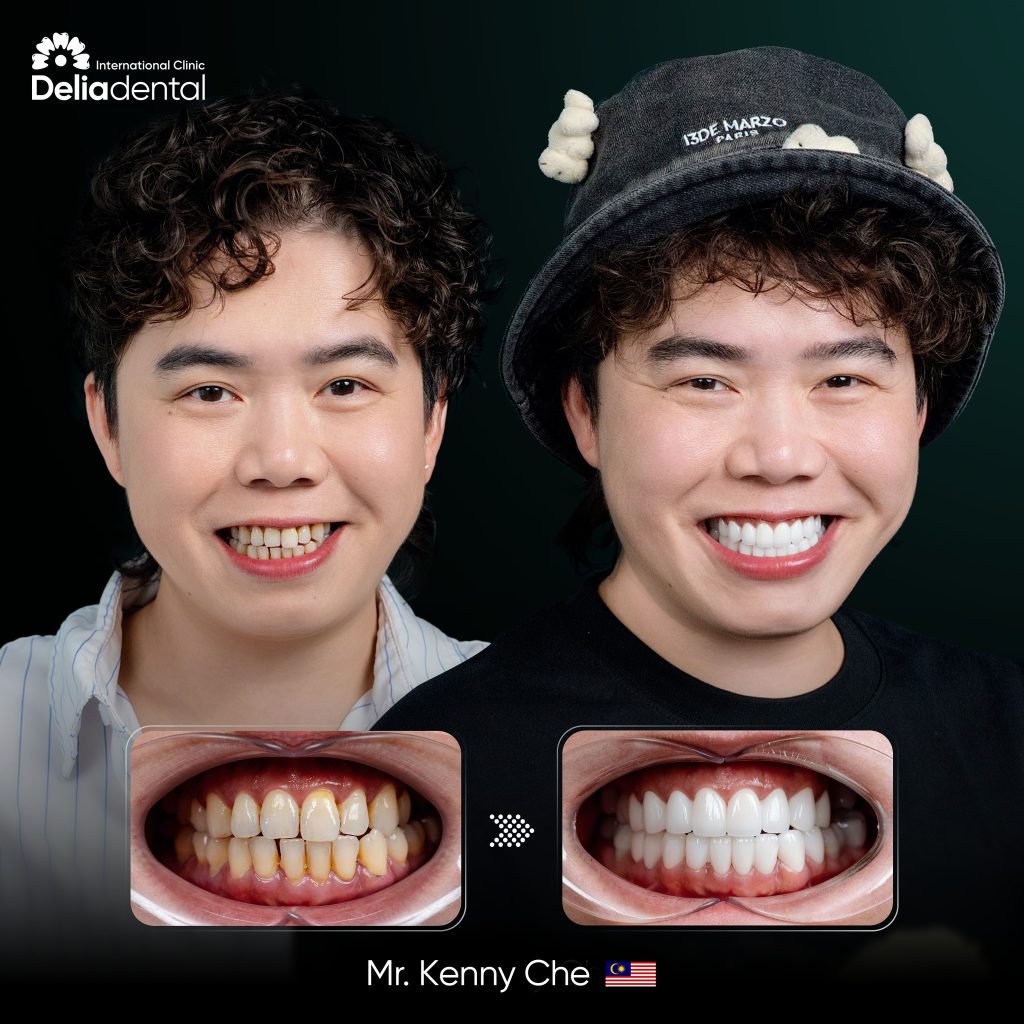
For crown and veneer patients, Delia Dental Clinic structures treatment in stages designed to fit a short stay. The number of visits depends on how many teeth are involved and whether any tooth needs extra treatment first.
Consultation, Scan and Design
The first visit covers a review of the patient’s medical history, dental X-rays and a 3D scan, which are used to design the new teeth. The patient’s goals for color, shape and proportion are discussed at this stage, since they guide the design. Patients with allergies or earlier reactions to anesthetic should mention them here, because allergy history is checked before any injection.
Preparation and Temporary Restorations
The teeth are then prepared, and temporary crowns or veneers are fitted so the patient leaves with a functional smile while the permanent restorations are made. Temporary restorations also help the patient see how the planned shape and proportion look in daily life. Whether a patient has a temporary set at this point depends on the case, and the dentist explains the plan at the appointment.
Try In and Adjustment
Before anything is made permanent, a provisional crown or veneer is fixed with temporary cement so color and shape can still be adjusted. Patients can look at it in different light and show it to family. Permanent cement is used only after the patient approves. This is the stage where concerns should be raised, because once restorations are permanently cemented, a change means remaking them.
Final Fitting and Check
The permanent restorations are fitted, the bite is checked and small adjustments are made. A final check confirms the teeth feel stable and comfortable before the patient leaves. How many adjustments are possible depends on the case and on the days left in the stay, which is another reason to keep a buffer before the flight home.
Fitting Sightseeing Around Treatment
Many patients combine dental treatment with time in Vietnam, and it is realistic for crown and veneer cases because there are gaps between appointments while the lab works. Patients often use these days to explore Ho Chi Minh City or Hanoi, and the team can suggest places to go based on the patient’s interests and schedule.
The type of treatment decides how much a patient should plan. Between crown appointments, light sightseeing is usually comfortable. After implant surgery, swelling, bleeding and soreness can occur, and recovery varies between patients, so the first days are better kept free for rest. Long tours, hot outdoor days and heavy meals are worth avoiding until the dentist confirms it is fine, and soft foods are usually advised for a period after implant surgery. A three day trek booked right after surgery is the kind of plan worth changing before you fly.
After You Return Home
Written warranty documentation and treatment records are handed over after treatment, and they are what make follow up possible at home. The documents let a local dentist see what was placed, with which materials and when. Patients should also ask the coordinator to send aftercare instructions in writing in English before they leave.
Patients can send questions, photos or short videos through WhatsApp or Messenger if something feels wrong after they return. A remote review can guide the next step, but it cannot diagnose. Facial swelling, fever, pus, severe pain that starts without a trigger, or difficulty breathing or swallowing need prompt local dental or urgent medical care, not a reply by message.
What to Send and Confirm With Delia Dental Clinic Before Booking Flights
The most useful step before booking is sending records, because a reviewed case gives a more reliable timeline than a general estimate. Delia Dental Clinic reviews the records, suggests a direction and lists the likely stages, and the final plan is then confirmed in person. A good starting set includes:
- Recent X-rays or an existing CBCT scan
- Clear smile and bite photos
- An existing quote from another dentist, if available
- Medical history and a medication list
- Your main concerns and preferred travel dates
It also helps to confirm a few practical points in writing before paying for flights: how many days the plan needs, whether the treatment is one trip or two, what airport pickup and hotel coordination cover for your dates, and what is not included in the cost estimate. Patients who do this avoid the most common source of stress, which is discovering on arrival that the plan or the support is different from what they assumed.
Clinical work takes place at the Ho Chi Minh City and Hanoi branches. Delia Dental Clinic has completed more than 5,000 restorative and cosmetic cases across both. Experience helps most when it is paired with imaging, a written plan and a realistic timeline, not when it stands in for them.
contact Delia Dental Clinic right now.
Frequently Asked Questions
Does Delia Dental Clinic Book Flights and Visas for Me?
Not as a general rule. The team coordinates the appointment schedule and hotel details, but flights, hotel and visa support depend on the current offer and its terms, such as a deposit, so confirm what applies to you in writing. Visa requirements vary by nationality and can change, so check Vietnam’s official e-visa portal close to your travel date instead of relying on an earlier trip. Book flights only after the treatment schedule is confirmed, because a fixed flight is hard to move if the plan needs an extra day. Avoid booking a flight home for the evening of your final appointment, particularly after surgery. If your dates are fixed, tell the coordinator when you first write so the plan is sized to fit them.
Can I Finish Crowns or Veneers in One Trip?
Often yes, when the teeth and gums are healthy enough and no tooth needs extra treatment first. The typical stay is about 5 to 10 days, depending on how many teeth are involved. A tooth with infection, gum disease or a need for root canal treatment may need to be treated before crowns, which adds days. An unstable bite can also need more adjustment after the try in. The photo and X-ray review gives a first answer, and the in person exam confirms it, so ask the coordinator which of these findings would change your schedule.
What Happens Between the Two Trips for Implants?
The patient returns home while the jawbone heals, which commonly takes about 3 to 6 months, and does not need to stay in Vietnam. During this period, questions and photos can be sent through WhatsApp or Messenger. The second trip is for the final prosthesis, and its date can be changed if the patient tells the coordinator in advance. A case with bone grafting may need longer healing, and the timing is confirmed through CT imaging. Keep the treatment records and warranty documents in a safe place, because a local dentist may ask for them if you need care at home. The final restoration should not be rushed to suit a travel date.
Is a Dental Trip Worth It for One Small Treatment?
Usually not on its own. A single filling or a routine cleaning rarely saves enough to cover flights, accommodation and time off work, and these are better handled locally. The trip makes more sense when the plan is large enough, such as several crowns, veneers, implants or a full arch case. Patients already travelling to Vietnam for another reason are the main exception. A useful test is to compare a written itemised quote from Vietnam with your local quote for the same procedures and materials, then add the full trip cost before deciding.
How Busy Can My Sightseeing Schedule Be During Treatment?
It depends on the stage. Between crown or veneer appointments, most patients can sightsee at a relaxed pace. After implant surgery, plan for rest during the first days, since swelling, bleeding and soreness can occur and recovery differs from patient to patient. Avoid heavy physical activity and long tours until the dentist says it is fine. Ask your coordinator to mark the appointment days and the lighter days on the same calendar so you can plan around them. If you have a long flight or an activity booked right after surgery, raise it before the schedule is confirmed, not afterwards.
Costs, Recovery and Country Specific Planning
These articles cover the cost, recovery and travel planning questions that usually follow once you have a rough trip length in mind.
- Dental Tourism in Vietnam for New Zealand Patients: Cost, Travel and Treatment Guide
- Full Mouth Dental Implants Cost in Vietnam
- Vietnam Dental Packages NZ: Prices and What’s Included
- Soft Foods After Dental Implants: Safe Healing Meal Guide in Vietnam
Final Thoughts
Dental travel in Vietnam works best when the plan, schedule and aftercare are clear before the flight is booked. Send your recent X-rays, smile photos and planned travel dates via WhatsApp or Messenger so Delia Dental Clinic can suggest a preliminary plan and tell you whether your case needs one trip or two.


