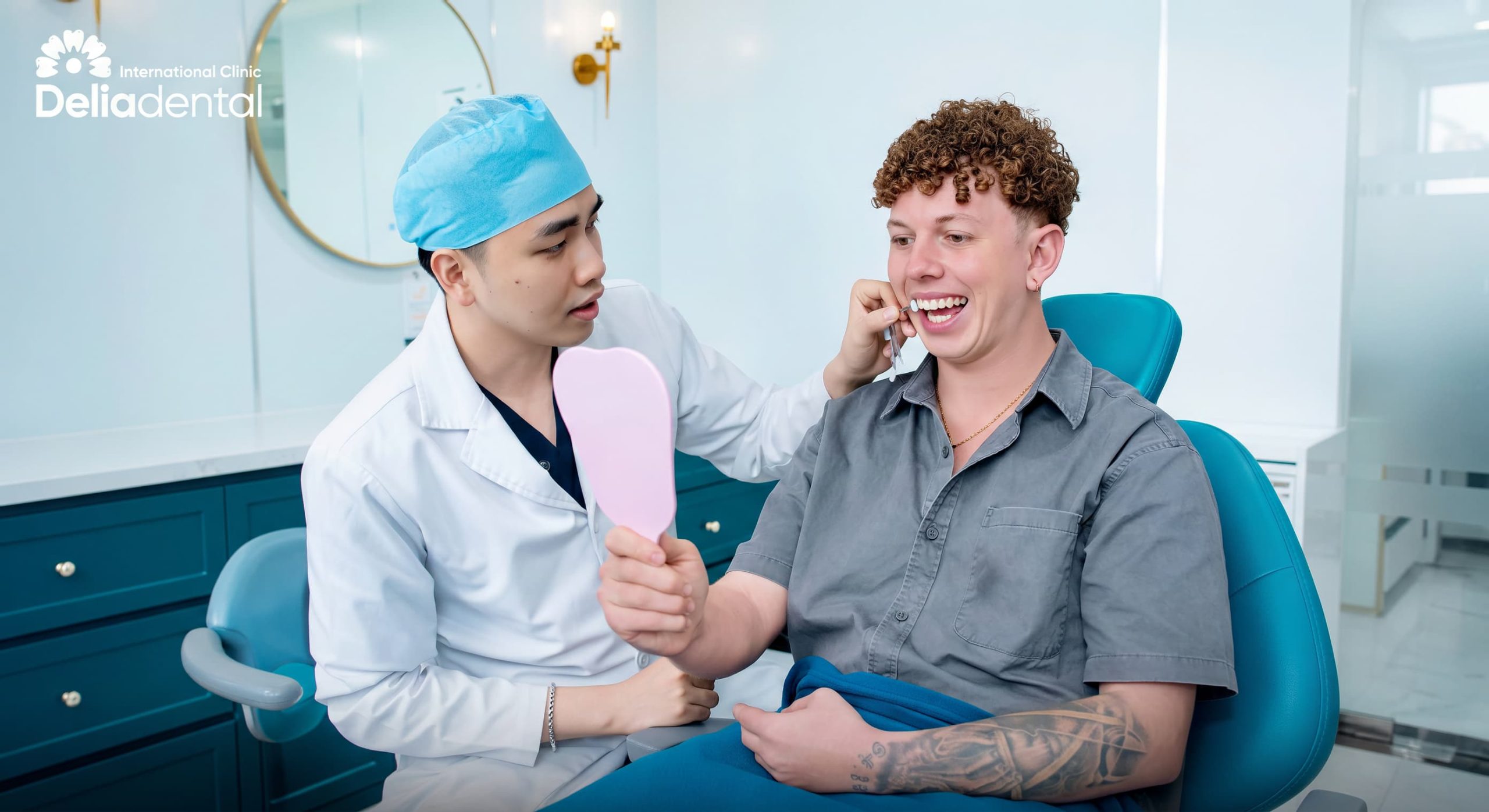
Yes, in most suitable cases. A single porcelain veneer can blend with the teeth beside it when the dentist and the ceramist match more than colour: translucency, shape and surface texture matter just as much, and they are what the eye reads first.
What decides the result is how different the treated tooth is from its neighbours, and how much those neighbours may still change. A chipped tooth beside evenly coloured teeth is a straightforward match. A darker tooth beside worn or stained teeth is a harder one.
This guide explains how a single veneer is matched, the situations where a dentist may suggest treating a neighbouring tooth as well, and how that changes the cost and the length of the trip.
Quick Answer
A single veneer can match natural teeth when the neighbouring teeth are reasonably even in colour, translucency and shape, and when the shade is chosen after any whitening has settled. If adjacent teeth are heavily stained, worn or uneven, a dentist may recommend treating them too. Feasibility needs an in person examination.
What Does Matching Involve Beyond Shade?
Matching one veneer to natural teeth involves four properties: value (how light or dark the tooth is), chroma (how saturated the colour is), translucency (how much light passes through the edge) and surface form (shape, texture and gloss). Colour alone is the property patients notice least when it is right and most when it is wrong.
| Property | What the eye notices when it is off |
|---|---|
| Value | The veneer looks brighter or greyer than its neighbours |
| Chroma | The veneer looks too yellow or too pale beside natural teeth |
| Translucency | The tooth looks flat and opaque, without the soft edge of natural enamel |
| Surface form | Different shine, texture or contour reflects light differently from the teeth beside it |
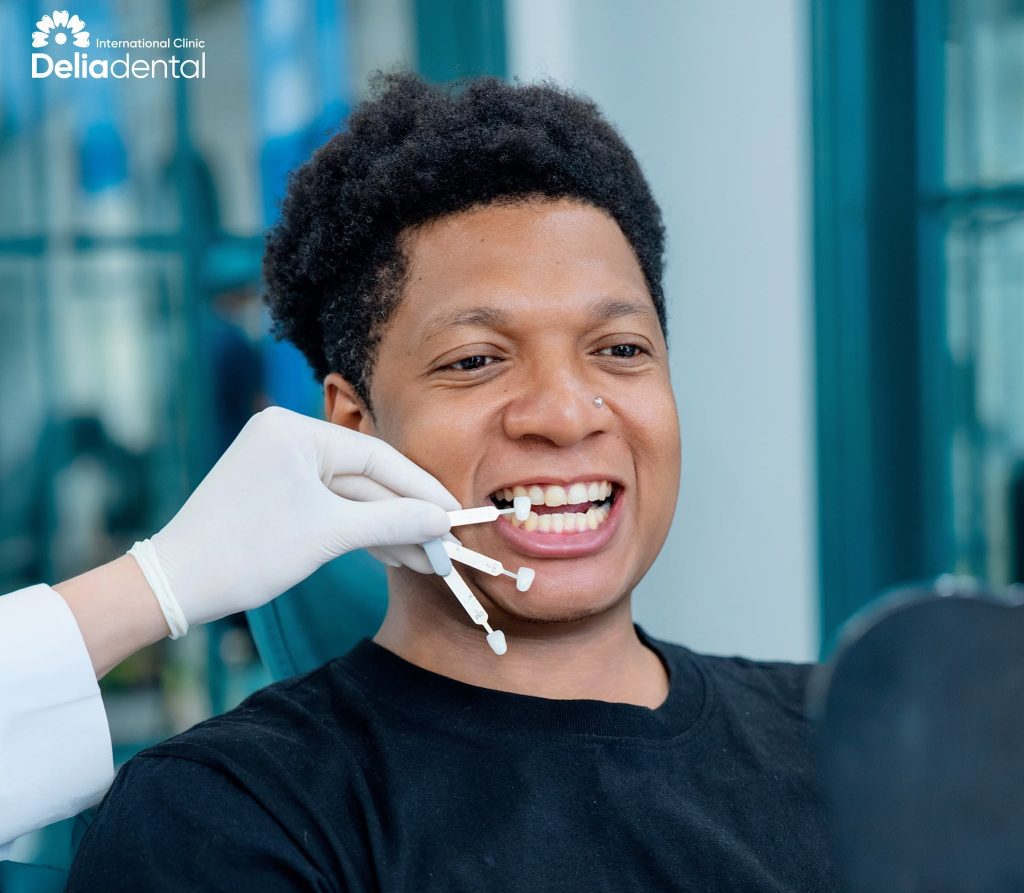
Dental sources describe shade matching as depending on lighting, tooth hydration, layering technique and the skill of the dentist and ceramist, not on a shade guide alone. A Decisions in Dentistry clinical report on a single upper lateral incisor veneer describes sending the laboratory a diagnostic wax-up and cross polarized photographs so the ceramist could copy anatomy and shade, which shows how much information a one tooth match needs.
Why One Veneer Is Harder to Match Than a Full Set
A single veneer has to agree with every tooth beside it, while a full set only has to agree with itself. With one tooth there is a direct reference on both sides, so small differences in value or translucency show up quickly.
Natural Teeth Are Not One Flat Colour
A natural tooth is usually darker and more saturated near the gum, lighter in the middle and more translucent at the biting edge. A veneer made in one uniform shade tends to look pasted on. A good match reproduces that gradient, which is why the dentist records shade in more than one zone of the tooth and the laboratory builds the veneer in layers.
Neighbouring Teeth Keep Changing
Natural teeth wear, stain and darken gradually with age and with food and drink, while ceramic holds its colour. A veneer matched well today may sit slightly lighter than its neighbours in some years. For that reason, dentists often discuss whitening, or treating the neighbouring teeth, before committing to one tooth.
Do You Need to Whiten the Neighbouring Teeth First?
Whiten first if your other teeth are darker than you want, because a veneer keeps the shade it was made in and cannot be bleached afterwards. With one veneer this matters more than with a full set, since every natural tooth beside it stays visible as a comparison. The sequence, the waiting period before shade selection and the cases where whitening is unnecessary are covered in Delia Dental Clinic’s guide to teeth whitening before veneers.
When One Veneer Works and When Neighbours Need Treatment Too
A single veneer is realistic when the problem is confined to one tooth and the neighbours are healthy and fairly uniform. It becomes less realistic as the neighbours become more stained, worn or uneven, because a veneer then has no good colour or shape to match.
| Situation | Is a single veneer realistic? | What a dentist may suggest |
|---|---|---|
| One chipped or slightly uneven tooth, neighbours even in colour | Usually yes | One veneer matched to the neighbours |
| Neighbours darker than you want | Yes, after a decision on whitening | Whiten first, then match one veneer |
| One tooth darker or discoloured from the inside, for example after trauma or a root canal | Case dependent | A more opaque material, or a crown instead of a veneer |
| Neighbouring teeth heavily stained or unevenly coloured | Harder | Veneers or crowns on a group of teeth for a consistent result |
| Neighbouring edges worn, short or misshapen | Harder | Reshaping or restoring the neighbours so one tooth is not the only one with new proportions |
| Visible fillings, bonding or old crowns beside the tooth | Case dependent | Replacing the older restorations so everything is matched together, since they do not lighten with bleaching |
| Smile line or tooth proportions look uneven beside the treated tooth | Case dependent | A design review that may include the matching tooth on the other side |
What About a Dark or Root Canal Treated Tooth?
A dark tooth can still receive a veneer, but the veneer may need a more opaque ceramic or a different restoration, because a thin translucent veneer shows the colour underneath it. A 2026 clinical report in Compendium describes this problem on an upper incisor: the team used an opaque lithium disilicate core under an overlying ceramic layer so the tooth could match its adjacent incisors despite a dark substrate.
For a tooth that has had a root canal or trauma, the dentist usually checks the colour under the enamel first, and may recommend a crown when the tooth needs more protection than a thin facing can give. This is general information. The right option for your tooth is decided after examination and X-rays.
How the Match Is Checked Before the Veneer Is Final
A reliable single veneer match follows a defined sequence rather than one shade tab comparison:
- The dentist records the shade in natural or colour corrected light before any preparation, because dry teeth look lighter and hydration changes the reading
- Photographs are taken with a shade tab in the frame, so the laboratory sees the target colour in context
- A mock-up or provisional veneer shows shape and proportion before the final one is made
- The veneer is viewed beside its neighbours in daylight, since indoor lighting hides differences
- Permanent cement is used only after you approve the match
Some concerns can still be corrected at the try-in, and others mean the veneer returns to the laboratory. Delia Dental Clinic’s guide to the veneer try-in explains which is which.
How to Prepare Before You Travel
Preparing before you travel makes the first consultation more useful, because the dentist can judge the likely match from your photographs before you arrive.
- Smile photos taken in natural daylight, close up and from a normal conversation distance
- A recent X-ray of the tooth, if you have one
- The date and method of any recent or planned whitening
- Any history on that tooth: fillings, a root canal, a knock or a previous veneer
- A photo of the matching tooth on the other side
How Delia Dental Clinic Plans a Single Veneer Match
Delia Dental Clinic, with branches in Hanoi and Ho Chi Minh City, plans cosmetic cases through a trial stage before anything is made permanent. The process starts with a scan, X-rays and a 3D design. A provisional veneer or crown is then placed with temporary cement so you can see and test the shape and colour, and review it again, including with family. Permanent cement is used only after you approve the result.
For a single tooth, that trial stage is where the match is judged against its neighbours in real conditions. Photographs sent before you travel help the team suggest an initial direction, for example whether whitening is worth discussing first or whether a neighbouring tooth should be part of the plan. The final decision on material and shade is made in person, not from photographs.
Current list prices for veneers at Delia Dental Clinic are below. Prices are in USD, per tooth, before VAT, and the final charge adds VAT, currently 8%.
| Veneer | List price per tooth | Final price with 8% VAT |
|---|---|---|
| Emax Press | $380 | $410.40 |
| LiSi | $550 | $594 |
Treatment that the tooth needs first, such as root canal care or a core buildup, depends on the case and is billed separately.
Frequently Asked Questions
Will a single veneer stay the same colour while my other teeth age?
The veneer keeps its colour while natural teeth gradually darken, wear and pick up stains. Over years this can leave the veneer slightly lighter than its neighbours. Whitening before the veneer, regular professional cleaning and limiting heavy staining habits slow that gap. If it becomes noticeable, a dentist can discuss whitening the neighbours or replacing the veneer.
Can I get a veneer on a tooth with a root canal or dark discolouration?
Often yes, although the plan may change. A root canal treated tooth can sit darker, and a thin veneer may let that colour show through, so the dentist may choose a more opaque ceramic or recommend a crown. The deciding factors are how much healthy tooth structure remains, how dark the underlying colour is and whether the tooth has been restored recently. An examination and an X-ray are needed before this can be answered for a specific tooth.
Can one veneer be matched if my other teeth have fillings or bonding?
It can, but the older restorations limit the result. Fillings, bonding and old crowns do not lighten with whitening, so they keep their current shade while the natural teeth around them change. A dentist may match the veneer to them as they are, or may suggest replacing the older work so every visible restoration is made to one shade plan. That decision depends on how worn or discoloured they are.
How many days should I plan in Vietnam for one veneer?
Delia Dental Clinic usually plans a veneer case within about seven to ten days, depending on the number of teeth and the design. One tooth is at the shorter end, but the plan lengthens if a neighbouring tooth, a trial stage or a laboratory adjustment is involved. If whitening is part of the plan, it is usually arranged before travel, since the shade needs time to settle before it is chosen. Send your photographs and travel dates first, and the team can confirm a realistic schedule for your case.
Does the November event pricing apply if I only need one veneer?
No. The New Year Smile Event, running from 18 November to 31 December 2026, gives veneer event prices of $270 per tooth for Emax Press and $310 per tooth for LiSi, before VAT, only when 8 or more teeth are treated and a deposit is paid in advance. Below 8 teeth, list prices apply. If a dentist recommends treating neighbouring teeth as well and the plan reaches 8 teeth, the event price becomes relevant.
Is bonding a cheaper way to fix one tooth than a veneer?
Composite bonding can be a lower cost option for a small chip or gap, and it can sometimes be matched in a single visit. It is generally less stain resistant and less durable than porcelain, and the match is built by hand in the mouth, so it depends heavily on the dentist’s skill. For larger changes in shape or colour, a porcelain veneer usually gives a more stable match.
Planning the Rest of Your Smile Work
If one veneer turns out to be part of a larger plan, these guides cover the next decisions.
- Porcelain Veneers in Vietnam: What to Expect from Consultation to Final Fit
- Smile Makeover in Vietnam: Cost, Timeline and Treatment Options
- Replacing Old Veneers in Vietnam: What Can and Cannot Be Corrected?
Final Thoughts
One veneer can look natural, but the match is decided by the teeth around it as much as by the veneer itself. Settling whitening first, judging the shade beside its neighbours in a trial stage and being honest about neighbours that are stained or worn gives the best chance of a result nobody notices.
Send smile photos taken in natural light, a recent X-ray of the tooth if you have one, and notes on any whitening or past dental work on that tooth via WhatsApp or Messenger, so Delia Dental Clinic can tell you whether one veneer is realistic for your case before you book flights.


