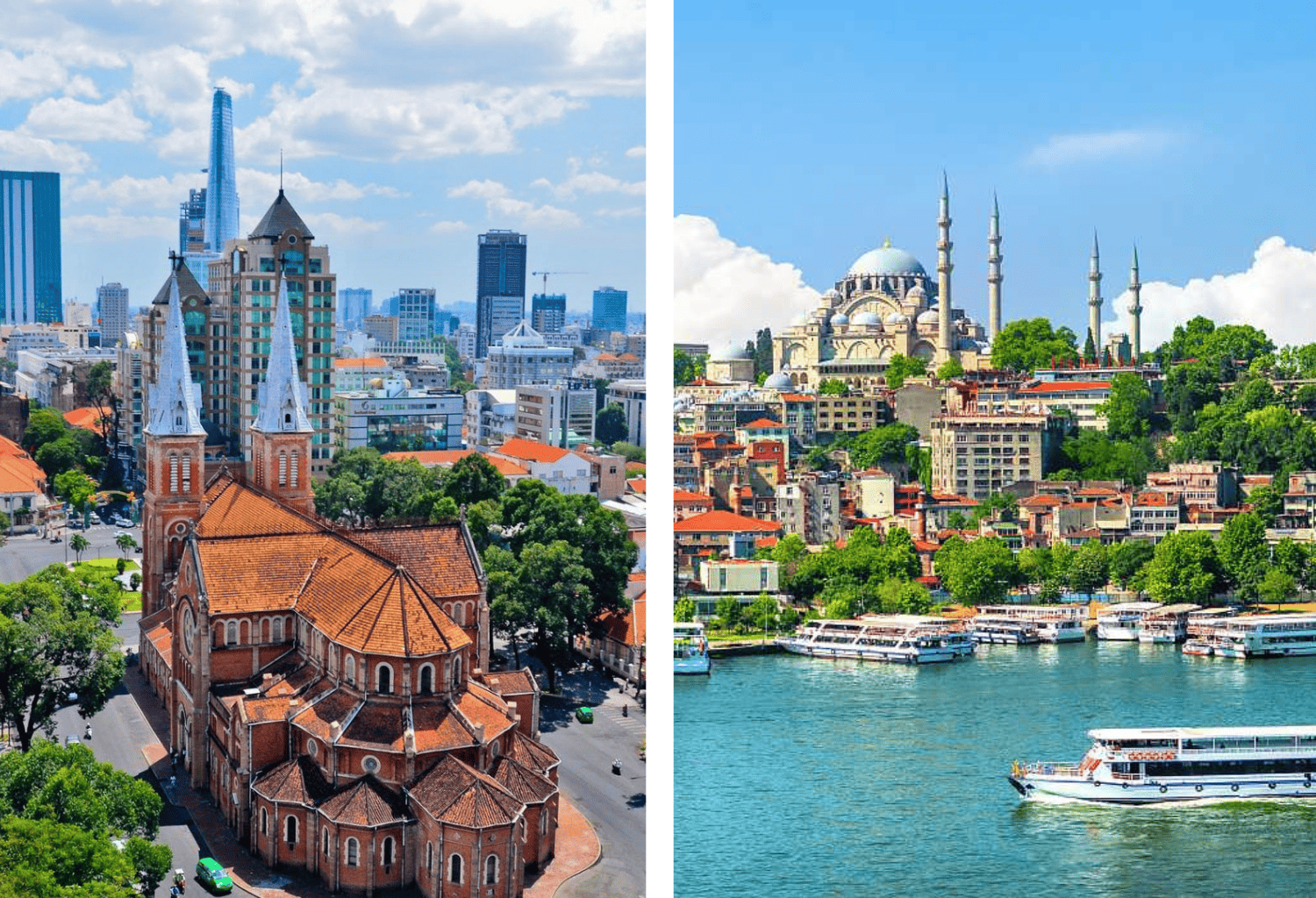
Both Vietnam and Turkey have built strong reputations as dental tourism destinations. Patients from Australia, the US, the UK, and across Europe can save 50–80% on major procedures compared to what they would pay at home. But the two countries serve different patient profiles, and choosing based on price alone often leads to the wrong decision.
This guide compares Vietnam and Turkey across the factors that actually matter: procedure costs, implant brands, warranty terms, travel logistics, and safety.
Market overview: two very different dental tourism markets
Turkey’s scale and the “Turkey Teeth” problem
Turkey is the world’s largest dental tourism destination by volume, attracting an estimated 750,000 dental tourists annually. The country’s proximity to Europe, aggressive digital marketing, and the depreciation of the Turkish lira have driven explosive growth in the sector, with the market projected to reach 532 million USD by 2033.
That scale has a downside. The term “Turkey Teeth” has entered mainstream media vocabulary in the UK and Europe, referring to a pattern where patients arrive for cosmetic work and receive full crowns on healthy teeth, with 60–70% of natural tooth structure removed when veneers or orthodontics would have been the appropriate choice. Media outlets including the BBC and the British Dental Journal have documented complications including nerve damage from excessive preparation, pulp exposure requiring root canals, infections that destroy underlying bone, and crowns debonding within months.
This is not representative of every Turkish clinic. Turkey has excellent dental facilities, including JCI-accredited hospitals with highly trained clinicians. The problem is concentrated in the high-volume, package-deal end of the market that prioritises throughput over individual treatment planning. Patients who do careful due diligence can find good clinics in Turkey. The risk is that the market’s sheer size makes it harder to distinguish good from bad quickly.
Vietnam’s smaller but more consistent market
Vietnam’s dental tourism sector is considerably smaller, which works in its favour for quality consistency. Clinics that target international patients compete on reputation and results rather than volume, because they cannot rely on the same flood of inbound traffic that Turkish clinics benefit from.
The treatment philosophy at reputable Vietnamese clinics also tends to be more conservative. Rather than recommending aggressive procedures to maximise per-patient revenue, the approach focuses on what is clinically appropriate. For international patients worried about being oversold, this matters.
Cost comparison across key procedures
The table below uses Delia International Dental Clinic’s standard rates for Vietnam pricing. Turkey prices reflect dental tourism clinic averages from published price lists. All figures in USD.
| Procedure | UK/Australia (USD) | Turkey (USD) | Vietnam / Delia (USD) |
|---|---|---|---|
| Single implant (Osstem) | $3,000–5,500 | $500–800 | from $700 |
| Single implant (Straumann) | $3,000–5,500 | $1,200–2,000 | from $2,000 |
| Zirconia crown | $800–1,600 | $160–250 | from $190 |
| Emax veneer | $700–1,500 | $180–400 | from $290 |
| All-on-4 per arch (economy brand) | $19,000–32,000 | $4,000–6,000 | from $6,300 (Osstem) |
| All-on-4 per arch (Straumann) | $25,000–40,000 | $14,000–18,000 | from $11,500 |
Turkey’s lowest prices on crowns and veneers are genuinely lower than Vietnam. But those prices frequently involve unspecified or generic implant brands at the entry level. When comparing like-for-like Straumann implants, Vietnam and Turkey are closely matched, and Vietnam’s warranty terms are significantly better, as covered in the next section.
Implant brands and warranty: the most important difference
The implant brand used is the single most important factor for long-term outcomes, and it is where the biggest difference between the two countries shows up in practice.
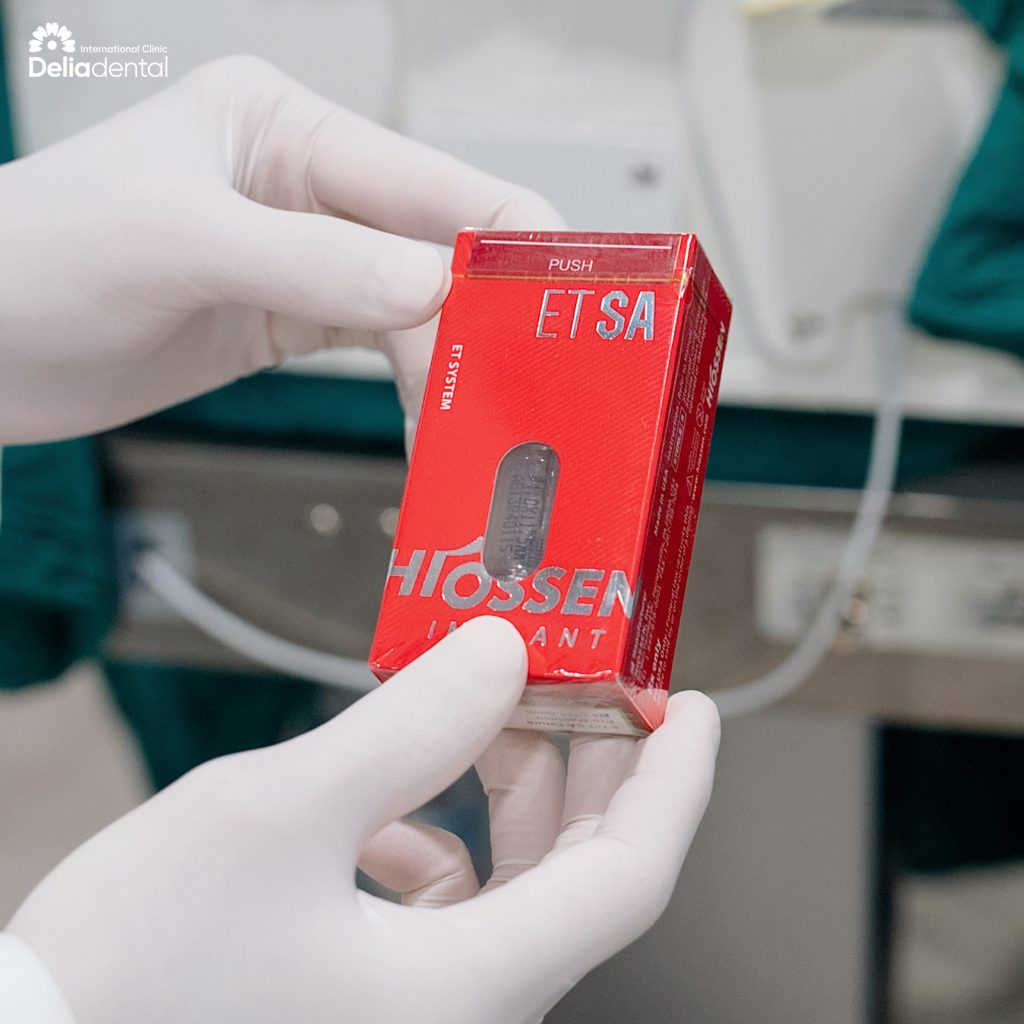
Straumann, Nobel Biocare, HIOSSEN, ETK, SIC, and Osstem are global brands available at quality clinics in both Turkey and Vietnam. The issue is documentation and warranty enforcement.
Most Turkish dental tourism clinics offer 1–3 year warranties on implants, and warranty documentation is frequently informal or verbal. The UK General Dental Council has no jurisdiction over Turkish practitioners, which means enforcing a warranty from abroad is difficult. Patients who experience complications after returning home typically find it cheaper to seek remedial treatment locally than to return to Turkey.
At Delia International Dental Clinic, warranty terms are written and issued before departure:
| Implant system | Warranty |
|---|---|
| Straumann SLA / SLActive | Lifetime |
| HIOSSEN | 30 years |
| ETK | 30 years |
| SIC | 30 years |
| Osstem / Dentium | 15 years |
Every implant case includes an implant passport containing the serial number, batch code, implant dimensions, and placement details. This document lets any dentist anywhere in the world identify the exact system used and source compatible components for future maintenance. Without it, a dentist examining a patient who received implants abroad often cannot determine what was placed, which complicates any follow-up care significantly.
Flight and travel: Turkey’s clearest advantage
For patients flying from the UK or Europe, Turkey has a meaningful logistical edge. London to Istanbul is 3.5–4 hours direct at budget-airline prices of USD 80–300 return. London to Vietnam is 11–13 hours with one connection at USD 500–900 return.
For patients flying from Australia, the picture reverses. Ho Chi Minh City and Hanoi are 8–9 hours direct or with one short stop from Sydney and Melbourne. Istanbul is 16–18 hours with at least one connection.
The financial logic is straightforward. For a single crown or a small veneer case worth under USD 2,000–3,000, Turkey’s flight cost advantage of USD 400–600 from Europe makes it the better total-trip value. For major treatments such as All-on-4 restorations or multi-implant cases, the additional flight cost to Vietnam is marginal relative to the treatment saving and the value of longer warranties and documented implant brands.
Accommodation and daily costs
Vietnam holds a slight edge on daily living costs, which partially offsets the higher flight cost from Europe.
| Expense | Turkey (Istanbul) | Vietnam (Hanoi/HCMC) |
|---|---|---|
| 4-star hotel per night | $60–150 | $30–80 |
| Restaurant meal | $10–25 | $5–15 |
| Local transport per day | $5–15 | $3–10 |
| Daily total (mid-range) | $90–200 | $45–110 |
For a 10-day treatment stay, the daily cost difference amounts to USD 150–900 in additional savings in Vietnam, enough to meaningfully reduce the gap created by higher airfares.

Safety and holiday experience
Vietnam ranks 41st on the Global Peace Index. Turkey ranks 147th. For patients traveling alone or for the first time, personal safety is a reasonable factor to weigh.
Both countries offer genuinely good holiday experiences, but they feel very different. Turkey suits patients who want a Mediterranean setting with European-familiar amenities, world-class historical sites like Hagia Sophia and Cappadocia, and easy connections back home. Vietnam suits patients who want a Southeast Asian experience: Ha Long Bay, Hoi An, Da Nang’s beaches, and food widely considered among the best in the world.
Visa-wise, most Western passport holders enter Vietnam visa-free for 45 days. UK citizens need an e-Visa for Turkey (USD 20, 90 days). Most EU citizens enter Turkey visa-free for up to 90 days.
Who should choose Vietnam and who should choose Turkey
| Factor | Choose Vietnam | Choose Turkey |
|---|---|---|
| Treatment value | Major cases above $4,000–5,000 | Routine cases under $3,000 |
| Implant warranty priority | Long written warranties (15 years to lifetime) | Short stay, already vetted clinic |
| Flight origin | Australia, USA, Singapore, Asia Pacific | UK, Europe |
| Safety priority | Higher priority | Comfortable with standard travel precautions |
| Treatment type | All-on-4, multi-implant, complex cases | Single crowns, small veneer cases |
| Holiday preference | Southeast Asia, beaches, street food culture | Mediterranean, European feel |
The bottom line: Turkey is a reasonable choice for European patients with smaller treatment needs who can identify a specific reputable clinic with named implant brands and written warranties. Vietnam is the stronger choice for anyone prioritising long warranty terms, implant traceability, major treatment packages, and patients flying from the Asia-Pacific region.
How Delia International Dental Clinic handles international patients
Delia International Dental Clinic operates across three branches in Ho Chi Minh City, Hanoi, and Thanh Hoa City, with the full range of implant systems available at each location.
The process for international patients starts before the trip. Send your existing X-rays or dental photos to the team via WhatsApp, and you will receive a written treatment plan with itemized USD pricing within 48 hours. The plan specifies the exact procedures recommended, the implant brand and model if applicable, the total cost, and the treatment timeline. Pricing is fixed at the point of quotation and does not change on arrival.
On arrival, a 3D cone beam CT scan is taken before any surgical planning is confirmed. For cosmetic cases, digital smile design lets patients preview their result before anything is finalized. The English-speaking team handles airport pickup, hotel recommendations near the clinic, and scheduling built around the patient’s available days in Vietnam.
For implant cases, Delia provides written warranty documentation and an implant passport with manufacturer serial numbers before departure. Your dentist at home can use these records for any routine check-ups or future maintenance, which resolves the aftercare gap that is the most common concern for dental tourists.
Available implant systems at Delia include the full Straumann range with lifetime warranty, HIOSSEN and ETK with 30-year warranties, SIC with a 30-year warranty, and Osstem and Dentium with 15-year warranties. For crown and veneer work, Emax and Zirconia are the primary materials. All procedures include a 3D CT scan at the assessment stage.
Remote follow-up is available via WhatsApp after patients return home. If anything needs attention during the healing period, the team is reachable directly without needing to arrange a return visit for minor questions.
Book a free online consultation here.


